

A paternity test without father present is achievable through DNA collected from close biological relatives or indirect biological samples, provided that proper consent and documentation protocols are followed. Many people assume the alleged father must participate directly, but alternative testing methods using grandparents, siblings, or aunts and uncles can establish biological relationships with meaningful statistical confidence. US Diagnostics Center offers home DNA testing for personal knowledge. For court-admissible testing, a separate legal test with witnessed collection and documented chain of custody is required. Understanding which path fits your legal and personal needs is the first decision you must make.
What DNA testing options exist when the father cannot be tested directly?
Paternity testing without the father present falls into two broad categories: direct testing and kinship DNA testing. Direct testing uses a sample from the alleged father himself. Kinship testing uses DNA from his biological relatives to infer a genetic connection to the child.
The most common alternatives to direct father testing include:
- Grandparent DNA testing: Paternal grandparents share approximately 25% of their DNA with a grandchild. Testing both grandparents together produces stronger statistical results than testing one alone.
- Sibling DNA testing: A full sibling DNA test compares the child's DNA against a known sibling of the alleged father to identify shared genetic markers.
- Avuncular DNA testing: An aunt or uncle of the alleged father shares roughly 25% of their DNA with a niece or nephew. This method works when grandparents are unavailable.
Each alternative method carries lower statistical certainty than direct father testing. Courts require a 99% or higher probability to establish legal paternity. Alternative methods can meet that threshold, but only when testing conditions are optimal and multiple relatives participate.
| Test type | Accuracy potential | Legal admissibility | Best use case |
|---|---|---|---|
| Direct father test | Highest | Yes, with chain of custody | Standard paternity cases |
| Grandparent DNA test | High (both grandparents) | Yes, with proper protocols | Father deceased or unavailable |
| Sibling DNA test | Moderate to high | Yes, with documentation | Known sibling available |
| Avuncular DNA test | Moderate | Conditional | No grandparents or siblings |
| Home paternity test | High (scientific) | No | Personal information only |
Pro Tip: Test both paternal grandparents together whenever possible. Testing only one grandparent reduces the statistical weight of the result and may not meet the legal threshold required by a court.
How to prepare and legally document paternity testing without the father's presence
Legal admissibility depends as much on procedure as it does on DNA science. Chain-of-custody documentation creates a verified paper trail from sample collection through laboratory analysis, confirming that no tampering occurred. Without it, even a scientifically accurate result can be rejected in court.
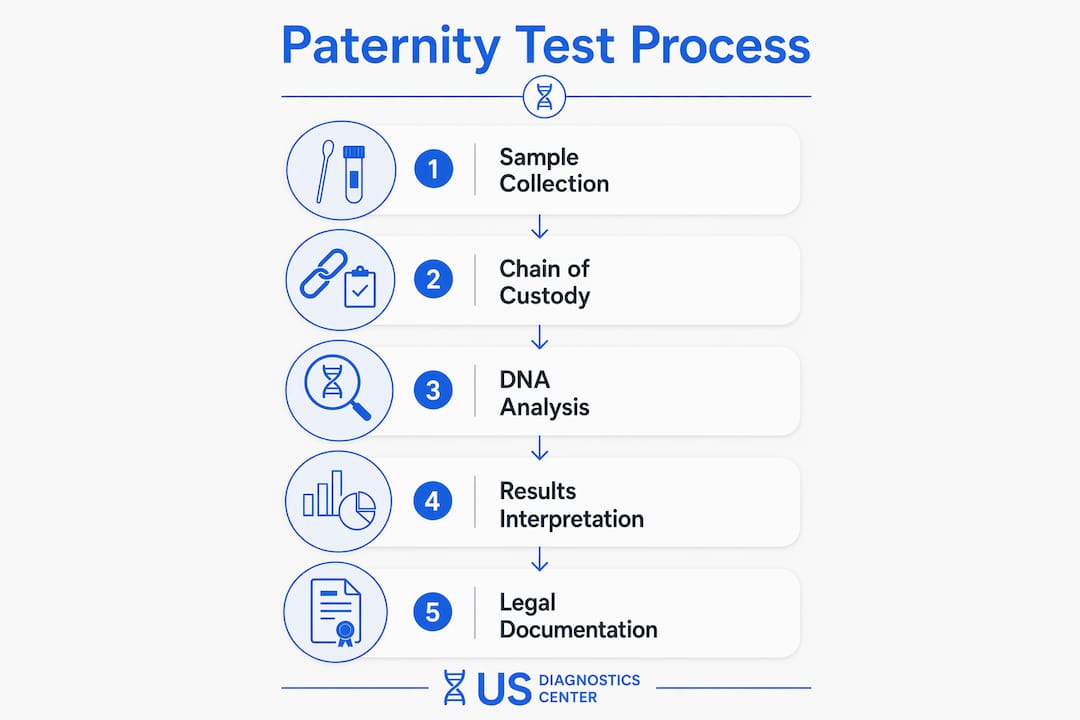
The core components of legal documentation for an absent-father case include:
| Documentation component | Purpose |
|---|---|
| Collector identity verification | Confirms who collected each sample |
| Photo ID of each participant | Links the biological sample to a named individual |
| Witnessed buccal swab collection | Prevents sample substitution or contamination |
| Chain-of-custody form | Tracks sample handling at every stage |
| Laboratory accreditation records | Validates that the testing facility meets legal standards |
Consent requirements add another layer of complexity. Informed consent laws vary by state, and some jurisdictions require the consent of the person being tested or their legal guardian. Testing a relative without their knowledge may breach privacy laws in certain states, regardless of your intent. Consulting a family law attorney before collecting any sample from a third party is the safest course of action.
Home paternity test kits, which typically cost $80 to $150 with results in 3–5 business days, are designed for personal information only and are not suitable for court use. Legal tests cost $300–$500 and include chain-of-custody protocols, authorized collectors, and accredited laboratory processing. The cost difference reflects the procedural infrastructure that makes results court-ready.
Pro Tip: Map your intended use before ordering any test. If you need results for a custody hearing, child support case, or inheritance claim, order a legal test from the start. Switching from a home test to a legal test after the fact means starting the entire process over.
Step-by-step guide to conducting a paternity test when the father is unavailable
A structured approach prevents costly errors and protects the legal value of your results. The steps below apply whether you are testing a grandparent, sibling, or aunt or uncle as a substitute for the alleged father.
-
Identify your testing purpose. Determine whether you need results for personal information or for a legal proceeding. This single decision determines every subsequent step, including which test type to order and which provider to use.
-
Select the appropriate test type. If the father is deceased or uncooperative, a grandparent DNA test or sibling test is the most practical alternative. US Diagnostics Center currently offers home DNA testing for personal knowledge. For court-admissible results, a legal DNA test with witnessed sample collection and documented chain of custody is required.
-
Obtain consent from all participants. Contact each relative you plan to test and obtain their written consent. For minors, a legal guardian must provide consent. Document this consent before any sample is collected.
-
Schedule sample collection with an authorized collector. For legal tests, samples must be collected by a neutral third party, such as a medical professional or a designated collection site. Accredited labs require photo ID and witnessed swabs to validate each sample's source.
-
Complete all chain-of-custody paperwork at the collection site. Every participant's sample must be labeled, sealed, and signed at the point of collection. Do not allow samples to leave the collection site unsealed.
-
Submit samples to the laboratory. Ship samples using the provider's designated packaging and shipping method. US Diagnostics Center typically delivers home test results within 2–3 business days, with expedited options available for urgent cases.
-
Review and interpret your results. Results will include a probability of paternity or kinship index. A probability at or above the legal threshold supports a formal paternity claim. Review the probability of paternity standards to understand what your specific result means.
-
Consult a family law attorney if results are for court use. An attorney can advise on how to present DNA evidence in your jurisdiction and whether additional documentation is needed.
Common challenges and solutions when testing without the father's presence
Testing without direct father participation introduces specific procedural risks. Recognizing them in advance allows you to address them before they invalidate your results.
- Consent refusal by relatives: A paternal grandparent or sibling has no legal obligation to participate. If a relative declines, you may need to seek a court order compelling testing, which requires legal representation.
- Incomplete chain of custody: A single gap in the documentation, such as an unsealed sample or a missing collector signature, can render results inadmissible. Courts prioritize procedural integrity over scientific accuracy when evaluating DNA evidence.
- Using home test results in legal proceedings: Private paternity testing without documented chain of custody is limited to personal information. Many people make the error of submitting home test results to a court, only to have them rejected outright.
- Sample contamination: Buccal swabs must be collected from individuals who have not eaten, drunk, or smoked for at least 30 minutes. Contaminated samples produce unreliable results and require recollection.
- Jurisdictional differences in consent law: Nevada's Department of Social Services, for example, mandates DNA samples from all named parties in a paternity case. Other states have different rules. Verify your state's requirements before proceeding.
"Court approval of DNA results hinges on maintaining an irrefutable chain of custody. Even scientifically valid tests fail without it." — LegalClarity
Pro Tip: Before collecting any sample, call your chosen laboratory and describe your specific situation. A reputable lab will tell you exactly which documentation is required for your jurisdiction and test type. This five-minute call can prevent weeks of delays.
Key Takeaways
A paternity test without the father present is legally viable when alternative DNA sources are tested under strict chain-of-custody protocols and proper consent is documented throughout.
| Point | Details |
|---|---|
| Alternative testing is possible | Grandparent, sibling, and avuncular DNA tests can substitute for direct father testing. |
| Legal threshold is 99% probability | Courts require a 99% or higher paternity probability to establish legal fatherhood. |
| Chain of custody is non-negotiable | A complete paper trail from collection to lab analysis is required for court admissibility. |
| Home tests have legal limits | Home kits ($80–$150) provide personal information only and are not court-admissible. Court-admissible results require a legal test with witnessed collection and documented chain of custody. |
| Consent laws vary by state | Some states require written consent from the person being tested before any sample is collected. |
What I've learned about testing without the father's cooperation
Working with families navigating absent-father paternity cases has reinforced one consistent lesson: the science is rarely the problem. DNA analysis is reliable and well-established. The failures I see most often are procedural. A family spends weeks arranging grandparent testing, only to discover the samples were collected at home without a neutral third party present. The results are accurate. The court rejects them anyway.
The other mistake I see is conflating scientific certainty with legal certainty. A grandparent test showing a strong kinship index is meaningful evidence, but it is not the same as a direct paternity result. Attorneys and judges understand this distinction. You should too, before you build a legal strategy around an alternative test result.
My practical advice is straightforward. If the father is unwilling to participate, do not attempt to test him covertly. Beyond the ethical problems, unauthorized testing can expose you to legal liability and will almost certainly produce inadmissible results. Work with a family law attorney and a laboratory that meets the procedural standards required for your jurisdiction. The combination of legal guidance and procedural rigor is what converts a DNA result into a legally recognized fact.
Technology in kinship DNA testing has improved considerably. Modern laboratories analyze hundreds of genetic markers, which increases the statistical power of grandparent and sibling tests. That said, the procedural requirements have not changed. Documentation, consent, and accredited collection remain the foundation of any result that will hold up in court.
— Todd
US Diagnostics Center's testing solutions for absent-father cases
US Diagnostics Center currently offers home DNA test kits for personal knowledge, including grandparent, sibling, and avuncular tests. Results are typically available within 2–3 business days. For court-admissible results, a legal DNA test with witnessed sample collection and documented chain of custody is required.
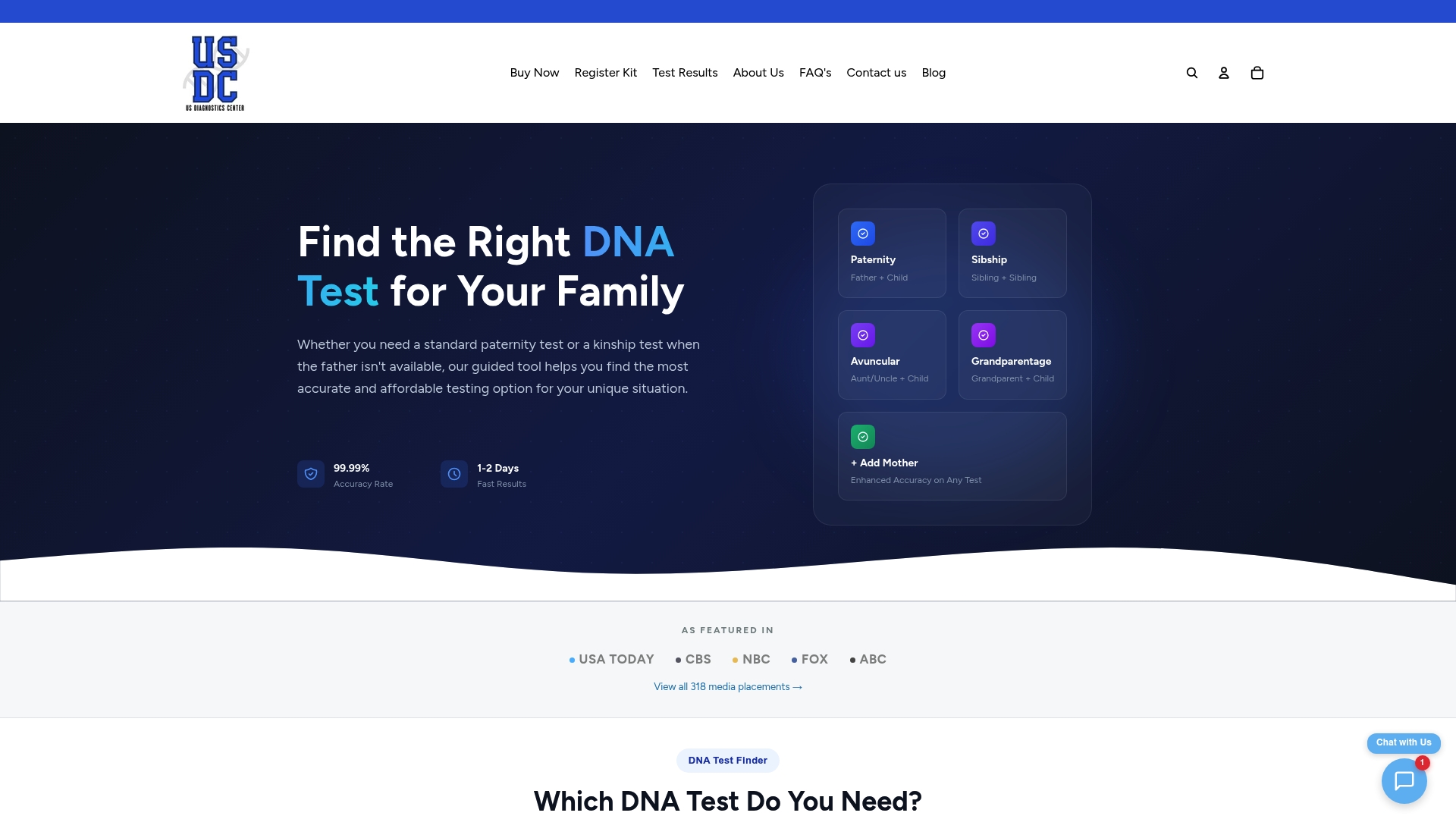
For families who need answers for personal clarity rather than court proceedings, US Diagnostics Center also provides home DNA test kits with straightforward collection instructions and results that reach 99.99% accuracy. Their guided tool helps you identify the right test for your specific family situation before you order, which eliminates the costly mistake of choosing the wrong test type. Confidentiality is maintained throughout, and expert support is available at every stage of the process.
FAQ
Can you do a paternity test without the father's DNA?
Yes. DNA from paternal grandparents, siblings, or aunts and uncles can be used to infer paternity when the alleged father's sample is unavailable. Legal admissibility depends on following chain-of-custody protocols throughout the process.
Who can request a paternity test when the father is absent?
The mother, the child (through a legal guardian), or a court can initiate paternity testing without the father's direct participation. Some states also allow government agencies to order testing in child support proceedings.
Are home paternity test kits valid in court?
Home paternity test kits are not court-admissible. Results from home kits lack the chain-of-custody documentation that courts require, making them suitable for personal information only.
What is the legal probability threshold for establishing paternity?
Courts require a probability of paternity at or above 99% to legally establish fatherhood. Alternative testing methods using relatives can meet this threshold, but typically require testing multiple family members to achieve sufficient statistical weight.
Does the father have to consent to a paternity test?
Consent requirements vary by state. In many jurisdictions, a person cannot be tested without their knowledge or consent. Courts can compel testing through a legal order when a party refuses to participate voluntarily.


0 comments