

DNA paternity testing is defined as the scientific process of comparing genetic markers between a child and an alleged father to establish or exclude biological parentage. The role of DNA in paternity proof has replaced older methods like blood typing because it delivers accuracy that courts and families can rely on. DNA testing confirms biological fatherhood with over 99% accuracy, making it the gold standard in both healthcare and legal settings. This guide explains how the process works, why it outperforms earlier methods, and what it means for your legal rights.
How does DNA matching determine paternity?
DNA matching for paternity works by analyzing Short Tandem Repeat (STR) loci, which are specific locations on chromosomes where genetic sequences repeat. STR loci analysis creates a unique genetic profile for each person tested. Laboratories compare these profiles across the child, the alleged father, and ideally the mother to identify shared genetic markers.
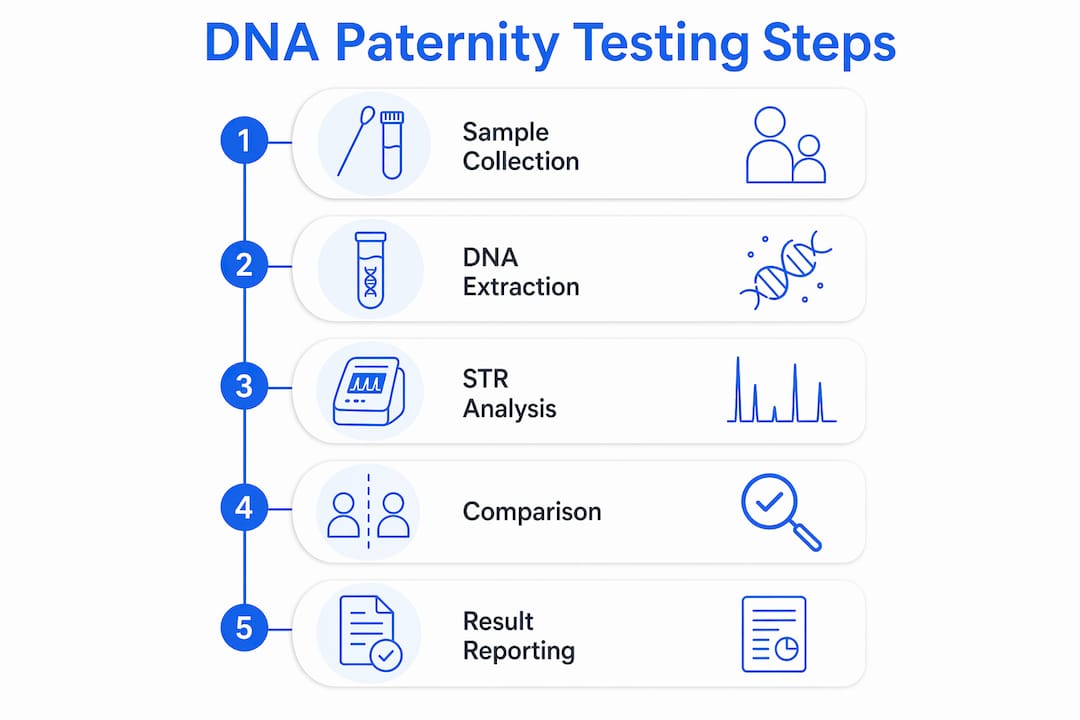
Sample collection is straightforward. Cheek swabs collect DNA from the inner lining of the mouth, a method that is painless and non-invasive. The swabs are then sent to an accredited laboratory where technicians extract and amplify the DNA before running the STR analysis.

Including the mother's DNA in a trio test significantly improves the reliability of results. Trio testing increases statistical power by clarifying which alleles the child inherited from the mother, leaving the remaining alleles to be matched against the alleged father. Duo testing, which excludes the mother, is still valid but carries a slightly higher margin of ambiguity.
The probability of paternity is the statistical measure labs use to express their conclusion. A result above 99.9% is considered conclusive confirmation of biological fatherhood. A result of 0% means the tested man is excluded as the biological father.
| Test type | Participants | Accuracy implication |
|---|---|---|
| Duo test | Child + alleged father | Valid but slightly less conclusive |
| Trio test | Child + alleged father + mother | Higher statistical power and clarity |
Pro Tip: Always choose a laboratory accredited by the AABB (American Association of Blood Banks). AABB accreditation confirms the lab meets rigorous standards for DNA testing accuracy and chain-of-custody procedures.
Why is DNA testing more accurate than older methods?
Blood typing was the primary tool for paternity disputes for decades, but it can only exclude a man as the father, not confirm him. DNA profiling, by contrast, can both exclude and confirm biological parentage with near certainty. DNA analysis examines unique genetic markers that cannot be forged or mistaken, which is the core reason courts now treat it as definitive evidence.
Older methods carried several limitations that DNA testing has resolved:
- Blood typing could only narrow down possibilities, not confirm a match.
- HLA antigen testing was more specific than blood typing but still fell short of the accuracy DNA profiling provides.
- Serology-based tests were vulnerable to sample degradation and produced inconclusive results in a significant number of cases.
- DNA testing analyzes dozens of STR loci simultaneously, producing a genetic profile so specific that the probability of a random match is astronomically low.
- Modern STR analysis produces results that are accepted as evidence in family courts, immigration proceedings, and inheritance disputes across the United States.
Legal systems in the United States and internationally have formally recognized DNA testing as the preferred evidentiary standard. Courts no longer treat blood typing results as sufficient for paternity disputes when DNA testing is available. This shift reflects both the scientific advancement of the technology and the legal system's demand for certainty in cases that affect child welfare, custody, and financial support.
What legal role does DNA play in paternity proof and parental rights?
DNA evidence carries significant weight in family law proceedings. Recent Supreme Court rulings establish that DNA testing is the preferred method for resolving paternity disputes when no other clear evidence exists. In 2026, courts have moved further toward prioritizing scientific DNA evidence over traditional legal presumptions, including statutory presumptions of legitimacy under laws such as Section 112.
When DNA results conclusively disprove paternity, courts have affirmed DNA evidence's precedence over statutory law, which can directly affect maintenance obligations and custody arrangements. A man who is excluded as the biological father through DNA testing may successfully challenge legal presumptions that previously bound him to financial responsibilities. This represents a meaningful shift in how family courts weigh scientific evidence against procedural assumptions.
Courts also balance competing rights carefully. Judicial decisions weigh an alleged father's right to privacy against a child's right to know their biological origins. In most unresolved disputes, courts favor the child's interest in establishing biological identity. DNA testing is ordered only when it is necessary to resolve a direct question of paternity, reflecting judicial caution rather than routine application.
| Scenario | Without DNA evidence | With DNA evidence |
|---|---|---|
| Paternity dispute | Resolved by presumption or testimony | Resolved by genetic confirmation or exclusion |
| Child support obligation | Based on legal presumption of fatherhood | Adjusted based on confirmed biological relationship |
| Custody determination | May rely on circumstantial evidence | Grounded in biological fact |
| Immigration or inheritance claim | Requires extensive documentation | DNA result accepted as primary proof |
Pro Tip: If you need DNA results for a court proceeding, order a legal DNA test that follows strict chain-of-custody protocols. Results collected without proper documentation may be challenged or rejected by a judge.
How can you obtain and interpret a DNA paternity test?
Choosing the right test depends on your purpose. Home DNA tests offer privacy and convenience but are generally not admissible in court. Legal paternity tests require witnessed sample collection and documented chain of custody to meet court standards.
The following steps outline the standard process for obtaining a legally valid paternity test:
- Select an accredited laboratory. Choose a provider with AABB accreditation to confirm the lab meets national standards for DNA testing.
- Order the correct test type. Decide between a home test for personal knowledge or a legal test for court proceedings before collecting any samples.
- Schedule witnessed sample collection. For legal tests, a neutral third party must observe and document the collection of cheek swabs from all participants.
- Preserve the chain of custody. Samples must be sealed, labeled, and shipped according to the lab's documented procedures to prevent any challenge to the results.
- Submit samples to the laboratory. Processing typically takes 2–3 business days, with expedited options available for urgent situations.
- Review the results report. The report will state a probability of paternity expressed as a percentage. A result above 99.9% confirms biological fatherhood. A result of 0% is a definitive exclusion.
- Seek genetic counseling if needed. Genetic counseling helps individuals understand the full implications of their results, particularly in complex family situations.
Several common misconceptions affect how people read DNA test reports. A probability of 99.9% does not mean there is a 0.1% chance the man is not the father. It means the statistical likelihood of a random unrelated man producing the same genetic match is less than 1 in 1,000. Exclusion results are absolute: if the alleged father does not share the required genetic markers with the child, biological fatherhood is ruled out entirely.
Privacy and consent are also procedural requirements. All tested parties must provide informed consent before samples are collected. Testing a child without the knowledge or consent of the custodial parent raises legal and ethical concerns that vary by state.
Key takeaways
DNA paternity testing is the definitive method for establishing biological fatherhood, combining genetic science with legal enforceability to resolve paternity disputes with over 99% accuracy.
| Point | Details |
|---|---|
| DNA is the gold standard | Over 99% accuracy makes DNA testing the accepted method in courts and healthcare settings. |
| Trio testing improves results | Including the mother's DNA increases statistical power and reduces ambiguity in paternity conclusions. |
| Legal tests require chain of custody | Court-admissible results depend on witnessed collection and documented sample handling procedures. |
| Courts prioritize DNA over presumptions | 2026 rulings confirm DNA evidence overrides statutory legitimacy presumptions in paternity disputes. |
| Genetic counseling supports interpretation | A counselor helps individuals understand probability scores and the legal implications of test results. |
Why DNA testing changed everything I thought I knew about family law
I have followed family law developments for years, and nothing has shifted the field as fundamentally as accessible DNA testing. Before this technology became widely available, paternity disputes were resolved through testimony, circumstantial evidence, and legal presumptions that often had little to do with biological reality. Courts made decisions that affected children's lives based on who was married to whom at the time of birth, not on scientific fact.
What strikes me most about the 2026 legal trajectory is that courts are finally treating DNA results as a floor, not a ceiling. The evidence does not just inform the decision; it drives it. That is a meaningful change. A man who has been presumed a legal father for years can now present conclusive DNA evidence and have that presumption rebutted. A child can establish biological identity for inheritance or immigration purposes without years of litigation.
The privacy dimension deserves more attention than it typically receives. Courts do not order DNA testing casually. Judicial caution around DNA orders reflects a genuine effort to balance the child's right to know their origins against the dignity and privacy of the adults involved. That balance is not always easy to strike, but the legal system is getting better at it.
My honest view is that the biggest mistake people make is choosing a home test when they actually need a legal one. The science is identical. The difference is entirely procedural. If there is any chance you will need your results in a court proceeding, start with a legal test. Restarting the process later costs time, money, and emotional energy that most families cannot afford.
— Todd
Get reliable DNA paternity testing through US Diagnostics Center
US Diagnostics Center currently offers home DNA tests for personal knowledge, helping individuals gain clarity about paternity, grandparentage, and sibling relationships from the privacy of their own home. Every test is backed by 99.99% accuracy and full confidentiality. For court-admissible results, a legal DNA test with witnessed sample collection and documented chain of custody is required.
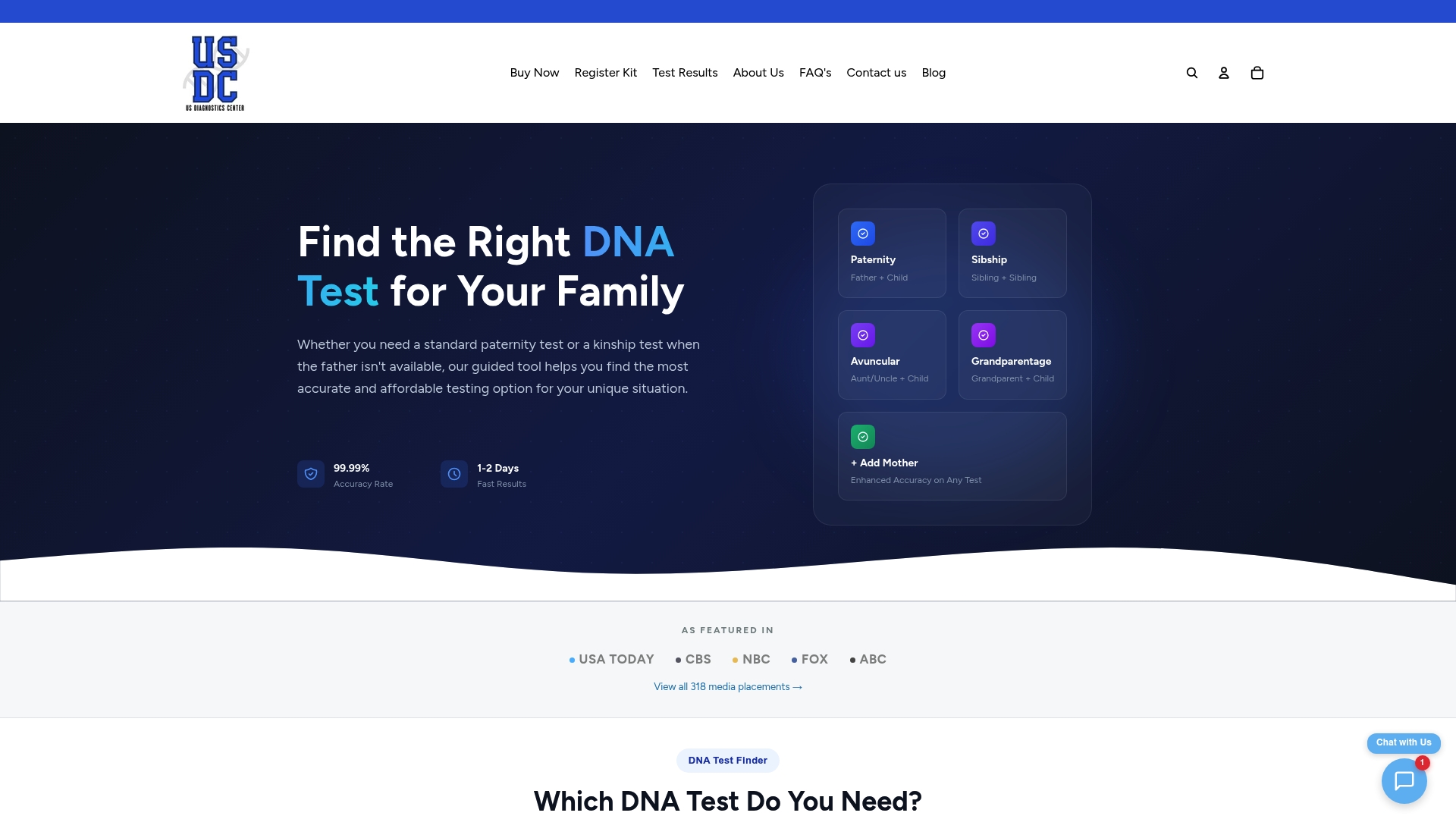
US Diagnostics Center's guided tool helps you identify the right test for your specific situation, whether that involves paternity, grandparentage, or sibling relationships. If you are ready to get started with a home DNA test, US Diagnostics Center is the place to begin.
FAQ
What is the role of DNA in paternity proof?
DNA testing compares genetic markers between a child and an alleged father to confirm or exclude biological parentage with over 99% accuracy. It is the accepted scientific and legal standard for resolving paternity disputes.
Does a home DNA test hold up in court?
Home DNA tests are generally not admissible in court because they lack the witnessed sample collection and chain-of-custody documentation that legal proceedings require.
What does DNA establish in custody and support cases?
DNA evidence can confirm or rebut biological fatherhood, directly affecting child support obligations and custody determinations. Courts in 2026 treat conclusive DNA results as primary evidence, overriding statutory presumptions of legitimacy.
How long does a DNA paternity test take?
Most accredited laboratories return results within 2–3 business days. Expedited processing is available when results are needed urgently for legal or personal reasons.
What is the probability of paternity threshold for legal cases?
A probability of paternity above 99.9% is considered conclusive confirmation of biological fatherhood in legal proceedings. A result of 0% is a definitive exclusion with no margin for interpretation.
Recommended
- Paternity Testing: The Complete Guide | USDC
- Probability of Paternity | DNA Testing Glossary | USDC
- Paternity Test | DNA Testing Glossary | USDC
This article is part of our Paternity Testing: The Complete Guide guide.


0 comments