

Paternity test results are defined as conclusive biological proof of fatherhood, established through DNA analysis with a probability of 99% or more. Understanding why paternity test results matter goes far beyond satisfying personal curiosity. These results directly determine a child's legal rights, access to financial benefits, and emotional stability. They also shape custody decisions, inheritance claims, and the parent-child bond in ways that last a lifetime. Whether you are navigating a custody dispute, seeking clarity about family history, or preparing legal documentation, the importance of paternity tests cannot be overstated.
Why paternity test results matter: legal rights and family law
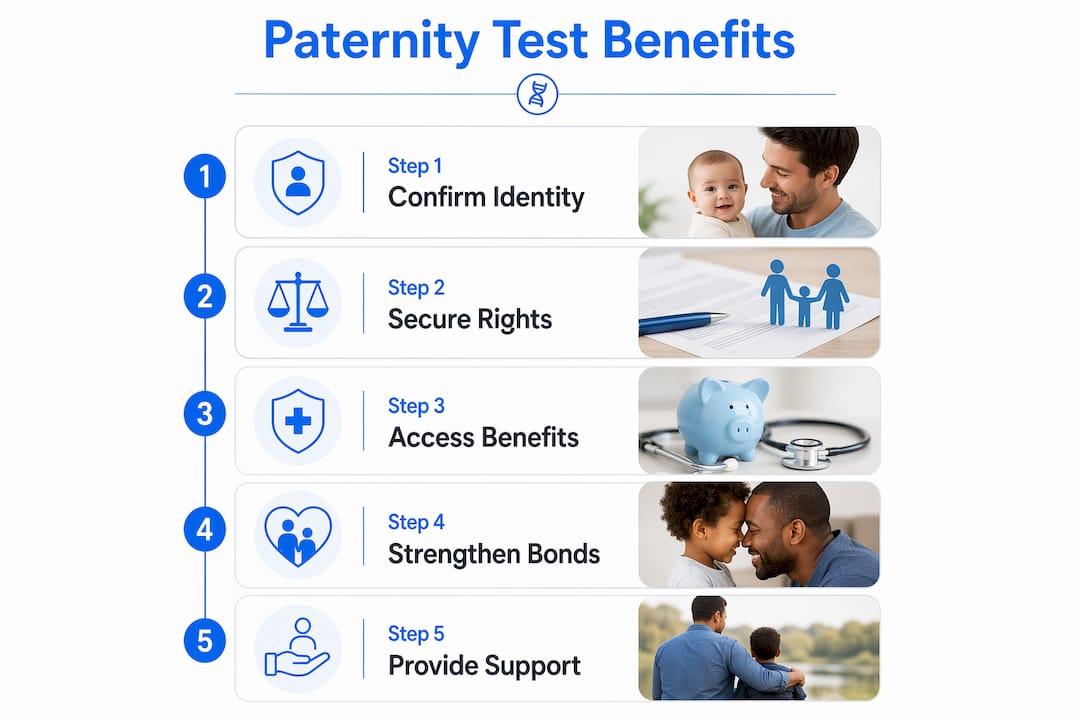
Paternity test results carry significant legal weight in family courts across the United States. DNA evidence is considered one of the most accurate forms of scientific identification available today, and courts rely on it to make fair, objective decisions in family law matters. Without established paternity, a child's legal relationship to their father does not formally exist, regardless of social or emotional bonds.
The legal consequences of establishing paternity are broad and concrete:
- Child support and custody. Establishing legal paternity is required before courts can order child support or assign custody rights. A father cannot petition for visitation or custody without it.
- Birth certificate amendments. Once paternity is confirmed, a father's name can be added to the birth certificate, creating a permanent legal record.
- Inheritance rights. DNA evidence helps courts distinguish valid inheritance claims from false allegations, protecting children's financial rights in estate proceedings.
- Social Security and veterans' benefits. Confirmed paternity gives children legal access to Social Security benefits, veterans' benefits, and health insurance coverage through the father.
- Immigration documentation. Paternity results are accepted as legal proof of biological relationship in immigration petitions involving a child and a U.S. citizen father.
One often overlooked legal risk involves alleged fathers named on birth certificates. In many legal systems, that individual may be held responsible for child maintenance until a DNA test proves otherwise. The burden of proof and initial payment typically fall on the disputing party, which makes early testing financially and legally critical.
Modern legal DNA tests combine advanced genetic analysis with strict chain-of-custody procedures. This process ensures results are court-admissible and defensible under cross-examination. A test conducted without proper chain-of-custody documentation will not be accepted in most court proceedings, regardless of its scientific accuracy.
Pro Tip: If you anticipate needing results for legal proceedings, request a court-admissible legal test from the start. Retesting later adds cost and delays legal proceedings.
How do paternity test results affect families emotionally?
The impact of test results on family relationships is profound and often underestimated. Family law experts recommend professional counseling to help parents and children navigate the emotional consequences of testing, both before and after results are received. This applies whether the result confirms or denies biological fatherhood.

When paternity is confirmed, the result often strengthens the father-child bond by removing doubt. It creates a foundation of certainty that supports healthy attachment and long-term relationship development. For a child, knowing their biological identity contributes directly to a stable sense of self.
When paternity is denied, the emotional effects ripple outward. Siblings may question their own family identity. Mothers face the challenge of managing their child's reaction to an unexpected result. The man who believed he was the father must process a significant loss, even if no biological connection existed.
Key emotional considerations for families include:
- Timing of disclosure. Establishing a child's true identity early reduces long-term emotional trauma related to identity uncertainty. Delayed disclosure tends to increase psychological harm.
- Counseling for all parties. Professional support helps parents communicate results to children in age-appropriate ways and manage their own reactions constructively.
- Sibling relationships. A denied paternity result may alter how siblings relate to each other, particularly in blended families.
- Psychological benefits of clarity. Uncertainty about biological identity creates ongoing stress. A definitive result, even a difficult one, allows families to move forward with accurate information.
Pro Tip: Schedule a session with a licensed family counselor before receiving results. Having professional support in place reduces the risk of reactive decisions that harm relationships.
How accurate are paternity test results, and how do you read them?
DNA testing is considered one of the most accurate forms of scientific identification available. A probability of 99% or higher is the legal threshold for confirming biological fatherhood in most U.S. states. Results below that threshold, such as 94.99%, do not confirm paternity definitively and may be treated as inconclusive by courts.
Understanding how to read a paternity test report prevents common misinterpretations. Most reports include a Combined Paternity Index (CPI) and a Probability of Paternity percentage. The CPI measures how much more likely it is that the tested man is the biological father compared to a random untested man. A probability of paternity of 99.99% means the result is conclusive under standard legal and scientific criteria.
The two main types of postnatal paternity tests differ in method and admissibility:
- Legal paternity test. Conducted at an accredited facility with chain-of-custody documentation. Results are court-admissible and used in custody, support, and immigration proceedings.
- At-home paternity test. Collected privately using a buccal swab kit. Results are for personal knowledge only and are not accepted as legal evidence in any court proceeding.
| Test type | Court-admissible | Timing | Risk level |
|---|---|---|---|
| Legal paternity test | Yes | After birth | None |
| At-home paternity test | No | After birth | None |
When choosing a laboratory for paternity testing, it is important to understand the quality standards that govern the industry. AABB accreditation is the gold standard for paternity testing laboratories in the United States, meaning an AABB-accredited lab follows strict quality standards for sample handling, analysis, and reporting. Verifying a laboratory's accreditation status independently before testing is a sound practice for any family seeking reliable results.
What are the practical scenarios where paternity results matter most?
The reasons for paternity testing extend across a wide range of real-life situations. Each scenario carries specific legal deadlines and procedural requirements that make timing a critical factor.
- Child support disputes. Courts require confirmed paternity before issuing a child support order. Without it, a mother cannot compel financial support through the legal system.
- Custody and visitation. A father seeking custody or visitation rights must establish legal paternity first. This applies equally to fathers who want to be involved and those contesting unwanted legal obligations.
- Medical family history. Access to a complete and accurate family medical history is a direct benefit of confirmed paternity. Genetic conditions, hereditary diseases, and risk factors become accessible information that guides healthcare decisions for the child.
- Inheritance and estate claims. When a biological father dies without a will, a child must prove paternity to claim inheritance rights. DNA evidence submitted in probate court resolves these disputes with scientific certainty.
- Veterans' benefits. Children of veterans are entitled to specific federal benefits, but eligibility requires proof of biological relationship. A court-admissible paternity test satisfies this requirement.
- Immigration petitions. U.S. Citizenship and Immigration Services accepts DNA test results as evidence of a biological parent-child relationship in certain visa and citizenship applications.
- Presumed paternity disputes. In many states, a man married to a child's mother at the time of birth is legally presumed to be the father. Contesting this presumption requires a DNA test filed within a specific legal window, which varies by state.
Timing matters in every one of these scenarios. Legal deadlines for contesting paternity, filing for benefits, or initiating custody proceedings are strict. Missing them can permanently affect a family's legal options. Consulting a family law attorney alongside obtaining a DNA test is the most effective approach in disputed cases.
Key Takeaways
Paternity test results provide definitive biological proof that determines a child's legal rights, access to benefits, and emotional stability, making early and accurate testing the most protective step a family can take.
| Point | Details |
|---|---|
| Legal threshold for paternity | A probability of 99% or higher is required to confirm biological fatherhood in most U.S. courts. |
| Benefits access | Confirmed paternity unlocks Social Security, veterans' benefits, inheritance rights, and health insurance for children. |
| Court-admissible testing | Only tests with proper chain-of-custody documentation are accepted in legal proceedings. |
| Emotional impact | Early disclosure of results reduces long-term identity trauma; counseling before and after testing is strongly recommended. |
| Test type selection | Legal and at-home tests serve different purposes; legal tests require witnessed sample collection and documented chain of custody for court-admissible results, while at-home tests are for personal knowledge only. |
What I've learned about the real weight of paternity test results
After years of observing how families navigate DNA testing, one pattern stands out clearly. Most people focus on the scientific result and underestimate the legal and emotional infrastructure that surrounds it. A test result is not the end of the process. It is the beginning of a series of decisions that require both legal guidance and personal support.
The families who handle this best are the ones who prepare before testing, not after. They understand the difference between a legal and at-home test, choose the appropriate option for their situation, and have a counselor available when results arrive. The ones who struggle are often those who treat the test as a simple yes-or-no answer and are unprepared for the legal and relational consequences that follow.
There is also a common misconception that a high probability percentage automatically resolves everything. A result of 99.99% confirms paternity scientifically. But translating that into a court order, a birth certificate amendment, or a benefits application requires additional steps that many families do not anticipate. Understanding the full process, not just the number, is what actually protects a child's rights.
My honest view is that paternity testing is one of the most consequential decisions a family can make. Treating it with the seriousness it deserves, by choosing the right test, the right lab, and the right support, produces outcomes that hold up legally and emotionally for years.
— Todd
Reliable paternity testing through US Diagnostics Center
US Diagnostics Center currently offers at-home DNA tests for personal knowledge, giving families accurate results in a private, convenient format.
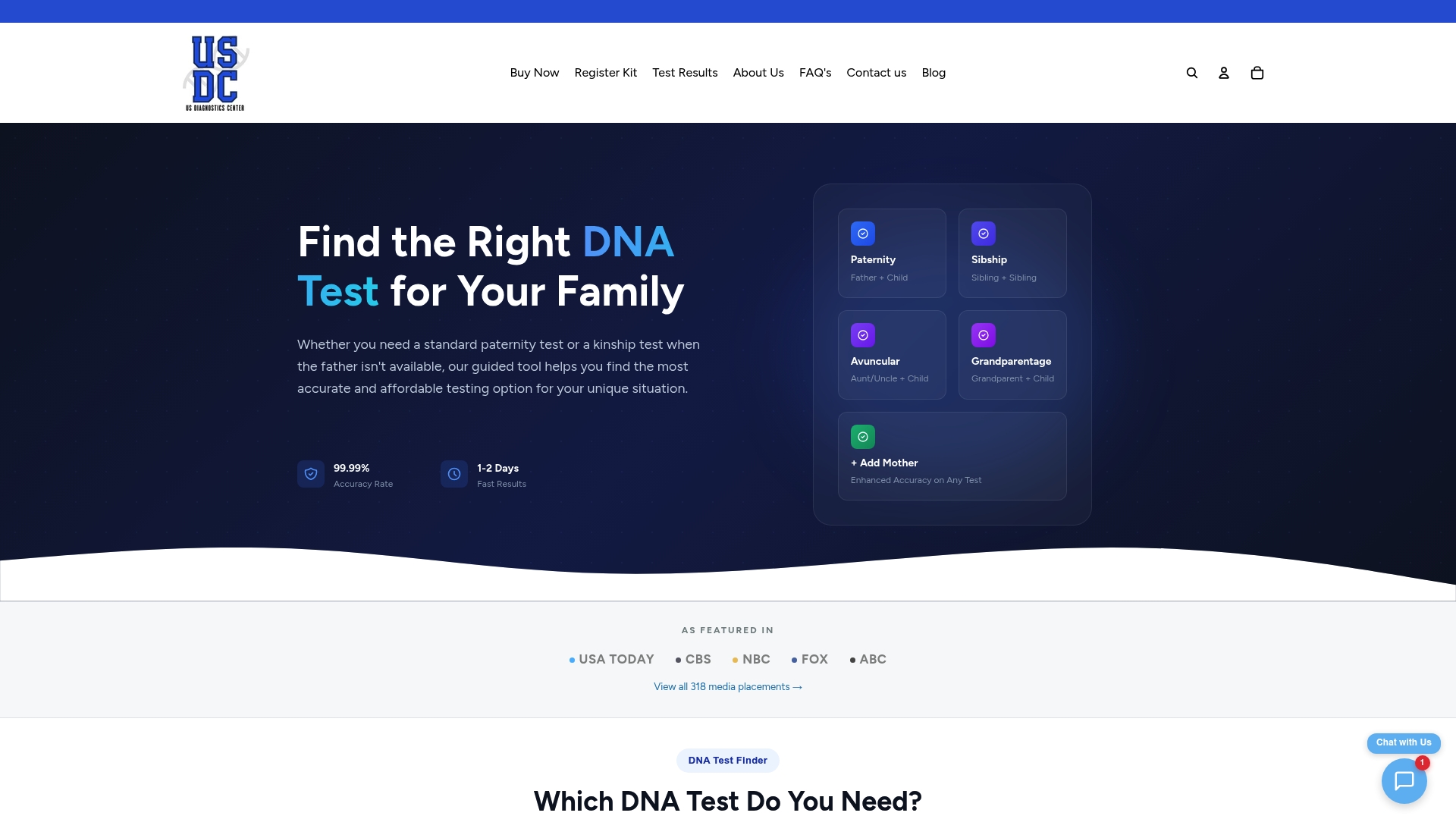
99% accuracy, typically within 2–3 business days. Expedited options are available for time-sensitive matters. A guided tool on the website helps families identify the most appropriate and affordable test for their specific situation, whether that involves paternity, grandparentage, or sibling testing. Confidentiality and expert support are provided throughout the process.
FAQ
What probability confirms paternity in a legal test?
A probability of 99% or higher is the legal standard for confirming biological fatherhood in most U.S. states. Results below this threshold may be treated as inconclusive by courts.
Can an at-home paternity test be used in court?
At-home paternity tests are for personal knowledge only and are not court-admissible. A legal test conducted at an accredited facility with witnessed sample collection and documented chain of custody is required for use in custody, support, or immigration proceedings.
What benefits does a child gain from confirmed paternity?
Confirmed paternity gives a child legal access to Social Security benefits, veterans' benefits, inheritance rights, and health insurance through the biological father, along with a complete family medical history.
Is prenatal paternity testing safe?
The American Pregnancy Association recommends the non-invasive prenatal paternity test or waiting until after birth to avoid the miscarriage risks associated with invasive procedures such as amniocentesis.
What does AABB accreditation mean for a paternity test?
AABB accreditation means the laboratory meets strict quality standards for sample handling, DNA analysis, and result reporting. Courts and government agencies recognize AABB-accredited results as reliable and scientifically sound.


0 comments