

A 0% result on a paternity test means the tested man is excluded as the biological father of the child in question. It's a direct statistical conclusion, not a probability that leaves room for doubt the way a 92% or even 99% result might.
TL;DR:
- A 0% paternity result conclusively excludes the tested man as the biological father but does not address legal or emotional factors.
- Common causes include true exclusion, close relative matches, sample contamination, collection errors, or limited marker panels, requiring retesting for confirmation.
- Detailed review of the full report, sample quality, and possibly adding the mother or relatives can clarify complex or questionable results.
- Retesting with legally recognized chain-of-custody tests and proper documentation is essential for court-related decisions.
- Broader family testing options and legal kits are available to verify results or explore extended relationships when a 0% outcome raises doubts.
Table of Contents
- What Does "0%" or "Excluded" Actually Mean on a Paternity Report?
- How Labs Turn DNA Markers Into a Percentage
- Why a 0% Result Happens: Real Causes and When to Question It
- What to Do After Getting a 0% Result
- Expert Perspective: Dr. Todd Lewis on Interpreting Exclusions
- Sharing a 0% Result: Privacy and Emotional Next Steps
- How US Diagnostics Center Can Help After a 0% Result
- Sources
- FAQ
What Does "0%" or "Excluded" Actually Mean on a Paternity Report?
Every paternity report centers on a single figure: the probability of paternity. Contrast that with a "not excluded" result, where the report shows a high percentage, commonly in the 99% to 99.99% range, indicating the tested man is statistically almost certain to be the biological father.

A typical report includes a probability-of-paternity line near the top, followed by a table of the individual genetic loci compared between the child and the alleged father.
Two things worth remembering:
- The 0% conclusion is strictly biological. It says nothing about custody, financial obligation, or the emotional relationship between the man and child, all of which fall under separate legal or personal processes.
- Excluded results are typically the cleanest outcome a paternity lab can report, since a true genetic mismatch usually shows up across many markers at once rather than just one or two.
How Labs Turn DNA Markers Into a Percentage
DNA testing works by comparing specific spots on the genome called genetic markers, where people vary enough to be useful for identification. Clinical paternity panels typically compare multiple markers between the child, the mother (when available), and the alleged father. More markers examined generally means a more decisive result, since a false match across dozens of independent locations becomes vanishingly unlikely.
Labs combine the marker data into a combined paternity index (CPI), a single number reflecting how much more likely the genetic pattern is if the tested man is the father versus a random unrelated man. That CPI feeds into Bayes theorem, a statistical formula that converts the index into the probability-of-paternity percentage printed on the report. Bayes theorem requires an assumed baseline probability, drawn from population genetics data, before the calculation can run.
- A true genetic match across the full panel typically yields 99% to 99.99%, not 100%.
- A true exclusion typically returns 0%, since even one confirmed non-match at multiple markers rules out biological paternity under standard testing.
Values that fall outside these two clusters are rare and usually prompt the lab to request additional samples before finalizing anything.
Why a 0% Result Happens: Real Causes and When to Question It
The tested man is not the biological father of the child sampled.
- Genuine exclusion. The straightforward case. Genetic markers show no biological relationship, and repeat testing confirms it.
- A close relative is the actual father instead. Brothers share a large portion of their DNA, so if the true father has a brother who was mistakenly tested, or if the situation involves half-siblings, the marker comparison can behave unpredictably. Testing the correct man directly resolves this.
- Sample contamination or degradation. Cheek swabs collected improperly, exposed to heat, or contaminated with another person's DNA can distort marker readings. Peer-reviewed discussions of testing edge cases note that allele drop-out from a low-quality sample is a known, if uncommon, technical failure point.
- Sample mix-up during collection or shipping. Rare, but possible when multiple kits are processed at once without careful labeling.
- Incomplete marker panels. Older or budget tests using fewer markers leave more room for statistical ambiguity than a panel testing up to 28 markers.
If you have any reason to suspect numbers two through four, the fix is the same: retest, and consider adding the mother's sample to narrow the comparison.
What to Do After Getting a 0% Result
The lab that ran your test is your first resource for questions about anything on the report that looks unclear.
- Read the entire report, not just the summary line. Check which loci showed mismatches, since a mismatch at every single marker versus a mismatch at just one or two carries different weight.
- Confirm what kind of test you took. Home tests and legal, chain-of-custody tests answer the biology question the same way, but only the legal version holds up in court, since it documents identity verification and sample handling at every step.
- Contact the lab directly if anything looks off. Ask specifically about marker count, sample quality flags, and whether a retest is recommended.
- Consider expanded kinship testing. Adding the mother's DNA, or testing a sibling or grandparent of the child, can clarify a confusing result faster than repeating the same test twice. USDC's guide on next steps after a 0% result walks through this in more detail. Expect a retest to follow the same turnaround as the original order.
- Talk to a family law attorney if the result affects custody, child support, or a court filing. Legal proceedings almost always require a chain-of-custody test rather than a home kit, regardless of what a home test already showed.
Pro Tip: Photograph or scan your full report the day you receive it, and keep the original collection packaging until any legal question is fully resolved. If a retest or legal proceeding comes up later, having dated documentation of the original result saves real time.
Expert Perspective: Dr. Todd Lewis on Interpreting Exclusions
When you're reviewing a report yourself, check the marker count (look for up to 28 markers on a clinical panel), the stated processing time, and whether chain-of-custody documentation was part of the order if the results might go to court. US Diagnostics Center offers both home and legal paternity kits with published turnaround benchmarks.
— Dr. Todd Lewis
Sharing a 0% Result: Privacy and Emotional Next Steps
Tell the people directly affected in person or in a private conversation rather than over text or in front of others, and limit who sees the physical report to only those who need it for legal or medical reasons. It's fair to hold both truths at once: the biology is settled, and the emotional processing isn't. If the situation involves a custody dispute or strained family communication, a mediator, counselor, or family law attorney can help separate the practical paperwork from the harder conversations.

How US Diagnostics Center Can Help After a 0% Result
If your report came back excluded and you want a second opinion, a broader family comparison, or a version that holds up legally, US Diagnostics Center builds its kits around exactly those situations.
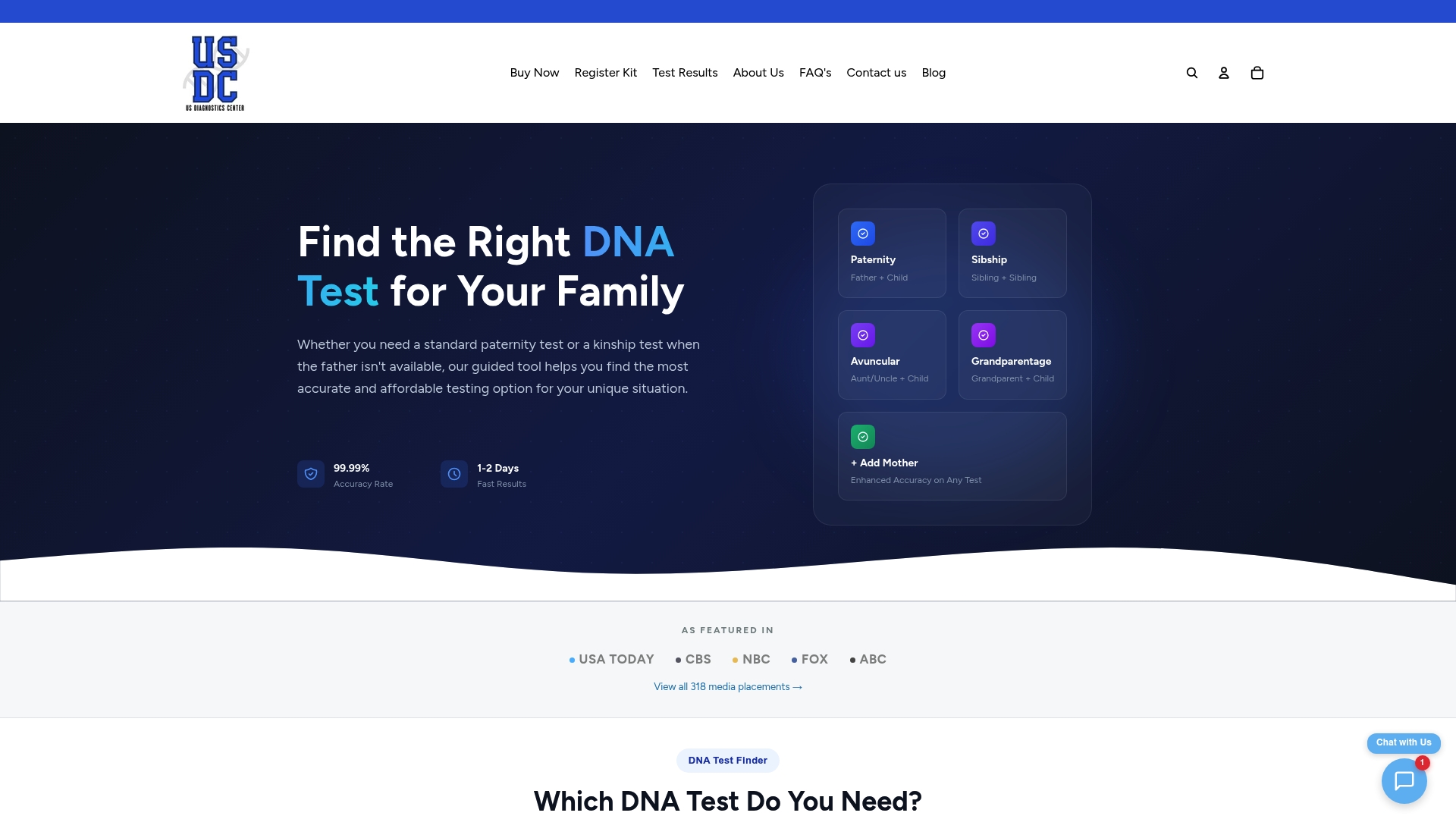
The home paternity kit runs $79 and compares up to 28 genetic markers using a simple cheek swab, with a prepaid return envelope included in every order. Lab processing takes 2 to 3 business days, with most orders completing in 7 to 10 business days from checkout to results. If the case involves extended family instead of a straightforward two-person comparison, kinship testing options cover maternity at $129 and sibling, grandparent, or aunt/uncle testing at $139, all useful when a 0% result raises questions about which relative is actually the biological match.
If the result needs to hold up in a custody case or other legal proceeding, legal chain-of-custody testing documents sample handling from collection through lab receipt. US Diagnostics Center does not offer prenatal, immigration, or ancestry testing. For guidance on which retest or expanded panel fits your specific report, contact customer support before placing a new order, or browse the full paternity testing lineup to compare options directly.
Sources
- DNA Paternity Test: Procedure, Accuracy & Results — Cleveland Clinic
- Paternity Test — Cuyahoga County
- DNA paternity testing — Wikipedia
- NEJM discussion of genetic testing edge cases
FAQ
What percentage counts as a positive paternity test?
A positive result, meaning the man is not excluded, typically falls between 99% and 99.99%.
What percentage of paternity tests come back negative?
There's no widely published industry-wide rate, since it depends heavily on why the test was ordered in the first place, such as routine confirmation versus a specific dispute.
Are paternity tests ever 100%?
No. Even a full genetic match across every marker tested results in a probability like 99.99%, not 100%, because Bayes theorem requires an assumed population baseline that keeps the figure just under absolute certainty.
What does a DNA test look like if you're not the father?
US Diagnostics Center's home paternity kit and expanded kinship panels can help confirm or clarify that result if you want a second comparison.
Recommended
- What a 99.99% Probability of Paternity Actually Means
- Paternity Test 0% Probability: 7 Steps to Take Next
- How Accurate Are Home Paternity Tests: What the Numbers Mean
- How to Read Paternity Test Results: DNA Report Explained
This article is part of our Paternity Testing: The Complete Guide guide.


0 comments