

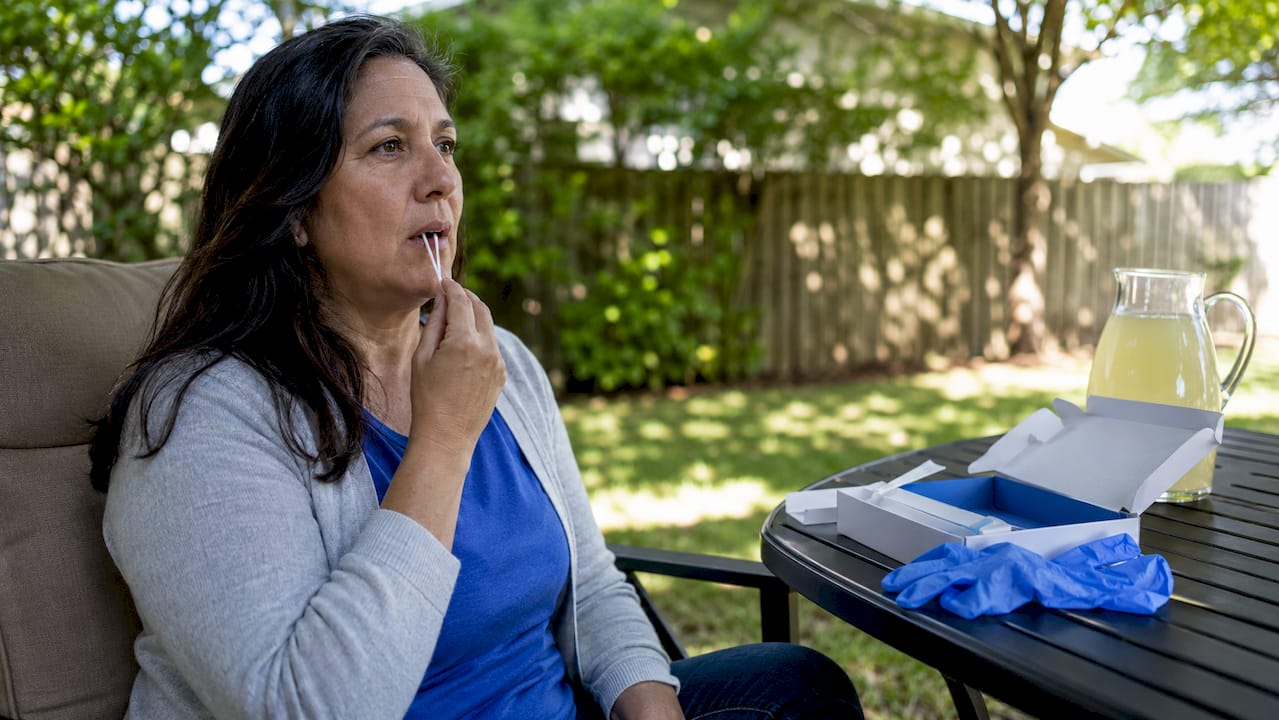
Collecting a DNA sample at home is defined as obtaining genetic material from your own cheek cells using a sterile buccal swab, then shipping that sample to an accredited laboratory for analysis. The buccal swab, the standard industry term for a cheek swab, is the most widely accepted self-collection method for paternity testing, kinship testing, and genetic health screening. Labs like TruMe Labs and Labcorp process home-collected buccal swabs with the same analytical rigor as clinic-collected samples. When you follow the correct home DNA sample collection steps, the results are just as reliable as those from a medical office visit.
What tools and materials do you need to collect a DNA sample at home?
A standard home DNA test kit contains everything required for a successful collection. Kit contents typically include sterile cheek swabs, collection tubes or drying bags, a prepaid shipping bag, identification labels, and a printed instruction sheet. Some kits include preservative liquids or double swabs for collecting samples from multiple participants, such as a child and an alleged father in a paternity test.
Beyond the kit itself, a few additional items improve the process. Disposable gloves prevent skin oils from contaminating the swab tip. A mirror helps you locate the inner cheek surface, which improves sample quality when you are collecting your own sample. A clean, flat workspace keeps packaging materials organized and reduces the risk of mix-ups between multiple participants' samples.
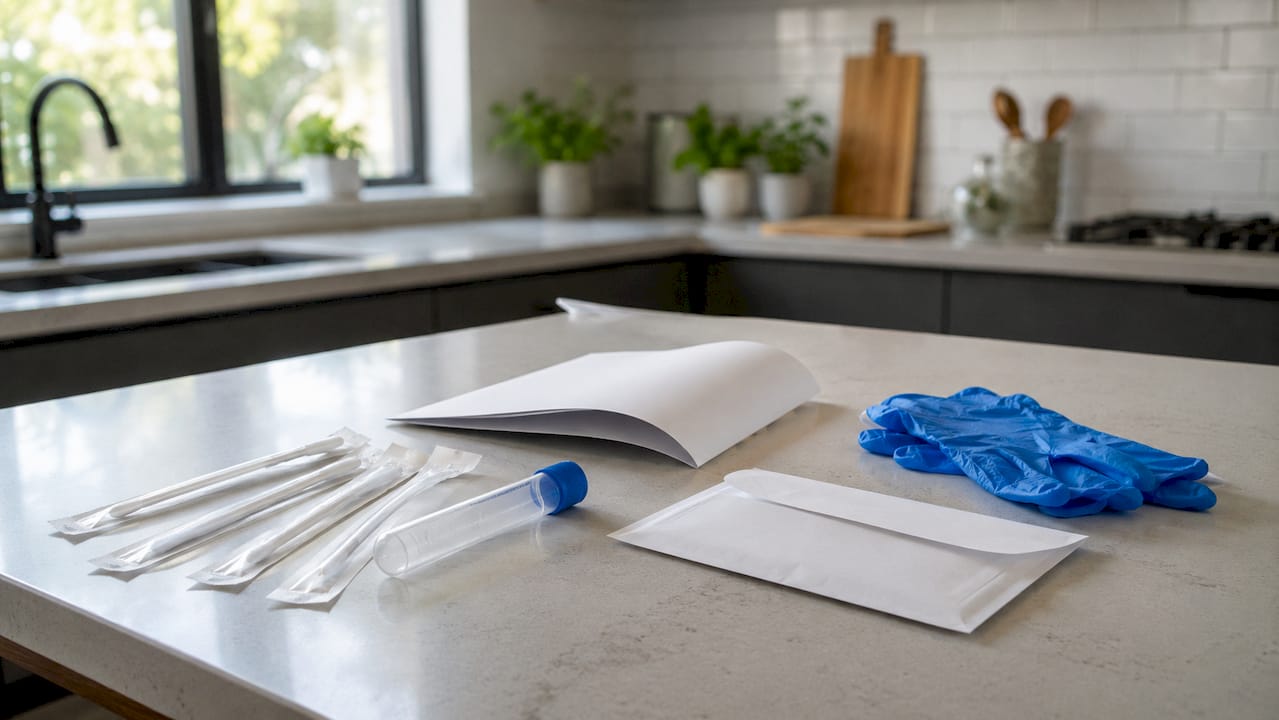
Preparation checklist before you begin
Preparation is as important as the collection itself. Follow these steps before opening the kit:
- Avoid eating, drinking, smoking, or chewing gum for at least 30 minutes before collecting. Contamination from food or drink lowers DNA quality and can affect test accuracy.
- Wash your hands thoroughly with soap and water, then dry them completely.
- Activate the test online if your provider requires it. Some kits require online activation before sample submission to link your sample to your account and confirm proper processing.
- Read all instructions in the kit before touching any materials.
Comparison of common home DNA kit types
| Kit type | Swabs included | Drying method | Best use |
|---|---|---|---|
| Standard paternity kit | 2 per person | Air dry, drying bag | Paternity, kinship testing |
| Ancestry/health kit | 1 saliva tube or 2 swabs | Sealed tube with preservative | Genetic health, ancestry |
| Legal admissible kit | 2 per person, witnessed | Chain of custody envelope | Court proceedings |
| Grandparentage kit | 2 per person | Air dry, drying bag | Grandparent-grandchild testing |
What are the step-by-step instructions to properly collect a DNA sample at home?
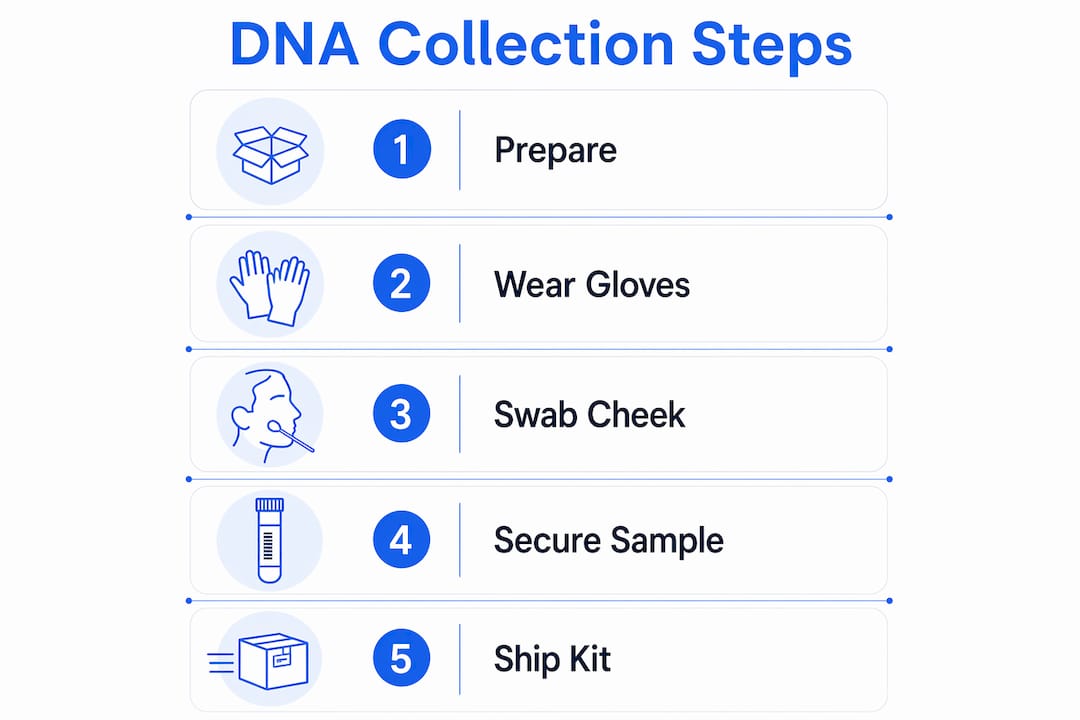
The home DNA testing process takes under 10 minutes when you follow each step in order. Rushing or skipping steps is the most common cause of sample rejection at the lab.
-
Prepare your environment (1–2 minutes). Clear a clean, dry surface. Put on disposable gloves. Lay out all kit materials without opening the swab packaging yet.
-
Activate the kit if required (2–3 minutes). Log in to your provider's portal and register the kit ID before proceeding. This links your sample to your profile in the lab's system.
-
Open the swab packaging carefully (30 seconds). Tear the wrapper from the end opposite the cotton tip. Hold the swab by the handle only. Never touch the cotton tip with your fingers or set it down on any surface.
-
Collect cheek cells (30–60 seconds per swab). Place the swab inside your cheek. Rub firmly and rotate against the inner cheek surface for 30–60 seconds. Apply enough pressure to feel slight friction. Repeat on the opposite cheek if the kit includes a second swab.
-
Air dry the swab (2–5 minutes). Hold the swab in the air or rest the handle end on a clean surface. Do not place the cotton tip against any surface. Most kits require the swab to be fully dry before sealing to prevent mold growth during shipping.
-
Place the swab in its container (30 seconds). Slide the dry swab into the sterile drying bag or collection tube. Seal it completely according to the kit instructions.
-
Label the sample (1 minute). Write the participant's full name, date of birth, and collection date on the label. Attach the label to the container, not to the outer bag. Proper labeling maintains correct identification and sample integrity during shipping.
-
Package and mail promptly (5 minutes). Place the sealed container in the prepaid shipping bag. Drop it in the mail the same day or the next morning. Samples kept at room temperature and shipped quickly are protected from environmental degradation.
Pro Tip: Use a mirror when swabbing your own cheek. Seeing the inner cheek surface helps you apply the swab to the correct area and collect enough cells for a valid result.
What common mistakes should you avoid during home DNA sample collection?
Contamination and improper handling are the two leading causes of sample rejection. Knowing what goes wrong helps you avoid repeating a collection.
Mistakes that invalidate a sample:
- Touching the swab tip. Contamination from skin contact compromises sample quality and test validity. Always hold the handle end.
- Eating or drinking before collection. Food particles and beverages introduce foreign DNA and lower the concentration of your own cheek cells.
- Sealing a wet swab. Moisture trapped in a sealed bag promotes bacterial growth, which degrades the DNA before it reaches the lab.
- Incorrect or missing labels. Unlabeled samples cannot be processed. Labs will discard them or request a retest.
- Delaying shipment. Leaving the sample in a warm car or on a windowsill accelerates DNA degradation. Ship the same day whenever possible.
What to do if something goes wrong:
If you touched the swab tip accidentally, do not use that swab. Most kits include a spare. If your kit has only one swab per participant and it was contaminated, contact the testing company directly for a replacement swab before submitting anything. If a swab arrived wet or damaged in the kit packaging, report it to the provider before opening it. Reputable providers will send a replacement kit at no charge.
Pro Tip: If you are unsure whether your collection was done correctly, call the testing company's support line before mailing the sample. Submitting a doubtful sample costs time and may require a full retest.
How does a buccal swab compare to other DNA sample types?
A buccal swab is the preferred collection method for home DNA testing because it is non-invasive, safe, and suitable for all ages, including infants. Blood draws require a trained phlebotomist and clinic visit. Hair samples need the root attached to contain nuclear DNA, and loose shed hairs often fail. Nail clippings and saliva tubes are accepted by some providers but are less standardized across labs.
The most important clarification for anyone worried about accuracy: a properly collected buccal swab contains the same genetic information as a blood sample. The DNA in your cheek cells is identical to the DNA in your blood cells. What determines accuracy is the laboratory's analytical process and the number of genetic markers tested, not the collection method.
"The accuracy of DNA testing is dependent more on lab analytical processes and the number of genetic markers tested than on the collection method itself. A properly collected buccal swab contains the same genetic information as a blood sample." — TruMe Labs
For a deeper look at how buccal swab collection fits into the broader testing process, US Diagnostics Center provides a full glossary entry covering terminology and procedure.
Sample type comparison
| Sample type | Invasiveness | Ease of home collection | Accepted for paternity | Typical accuracy |
|---|---|---|---|---|
| Buccal swab | None | Very easy | Yes | High |
| Blood | High | Not recommended at home | Yes | High |
| Saliva tube | None | Easy | Some providers | High |
| Hair with root | Low | Moderate | Limited providers | Moderate |
| Nail clippings | None | Easy | Rare | Lower |
For context on how to prepare for DNA testing across different sample types, GeneMatrix offers a step-by-step preparation guide that covers accuracy factors in detail.
Key takeaways
Collecting a DNA sample at home with a buccal swab is accurate, non-invasive, and reliable when you follow proper preparation, collection, and shipping steps.
| Point | Details |
|---|---|
| Buccal swab is the standard method | Rub the sterile swab inside the cheek for 30–60 seconds to collect enough cells. |
| Preparation prevents contamination | Avoid food and drink for 30 minutes before collection and always hold the swab by the handle. |
| Labeling and shipping matter | Label every sample with full name and date, then ship at room temperature on the same day. |
| Lab process drives accuracy | A properly collected cheek swab contains the same genetic data as a blood sample. |
| Kit type should match your purpose | Legal proceedings require a chain-of-custody kit; personal testing uses a standard home kit. |
What I have learned from watching people collect DNA samples at home
Most collection errors are not careless. They come from people who read the instructions once, felt confident, and then moved too fast. The most common mistake I see is touching the swab tip while trying to open the packaging. It happens in a split second, and most people do not realize it until they are already sealing the bag.
The second pattern is skipping the 30-minute food and drink restriction. People assume it is a minor precaution. It is not. Foreign material in the mouth genuinely affects the concentration of cheek cells on the swab, and labs do flag low-quality samples. A retest costs time and, depending on the provider, additional fees.
What I find genuinely reassuring about the home DNA testing process is how well-designed modern kits are. US Diagnostics Center has refined their home DNA test kits to minimize user error. The instructions are clear, the materials are sterile, and the packaging is straightforward. You do not need a medical background to do this correctly. You need to slow down, follow the steps in order, and mail the sample the same day. That is genuinely all it takes.
— Todd
How US Diagnostics Center makes home DNA testing straightforward
US Diagnostics Center currently offers home DNA test kits designed for paternity, grandparentage, sibling, and kinship testing, all with clear collection instructions included. Every kit uses the buccal swab method, and results are delivered within 2–3 business days. Expedited processing is available for urgent cases. For situations requiring legal documentation, a legal DNA test with witnessed sample collection and documented chain of custody is required; such tests are offered by accredited providers in the DNA testing industry.
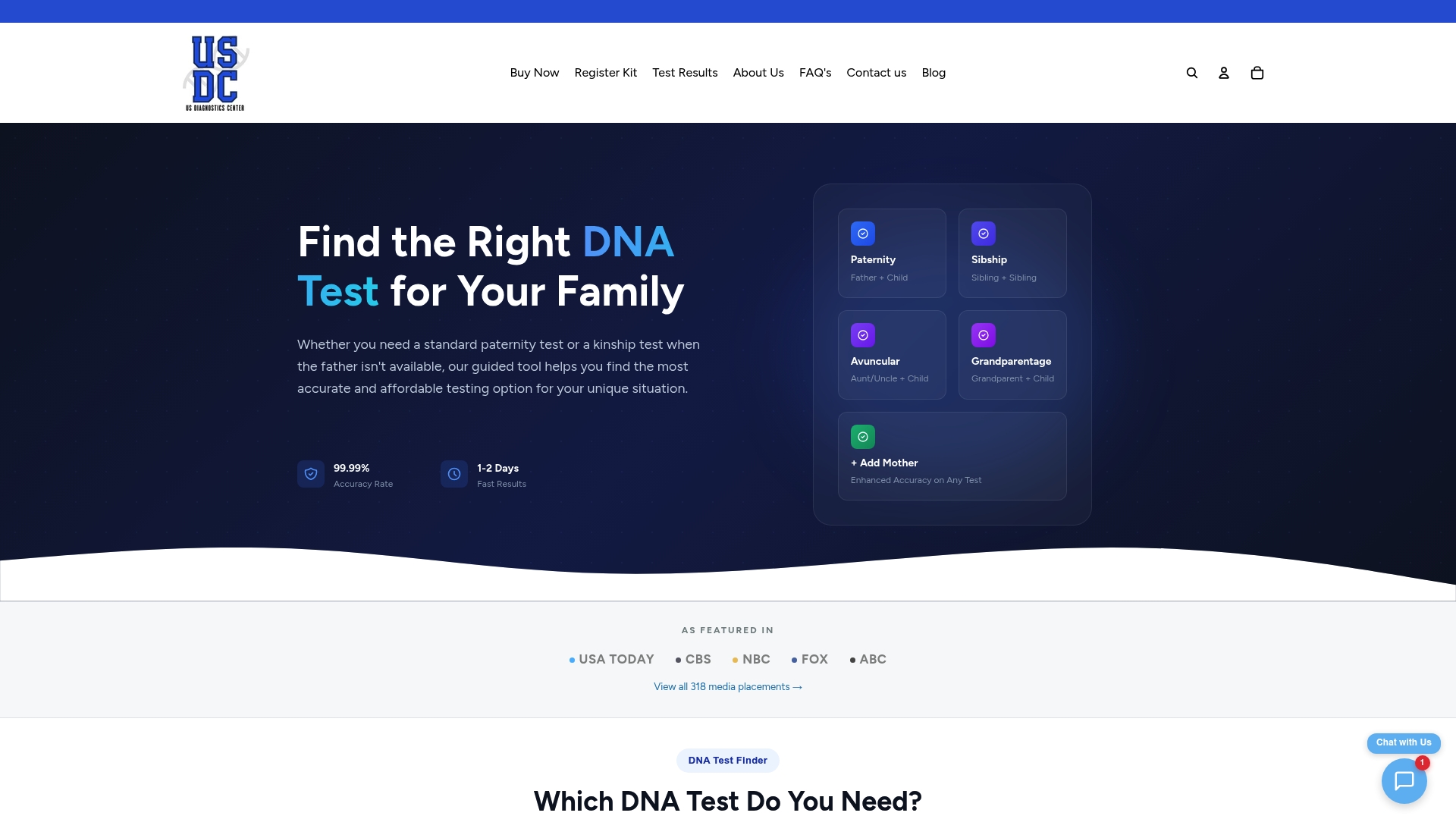
Whether you need a personal answer or information about the right test for your specific situation, US Diagnostics Center's home DNA test kits are a clear, reliable starting point.
FAQ
What is a buccal swab and why is it used for home DNA collection?
A buccal swab is a sterile cotton-tipped applicator used to collect cheek cells from the inner mouth. It is the standard home collection method because it is non-invasive, painless, and produces the same genetic data as a blood sample.
How long does it take to collect a DNA sample at home?
The full collection process takes under 10 minutes. Each swab requires 30–60 seconds of firm rubbing against the inner cheek, followed by a brief air-drying period before sealing.
Can a home-collected DNA sample be used in court?
A standard home kit is not court-admissible. Legal proceedings require a chain-of-custody kit collected under witnessed conditions. For court-admissible results, a legal DNA test with witnessed collection and documented chain of custody is required; contact an accredited legal testing provider for those services. US Diagnostics Center currently offers home DNA test kits for personal knowledge.
What happens if I contaminate the swab tip?
Do not use a contaminated swab. Use the spare swab included in the kit, or contact your provider for a replacement before submitting the sample.
Does the collection method affect DNA test accuracy?
No. Test accuracy depends on the lab's analytical process and the number of genetic markers tested, not on whether the sample was collected at home or in a clinic.

0 comments