

TL;DR:
- Legal DNA tests are court-admissible and require collection at approved centers with chain-of-custody procedures, while home tests are for personal use and involve self-collection. Preparation for legal tests includes ID verification and following strict collection protocols, whereas home testing only needs careful swabbing and sealing. People often mistake the inapplicability of home tests for legal cases, as only legally conducted tests provide valid court evidence.
DNA testing is defined as the process of collecting a biological sample and submitting it to a certified laboratory for genetic analysis to determine relationships or health-related information. The process is more straightforward than most people expect. Whether you need results for a paternity case, a family question, or personal curiosity, understanding how to do a DNA test correctly from the start saves time, money, and frustration. The key distinction that shapes every decision is whether you need a legally admissible result or a personal one. This guide walks through both paths clearly.
What types of DNA tests exist and how do they differ?
Two primary categories of DNA tests exist: legal tests and home tests. Each serves a different purpose, uses different collection protocols, and produces results with different legal standing.
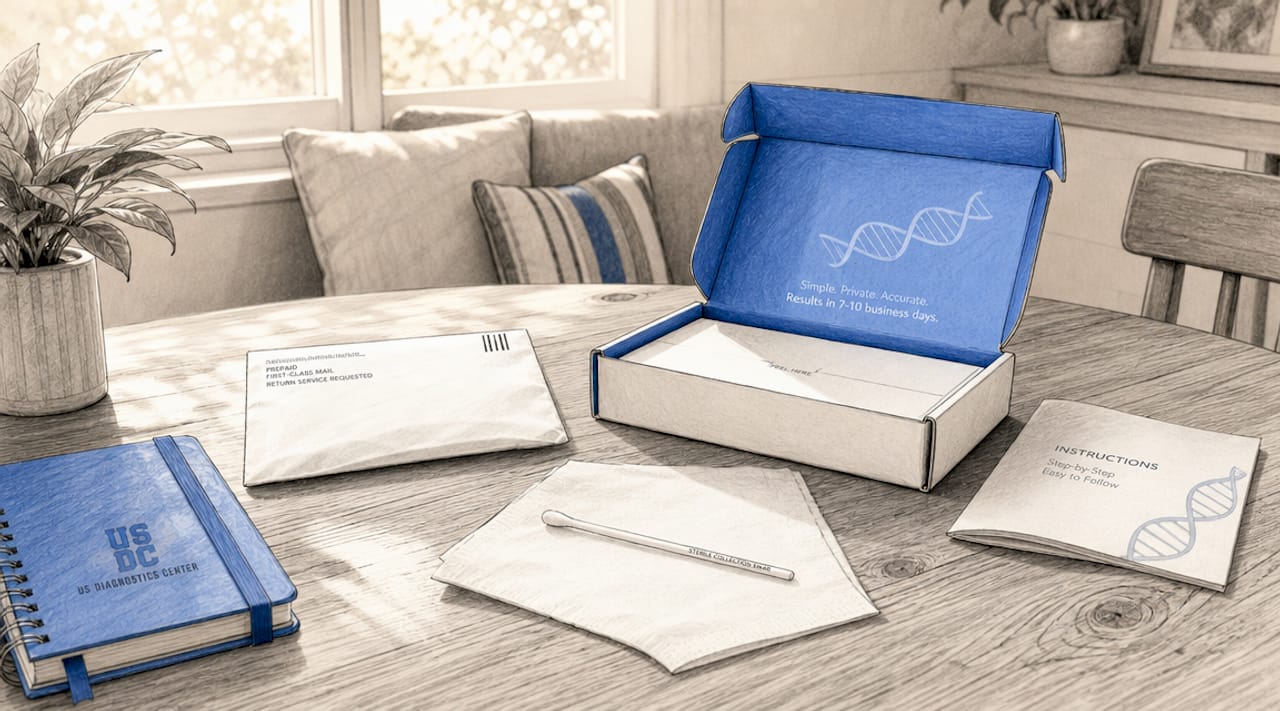
Legal DNA tests are court-admissible. They require collection at an approved facility, witnessed sample handling, and processing by a laboratory holding AABB accreditation. The American Association of Blood Banks (AABB) sets the accreditation standard accepted by U.S. courts and federal agencies. AABB accreditation mandates staff qualifications, proficiency testing, frequent audits, and documented chain-of-custody steps. Legal paternity tests analyze short tandem repeat (STR) markers, with industry standard testing typically covering 20 or more markers to establish biological relationships with a high degree of certainty.
Home DNA tests use the same underlying science but differ in one critical way: samples are self-collected without supervision. Home kits are faster and cheaper but cannot replace legal tests when court or immigration proof is needed.
| Feature | Legal DNA test | Home DNA test |
|---|---|---|
| Court-admissible | Yes | No |
| Sample collection | Witnessed, at approved site | Self-collected |
| Markers analyzed | 20 or more STR markers | Varies by test type |
| Turnaround time | 7–10 business days | 7–10 business days |
| Best for | Paternity cases, legal disputes | Personal use, family questions |
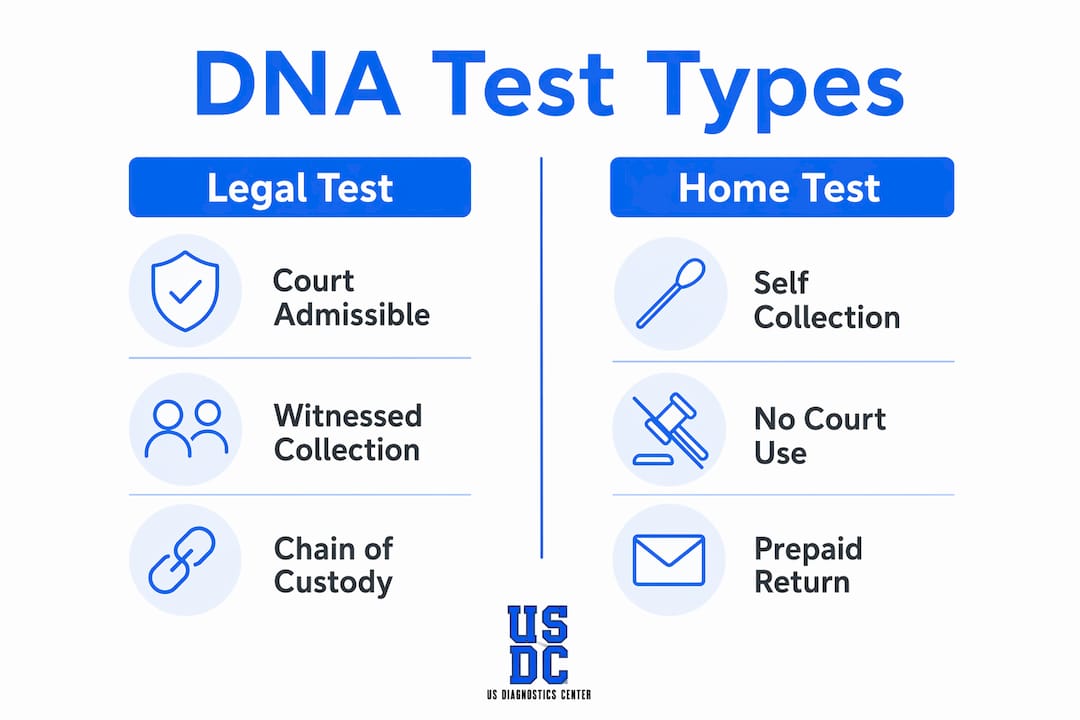
Pro Tip: If there is any chance you will need results in a legal proceeding, order a legal test from the start. Redoing the test later costs more and delays resolution.
What do you need to prepare before taking a DNA test?
Preparation determines whether your results are valid and usable. The requirements differ significantly between legal and home tests.
For a legal DNA test, you need:
- A government-issued photo ID for every person being tested (driver's license, passport, or state ID)
- Confirmation that the collection site follows chain-of-custody protocols
- Verification of the lab's accreditation status through the official AABB directory before submitting any sample
- Willingness to have samples collected by a neutral third party at an approved center
For a home DNA test, preparation is simpler but still matters:
- Avoid eating, drinking, smoking, or chewing gum for at least 30 minutes before swabbing
- Swabbing first thing in the morning without any prior oral activity produces the best DNA yield
- Use only the sterile swabs included in the kit; do not substitute household cotton swabs
- Keep swabs away from other people's saliva, pets, or contaminated surfaces
Choosing the right test for your goal is the most important preparation step. If you are unsure whether your situation requires a legal test, the STR vs. genealogy testing comparison at US Diagnostics Center explains the difference clearly.
Pro Tip: Verify AABB accreditation directly through the AABB's public directory. Some labs claim accreditation without holding it. A quick search takes two minutes and protects you from invalid results.
How is DNA testing done, step by step?
The steps for DNA testing follow a clear sequence, though the process differs between legal and home collection.
Legal DNA test process
- Order the test. Select a legal DNA test from an accredited provider. US Diagnostics Center's legal DNA test kits are coming soon — visit the legal DNA tests page to learn more.
- Schedule your appointment. Book a sample collection appointment at an approved collection center. All parties being tested must attend in person.
- Verify identity. At the appointment, a neutral collector checks government-issued photo ID for each participant. Chain-of-custody protocols may also include photographs and fingerprints to create an indisputable identity record.
- Collect the sample. The collector performs a buccal (cheek) swab on each participant using sterile equipment. The sample is collected in your presence and sealed immediately in a tamper-evident package.
- Secure transport. The sealed samples are shipped directly to the lab under documented chain-of-custody procedures. You do not handle the samples after collection.
- Receive results. Legal paternity tests return results in 7–10 business days from order to results. Results arrive as a formal report suitable for court submission.
Home DNA test process
- Order the kit. Select a home DNA test online. US Diagnostics Center's home paternity test starts at $79 and includes a prepaid return shipping envelope.
- Read the instructions fully before opening any swabs. Contamination is the most common cause of invalid results.
- Collect the sample. Rub the sterile swab firmly against the inside of your cheek for 30–60 seconds. Repeat with the second swab on the other cheek.
- Label and package. Label each swab with the correct participant's name. Place swabs in the provided envelopes and seal them completely.
- Mail the samples. Use the prepaid return envelope to send samples to the lab. Do not delay mailing, as swab quality can degrade over time.
- Receive results. Home paternity results from US Diagnostics Center arrive within 7–10 business days from order to results.
The most common mistakes during collection are touching the swab tip with your fingers, swabbing too briefly, and mixing up participant labels. Each of these errors can invalidate the sample and require a retest.
How do you understand your DNA test results?
DNA test results report genetic relationships in specific, standardized terms. Knowing what those terms mean helps you act on the results with confidence.
Paternity test results express findings as either an inclusion or an exclusion. An inclusion means the tested man is not excluded as the biological father, and the report will state a paternity probability. Accuracy from accredited labs reaches 99.999% when protocols are followed correctly. An exclusion means the tested man cannot be the biological father, and the probability is 0%.
When results are unclear, a lab may request a retest due to insufficient DNA or sample contamination. This is not a failure. It is the quality control process working correctly. Retesting with a fresh sample resolves the issue in most cases.
Privacy considerations deserve attention, especially for home tests. No universal law guarantees DNA result privacy, and some providers may share anonymized data or require consent for further research. Read the privacy policy of any provider before submitting a sample. Legal test results from accredited labs are handled under stricter confidentiality standards.
Key Takeaways
A legal DNA test requires accredited lab processing, witnessed sample collection, and chain-of-custody documentation to produce court-admissible results.
| Point | Details |
|---|---|
| Legal vs. home tests | Legal tests are court-admissible; home tests are for personal use only. |
| AABB accreditation matters | Verify lab accreditation through the official AABB directory before submitting samples. |
| Preparation affects accuracy | Avoid eating or drinking before swabbing; use only kit-provided sterile swabs. |
| Chain of custody is required | Witnessed collection, tamper-evident sealing, and ID verification protect legal results. |
| Results have defined meanings | Paternity results state inclusion or exclusion with a probability percentage, not a yes/no answer. |
Why the legal vs. home distinction is the decision most people get wrong
People come to me after they have already taken a home test and are now sitting in a lawyer's office being told the results are inadmissible. It happens more often than it should. The home test gave them a clear answer, but the court will not accept it. Now they have to retest, pay again, and wait again, often under time pressure from a custody hearing or child support proceeding.
The science in a home kit is legitimate. The problem is not the analysis. The problem is the absence of a verified chain of custody. A court cannot confirm who actually provided that sample. Anyone could have swabbed anyone. That is why chain-of-custody procedures exist, and why they are non-negotiable for legal use.
My consistent advice is this: if there is any legal dimension to your question, even a remote possibility, start with a legal test. The cost difference is modest. The difference in outcome can be enormous. A home test for personal peace of mind is a reasonable choice when no legal proceeding is involved. But conflating the two is a costly mistake that is entirely avoidable.
— Todd
US Diagnostics Center's DNA testing options, explained
US Diagnostics Center currently offers home DNA tests designed to fit specific family situations, from paternity to grandparentage to sibling testing. Legal and immigration testing options are coming soon.
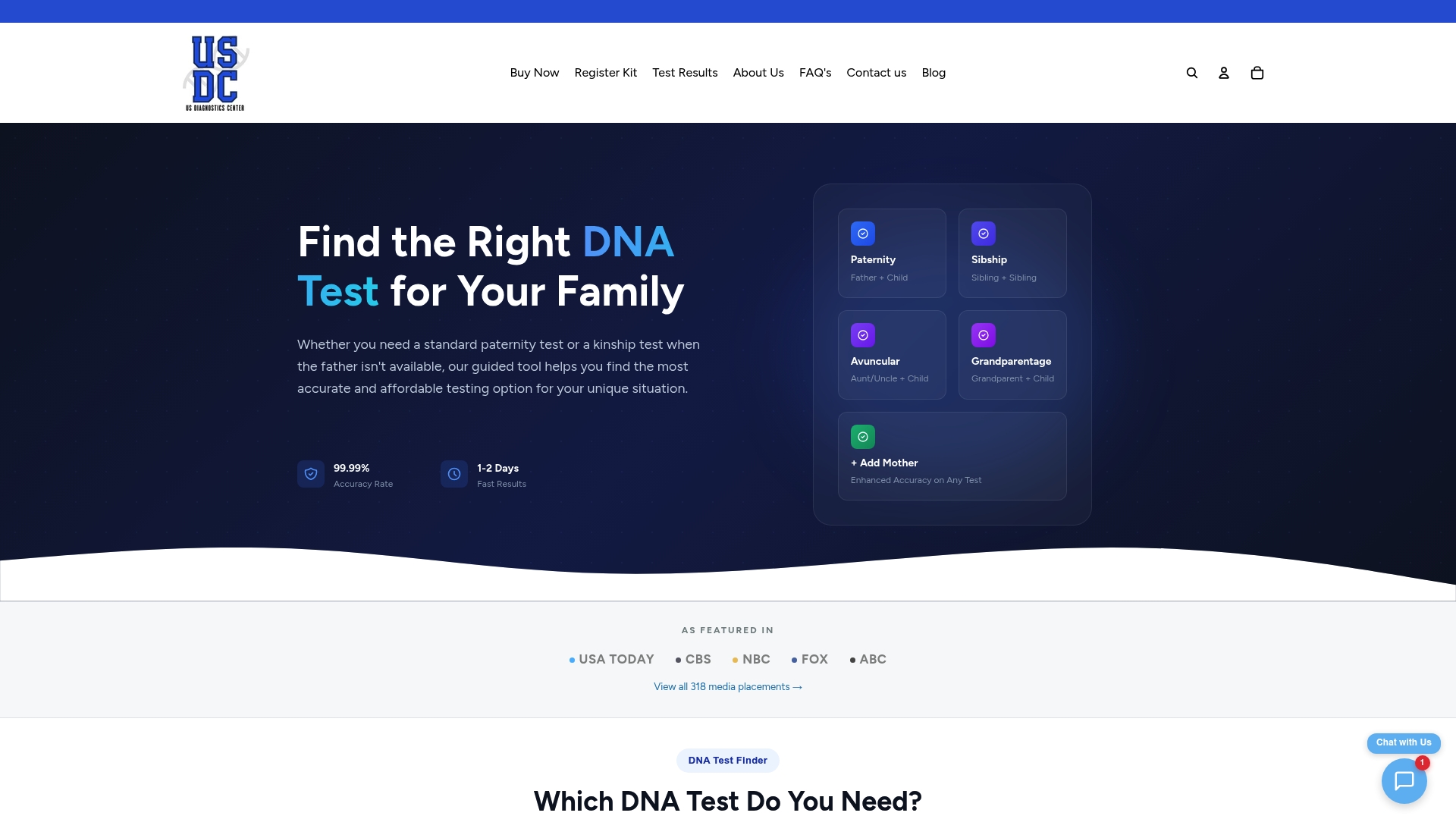
Home DNA tests analyze up to 28 STR markers and include a prepaid return shipping envelope for straightforward sample submission. Lab processing takes 2–3 business days, with standard order-to-results delivery in 7–10 business days. Home paternity testing starts at $79. For those with more complex kinship questions, legal DNA test kits are coming soon — visit the legal DNA tests page to learn more. A guided tool on the website helps you identify the most accurate and affordable test for your specific situation.
FAQ
What is the difference between a legal and home DNA test?
A legal DNA test uses witnessed sample collection and chain-of-custody documentation, making results court-admissible. A home DNA test is self-collected and valid for personal use only.
How long does it take to get DNA test results?
Legal paternity tests return results in 7–10 business days from order to results. Home paternity tests from US Diagnostics Center also return results within 7–10 business days from order to results.
What do I need to bring to a legal DNA test appointment?
Every participant must bring a government-issued photo ID such as a driver's license or passport. The collection center handles all other documentation and sample handling.
How accurate are DNA test results?
Accredited labs produce results with accuracy reaching 99.999% when proper protocols are followed. Sample contamination or failure to follow collection instructions are the primary causes of inaccurate results.
Can I use a home DNA test for court?
No. Home DNA test results are not court-admissible because samples are self-collected without witnessed chain-of-custody procedures. A legal test conducted at an approved collection site is required for any court or legal proceeding.
Recommended
- How DNA Testing Works: Step-by-Step Guide | USDC
- What Is Included in a DNA Test Kit: Full Guide | USDC
- Best Paternity Test Kit 2026: Honest Side-by-Side Comparison | USDC
- USDCTest | DNA Paternity Testing for Peace of Mind
This article is part of our Understanding DNA Testing: How It Works and What to Expect guide.


0 comments