

Same day paternity testing is defined as a DNA verification process where samples are collected, submitted directly to a lab, and processed under expedited conditions to deliver results within 24 hours or less. The standard method is a buccal swab, which collects cheek cells in roughly 30 seconds per person. Providers like US Diagnostics Center and Labcorp offer expedited processing, but achieving true same day results requires more than just a fast lab. The entire process, from sample collection to direct lab drop-off, must be executed correctly. Skipping any step, especially chain of custody documentation for legal tests, can invalidate results entirely.
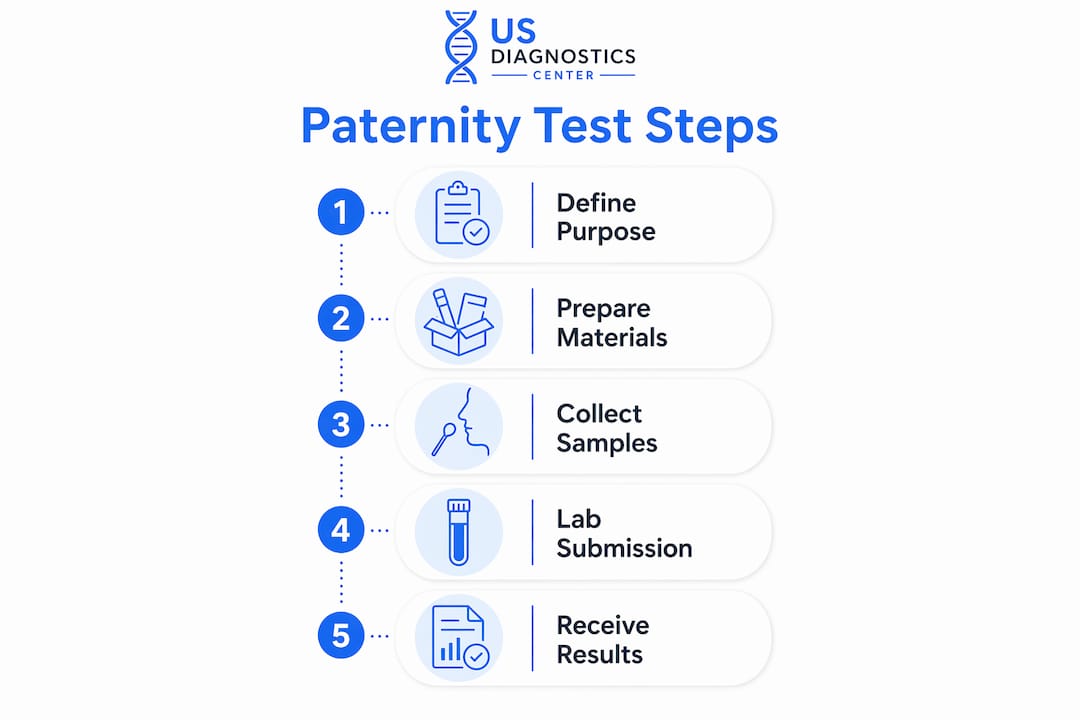
What are the same day paternity testing steps?
The same day paternity testing steps divide into two distinct tracks: informational and legal. Knowing which track applies to your situation before you begin determines every subsequent decision.
Informational tests are for personal peace of mind. They do not require witnessed collection or chain of custody documentation. At-home kits work for this purpose, and results can arrive faster because the procedural requirements are minimal.
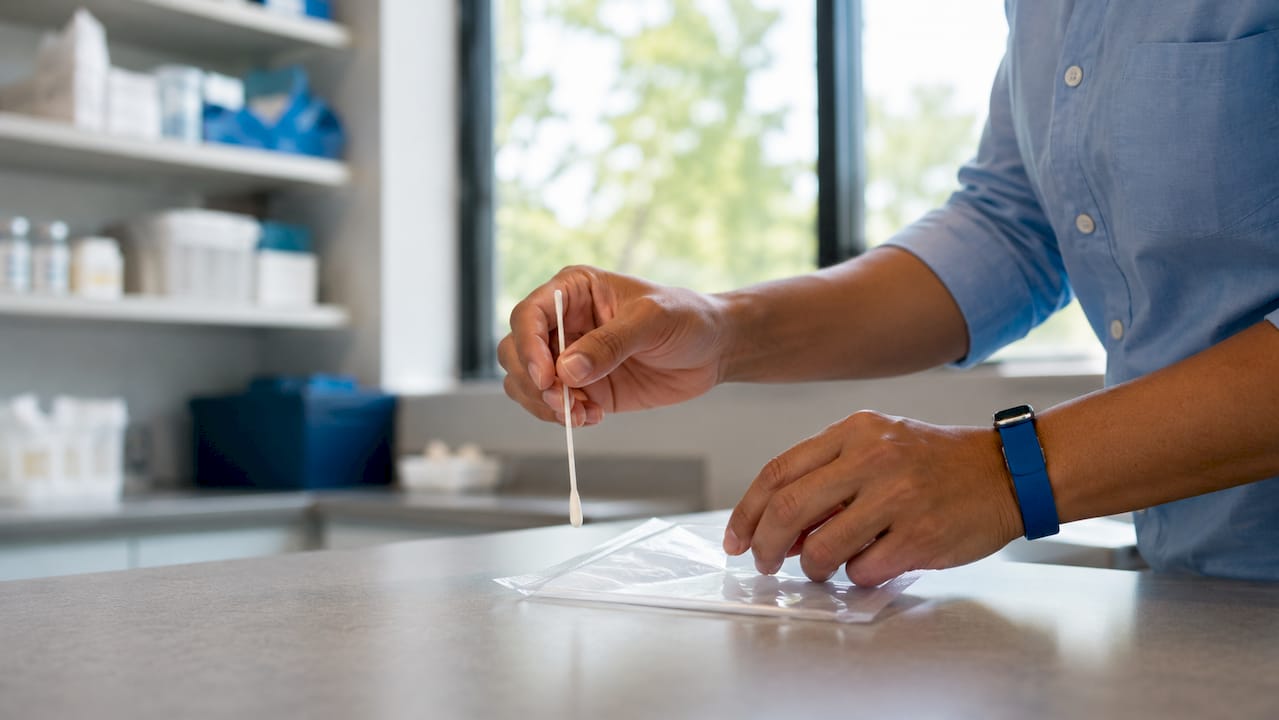
Legal tests are required for court proceedings, child support cases, or government filings. These tests require certified collection at an approved facility, photo identification for all parties, and an unbroken chain of custody from collection through reporting. Legal paternity tests require this documented trail to be court-admissible. Missing a single step in that trail renders the results legally worthless.
| Requirement | Informational test | Legal test |
|---|---|---|
| Photo ID required | No | Yes, for all parties |
| Witnessed collection | No | Yes, certified collector |
| Chain of custody forms | No | Mandatory |
| At-home kit eligible | Yes | No |
| Court-admissible | No | Yes |
| Typical cost | Lower | $300–$500 plus collection fees |
Choosing the wrong track wastes time and money. If there is any chance results will be needed in court, treat the test as legal from the start.
Pro Tip: Call the collection facility before arriving. Confirm they are AABB-accredited and can process samples under expedited conditions. Not every clinic offers rush processing.
How to prepare before you collect samples
Preparation is the step most people skip, and it is the most common reason same day results fall through. Every required item must be in hand before collection begins.
For a legal test, you need government-issued photo ID for the alleged father, the mother (if participating), and a legal guardian if the child is a minor. You also need the chain of custody forms provided by your testing provider, tamper-evident swab packaging, and a scheduled appointment at a certified collection site. Walk-in availability varies by facility, so calling ahead is not optional.
For an informational test, the preparation is simpler. You need the swab kit, clean hands, and the ability to avoid eating, drinking, or chewing gum for at least 30 minutes before collection. Residue in the mouth can degrade the DNA sample and force recollection.
Direct lab drop-off is non-negotiable for same day results. Mailing samples disqualifies same-day turnaround because transit time alone exceeds 24 hours. Identify a certified collection facility that is co-located with or directly connected to the processing lab. US Diagnostics Center offers guidance on locating accredited collection sites that support expedited submission.
Pro Tip: Prepay for rush processing when you book your appointment. Labs prioritize samples tied to confirmed expedited orders. Showing up and requesting rush service at the counter often results in standard processing instead.
Step-by-step sample collection and submission procedure
Correct collection technique is the single biggest variable under your control. Poor specimen quality causes labs to reject samples and request recollection, which eliminates any chance of same day results.
Follow these steps exactly:
- Confirm no food, drink, or tobacco for 30 minutes before collection. Rinse the mouth with water if needed.
- Open the swab kit without touching the cotton tip. Contamination from handling invalidates the sample.
- Swab the inner cheek by rotating the swab firmly against the inside of one cheek for approximately 30 seconds. Repeat with a second swab on the other cheek.
- Air-dry the swab for 30–60 seconds before placing it in the labeled envelope. Moisture causes bacterial growth that degrades DNA.
- Seal the tamper-evident envelope and sign across the seal. For legal tests, the certified collector also signs and dates the seal.
- Complete the chain of custody form in full. Record the collector’s name, collection location, date, and time. All parties present must sign.
- Package all envelopes in the provided outer mailer with the completed chain of custody form included.
- Deliver samples directly to the lab on the same day as collection. Do not leave samples in a vehicle or at room temperature for extended periods.
Chain of custody protocols include physical handling logs and tamper-evident packaging to confirm samples remain uncontaminated throughout the process. Accredited labs verify seals and signatures upon receipt before processing begins.
Pro Tip: Take a photo of the sealed, signed envelope before handing it over. This creates a personal record of the seal condition at the time of submission, which can be useful if any dispute arises later.
How do labs process samples for same day results?
Lab processing speed depends on accreditation, staffing, and whether rush protocols are active. Understanding what happens inside the lab helps you ask the right questions before you commit to a provider.
After receipt, the lab verifies the chain of custody documentation and checks tamper-evident seals. Any discrepancy at this stage triggers a hold or a recollection request. This verification step is why proper documentation is the biggest bottleneck in urgent testing, not the DNA extraction itself.
Once samples clear intake, technicians extract DNA from the cheek cells and analyze genetic markers at multiple locations across the genome. The comparison between the child’s markers and the alleged father’s markers produces a probability of paternity. A result of 99% or higher establishes legal fatherhood in most jurisdictions. A result of 0% excludes paternity entirely.
| Processing type | Turnaround after lab receipt |
|---|---|
| Standard | 2–5 business days |
| Expedited or rush | 24–48 hours |
| Same day (direct drop-off) | Same business day or next morning |
AABB accreditation signals that a lab meets the standards required for court-admissible results. US Diagnostics Center holds AABB accreditation, which means its results carry legal weight in court proceedings and government filings.
- Confirm the lab offers rush processing before submitting samples.
- Ask whether same day results are delivered electronically or require pickup.
- Verify the lab’s cutoff time for same day drop-off submissions.
- Request confirmation that your chain of custody forms are complete upon receipt.
What to do after receiving your paternity test results
Results arrive as a formal report, not a simple yes or no. Knowing how to read and act on that report determines whether the test serves its intended purpose.
The report states a probability of paternity as a percentage. A result at or above 99% confirms paternity with the legal confidence required in most courts. A result of 0% is a definitive exclusion. Any result between these values is unusual and typically indicates a sample quality issue or a need for additional testing.
For legal use, verify that the report includes the lab’s accreditation number, the chain of custody reference number, and the signatures of the certified collector and lab director. Missing any of these elements can make the results inadmissible. Courts and agencies like child support enforcement offices require all documentation to be intact before accepting results.
Do’s after receiving results:
- Store the original report in a secure location.
- Request a certified copy if submitting to a court or government agency.
- Confirm the chain of custody reference number matches your submission paperwork.
- Contact the lab immediately if any information on the report appears incorrect.
Don’ts after receiving results:
- Do not submit photocopies to courts without confirming the agency accepts them.
- Do not discard the chain of custody forms after receiving results.
- Do not assume an informational test result carries legal weight. It does not.
Pro Tip: If results will be used in a child support or custody proceeding, consult a family law attorney before submitting them. An attorney can confirm the documentation meets your jurisdiction’s specific admissibility requirements.
The probability of paternity threshold varies slightly by state, so confirming local standards before filing protects against procedural delays.
Key Takeaways
Achieving same day paternity results requires correct sample collection, direct lab drop-off, and complete chain of custody documentation from the first step to the last.
| Point | Details |
|---|---|
| Define your test purpose first | Legal and informational tests have different requirements; choose the correct track before collecting samples. |
| Direct drop-off is required | Mailing samples disqualifies same day results; deliver directly to the lab on collection day. |
| Documentation is the bottleneck | Incomplete chain of custody forms cause delays or rejection, not slow DNA extraction. |
| Rush processing must be pre-arranged | Prepay for expedited processing when booking to guarantee priority handling at the lab. |
| Results require verification | Confirm accreditation numbers and chain of custody references before submitting results to any court or agency. |
Why I always tell people to decide legal vs. informational first
The most common mistake I see is people collecting samples at home, mailing them in, and then discovering weeks later that those results cannot be used in their custody hearing. The frustration is real, and it is entirely avoidable.
The distinction between a legal paternity test and an informational one is not a technicality. It is the entire architecture of the process. If you need results in court, the chain of custody must be intact from the moment the swab touches the cheek. No amount of expedited lab processing fixes a broken chain of custody after the fact.
My advice is always the same: if there is even a 10% chance you will need these results for legal purposes, treat the test as legal from day one. The cost difference between an informational and a legal test is real, but it is far less than the cost of repeating the entire process after a court rejects inadmissible results.
Certified collection facilities are not an inconvenience. They are the mechanism that makes results legally defensible. Scheduling an appointment at an AABB-accredited site and prepaying for rush processing takes about 15 minutes. That investment protects the integrity of results that may carry significant legal and personal consequences.
— Todd
US Diagnostics Center’s expedited paternity testing options
US Diagnostics Center currently offers home DNA tests for personal knowledge. Expedited lab processing is available during checkout. Their guided approach helps you identify the right test for your specific situation, whether that involves a newborn, an alleged father who is unavailable, or a court filing with a tight deadline.
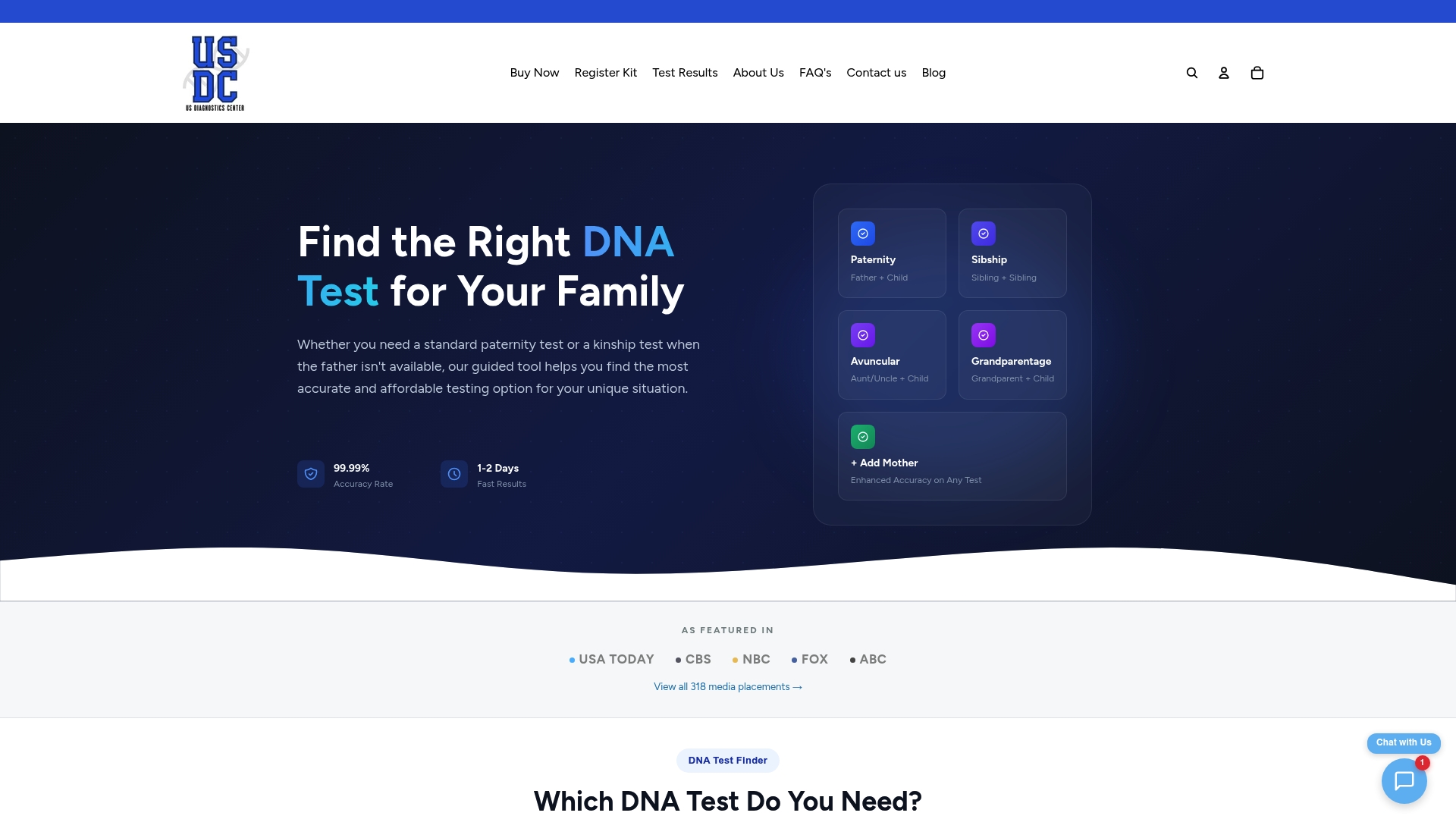
US Diagnostics Center’s rush paternity test service is designed for clients who cannot wait for standard turnaround times. Results carry a 99.99% accuracy guarantee and full chain of custody documentation. Contact US Diagnostics Center directly to confirm scheduling availability, collection site options, and expedited processing cutoff times for your area.
FAQ
What does same day paternity testing actually mean?
Same day paternity testing means samples are collected and delivered directly to a lab for processing within the same business day, with results issued within 24 hours. It requires direct drop-off at the lab, not mail submission.
Can I use an at-home kit for same day legal results?
No. At-home kits do not meet chain of custody requirements for court-admissible results. Legal tests require witnessed collection at a certified facility with full documentation.
How long does cheek swab collection take?
Cheek swab collection takes approximately 30 seconds per person. The total time at the collection facility, including paperwork, typically runs 15–30 minutes.
What probability confirms paternity legally?
A probability of 99% or higher establishes legal fatherhood in most jurisdictions. A result of 0% is a definitive exclusion of paternity.
What happens if my sample is rejected by the lab?
If a sample fails quality checks, the lab requests recollection. This eliminates same day results and restarts the process. Proper swab technique and dry packaging prevent most rejections.
Recommended
- Rush Paternity Test Results: Fast, Legal, and Accurate | USDC
- Paternity Testing: The Complete Guide | USDC
- At-Home Paternity Test: Cost & Accuracy | USDC
- Legal Paternity Test | Coming Soon | USDC
This article is part of our Paternity Testing: The Complete Guide guide.


0 comments