

Home DNA relationship tests cost less than clinical or court-ordered testing because a direct-to-consumer model strips out clinical overhead, high-volume labs spread fixed costs across thousands of samples, and personal-use testing skips the supervised collection and chain-of-custody documentation that legal tests require. At US Diagnostics Center, a home paternity test costs $79 and a home sibling, grandparent, or aunt/uncle test costs $139. Understanding why home DNA tests cost less at that level, and where the true cost differences show up, helps you match the right test to your actual situation without overspending on features you do not need.
Why home DNA tests cost less: the business model explained
The direct-to-consumer model is the single biggest reason affordable home DNA testing exists at its current price point. Eliminating clinical visits, healthcare provider billing, and insurance processing removes layers of administrative cost that traditional lab tests carry. A hospital-ordered genetic test routes through a physician, a billing department, and an insurance adjuster before the lab even processes your sample. A home kit skips all of that.
Centralized, high-throughput labs also reduce the per-test cost significantly. When a lab processes thousands of samples using the same automated pipeline, the fixed costs spread across a much larger volume. That efficiency passes directly to the consumer as a lower price.
Direct online ordering also reduces the marketing and distribution overhead built into pharmacy-shelf pricing. Kits shipped straight from the lab do not carry retail markup, in-store staffing costs, or third-party fulfillment fees.
The cost structure of a home DNA relationship kit typically includes:
- Sample collection materials: A cheek swab kit for each person being tested, included in the kit price
- Prepaid return shipping envelope: The kit ships with a prepaid return envelope so no separate postage is required
- Lab processing: Automated analysis of the samples at a centralized laboratory
- Results delivery: A secure digital report you can view online
At US Diagnostics Center, the $79 home paternity kit price includes the swab kit for both alleged father and child, the prepaid return shipping envelope, and lab analysis. There are no separate lab fees, no membership charges, and no required subscription to access your report.
Pro Tip: Before purchasing any home DNA kit, check whether the sticker price includes return shipping and lab processing. Some marketplace-sold kits charge separately for the return label, adding $10 to $20 to what looked like the total.
How does test technology affect the cost of relationship DNA kits?
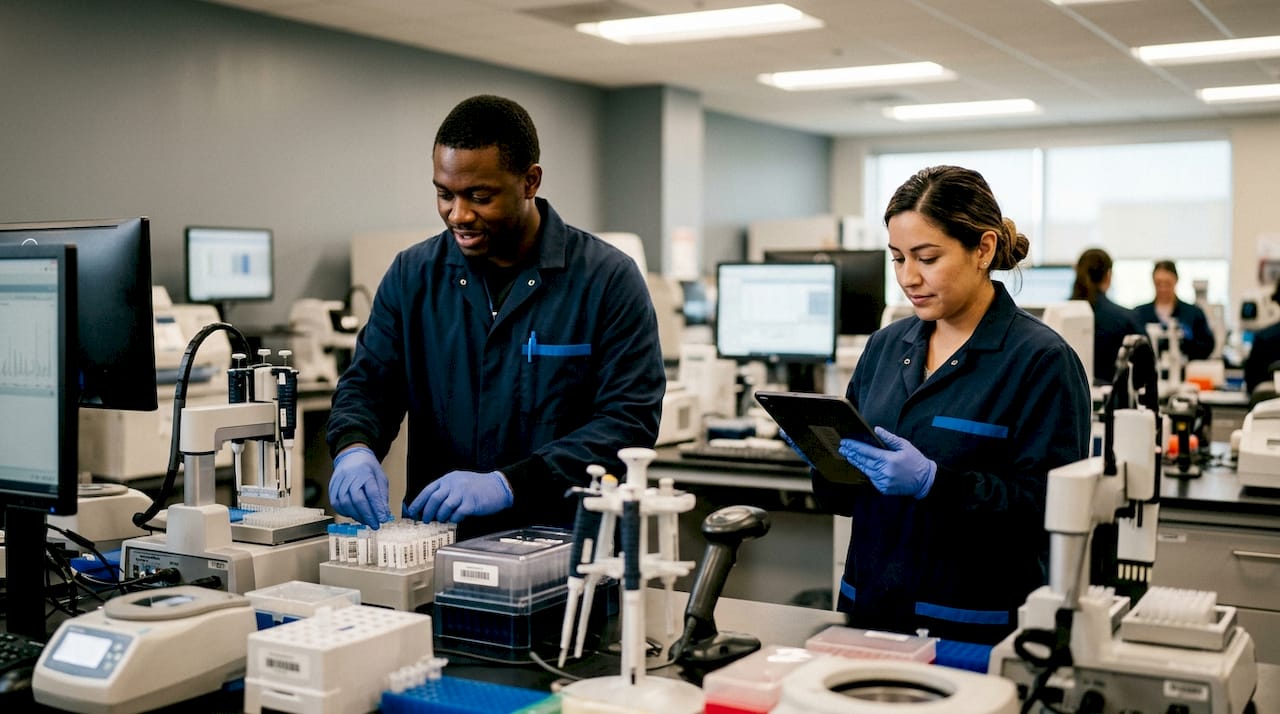
The genetic technology used for relationship testing is a major driver of both accuracy and price. Home paternity and kinship kits use short tandem repeat (STR) analysis of a defined set of genetic markers. That marker-based approach is the industry standard because it delivers court-grade statistical certainty for identity and relationship questions without the cost of sequencing every base pair in the genome.
US Diagnostics Center analyzes up to 28 genetic markers per sample. The industry standard for accredited relationship testing is 20 or more markers. More markers produce a stronger combined paternity index and reduce the chance of an inconclusive result on hard cases, but the underlying automation is what keeps the per-sample cost affordable. Once the marker panel is designed and the analytical pipeline is validated, running a thousand samples costs only marginally more per sample than running one hundred.
The table below shows how test purpose typically maps to technology and price for the relationship-testing category:
| Test purpose | Technology | Typical price range | Example USDC price |
|---|---|---|---|
| Home paternity | STR marker analysis | $79–$199 | $79 |
| Home maternity | STR marker analysis | $129–$249 | $129 |
| Sibling, grandparent, aunt/uncle | STR marker analysis with kinship index | $139–$399 | $139 |
| Court-admissible paternity | STR marker analysis + chain of custody | $300–$600 | Coming soon |
Choosing the right test for your actual need is the most direct way to control cost. A kinship DNA test for confirming a biological relationship uses the same STR technology as a paternity test with a different statistical model. You do not need a more expensive product to get an answer you can trust for personal knowledge.
What hidden costs affect the true affordability of home DNA tests?
The upfront price of a DNA kit is not always the total cost. Some platforms build in add-on fees, rush charges, or platform access charges that show up only after you have already paid for the kit. This is where a home DNA test price comparison gets misleading if you look only at the sticker number.
Common hidden costs to watch for across the industry include:
- Separate return shipping charges: Some kits do not include a prepaid return envelope, adding $10 to $20 to the actual cost of the test
- Rush or expedited processing: Faster lab turnaround is offered as an optional add-on and can add $50 to $200 to the base price depending on the provider
- Additional-person testing: Some kits price for two participants, then charge extra per additional person if a case needs a mother's sample or a second child
- Digital report add-ons: Certified or notarized copies of results, expedited email delivery, or physical mailed copies are sometimes billed separately
At US Diagnostics Center, the base kit price includes lab processing and the return envelope. Expedited processing is available as an optional add-on during checkout for time-sensitive situations. Standard order-to-results turnaround runs about 7 to 10 business days, and lab processing itself takes 2 to 3 business days once samples are received. Choosing standard delivery keeps the total cost at the sticker price.
Pro Tip: Calculate your realistic total, not just the kit price. If you know a case needs more than two participants or a faster turnaround, add those line items to your comparison before you decide which provider is actually the lowest cost.
How do legal requirements change what you pay for DNA tests?
Legal admissibility is the factor that most directly explains why some DNA tests cost significantly more than others. A home paternity test for personal knowledge and a court-admissible paternity test are not the same product, even though both start with a cheek swab.
Legal DNA tests cost more due to supervised sample collection, certified documentation, and identity verification required for admissibility in court proceedings. The price increase for legal tests compared to personal-use home kits typically ranges from $200 to $500. That premium covers a specific set of procedural requirements.
The key differences between personal-use and legal DNA tests are:
- Identity verification: Legal tests require government-issued photo ID for all parties at the time of collection. Home kits require no identity confirmation.
- Supervised collection: A neutral third party, typically a medical professional or authorized collector, observes and documents the sample collection process.
- Chain of custody documentation: Every step from collection to lab analysis is documented and signed. This creates a paper trail the court can verify.
- Certified lab reporting: Results are issued on official letterhead with laboratory certification details, formatted for submission to a court or government agency.
- Accreditation standards: Labs processing legal tests are typically expected to meet AABB accreditation standards, which set the quality benchmark for relationship DNA testing used in legal proceedings.
Chain of custody procedures and identity verification add complexity and cost that are entirely absent from home DNA kits. If you need results for a custody case, immigration petition, or inheritance dispute, a personal-use home kit will not serve that purpose regardless of its accuracy. The at-home paternity test is the right choice for personal knowledge. A court-admissible test is required when results must hold up in a formal proceeding.
Key Takeaways
Home DNA relationship tests cost less because the direct-to-consumer model, automated STR marker analysis, and centralized high-volume labs eliminate the clinical overhead and chain-of-custody procedures that make legal and clinical genetic testing expensive.
| Point | Details |
|---|---|
| Business model drives savings | Removing clinical visits and insurance billing cuts the largest cost components from DNA testing. |
| Technology determines price tier | STR marker analysis with 20 or more markers delivers court-grade accuracy at home-kit pricing because the lab pipeline is highly automated. |
| Hidden add-on costs matter | Rush processing, per-person fees, and separate shipping charges can quietly push a "cheap" kit above better-priced flat-fee providers. |
| Legal tests cost more by design | Court-admissible tests require supervised collection, chain of custody, and accredited-lab reporting. |
| Match the test to your need | Choosing the right test type avoids overpaying for legal procedures you do not need and undershooting when you do. |
The real cost question most people skip
People spend a lot of time comparing kit prices and almost no time asking what they actually need the results for. That is the question that determines whether a $79 home paternity kit is a good deal or the wrong product entirely.
I have seen this play out repeatedly. Someone buys a home paternity test for personal peace of mind, gets a clear result, and that is the end of it. Perfect use case. Then someone else buys the same kit hoping to use the results in a custody hearing, and the court rejects it because it lacks chain of custody documentation. The lower price cost them months of delay and the expense of redoing the test correctly through a supervised legal process.
The rush-fee issue is equally underappreciated. A low upfront price is genuinely attractive, but if you need results in three days and the base plan runs 7 to 10 business days, expedited processing charges will change your real total. That is not a hidden cost. It is a design choice you get to make at checkout, and it is worth knowing about before you decide which provider actually costs the least for your situation.
My honest recommendation: decide what you need the results for before you buy anything. Personal knowledge of a biological relationship requires a reliable, accurate home relationship test. Legal proceedings require a court-admissible test with proper documentation. Matching the test type to the actual purpose is how you get real value from home DNA testing, not just a low sticker price.
— Todd
Home DNA testing options from US Diagnostics Center
US Diagnostics Center offers a range of home DNA tests designed for personal biological relationship verification, with transparent flat-fee pricing and no hidden lab fees. Our lab analyzes up to 28 genetic markers — more than the industry standard of 20 or more — and delivers 99.99% inclusion probability on positive paternity results. Lab processing takes 2 to 3 business days once samples are received at the lab, with a total order-to-results window of approximately 7 to 10 business days. Expedited processing is available as an add-on during checkout for time-sensitive situations.
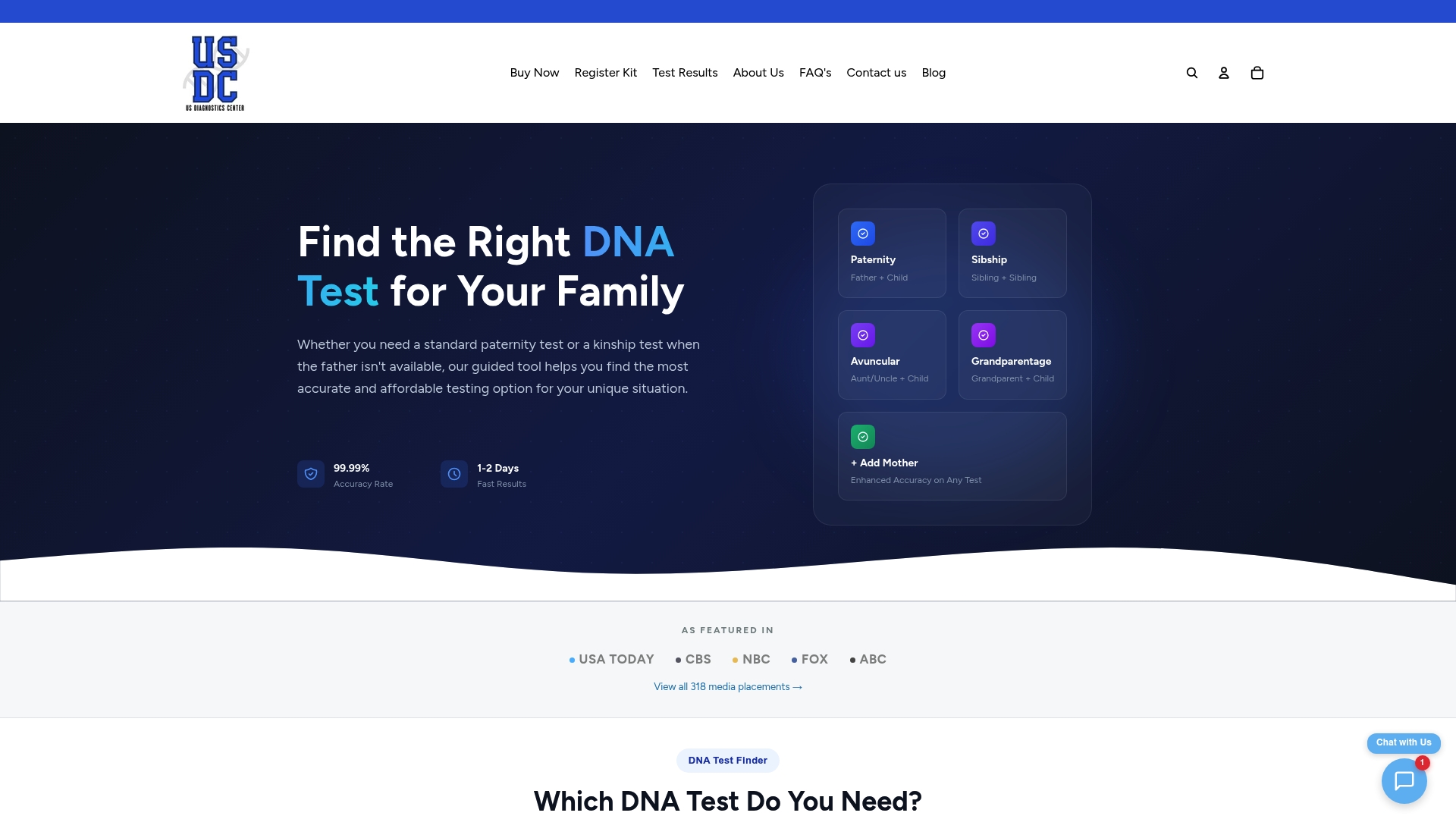
For those who may need court-admissible results in the future, USDC is expanding its offerings to include legal and immigration DNA testing (coming soon). Learn more about what distinguishes a home paternity test from a legal DNA test. Whether you need a personal-use result now or are planning ahead for a legally verified one, USDC is BBB Accredited and all results carry full confidentiality throughout the process.
FAQ
Why are home DNA relationship tests so much cheaper than clinical tests?
Home DNA relationship tests eliminate clinical visits, insurance billing, and healthcare provider fees by selling directly to consumers. Centralized, automated labs process large volumes of samples at low per-unit cost, which keeps prices down.
What is the typical price range for a home relationship DNA test kit?
Home paternity kits typically run $79 to $199, home maternity kits run $129 to $249, and kinship tests (sibling, grandparent, aunt/uncle) run $139 to $399 depending on marker count, statistical analysis, and turnaround options.
Do home DNA test prices include shipping and lab fees?
At USDC, the kit price includes the prepaid return shipping envelope and lab processing. Some marketplace providers charge separately for return shipping, expedited processing, or per-person fees when more than two people need to be tested, so it is worth reading the fine print.
When do I need a legal DNA test instead of a home kit?
A legal DNA test is required when results must be submitted to a court, government agency, or immigration authority. Legal tests include supervised collection, identity verification, and chain of custody documentation that home kits do not provide.
How fast are home paternity test results once samples reach the lab?
Lab processing takes 2 to 3 business days once the lab receives the samples. Total order-to-results turnaround for standard shipping is 7 to 10 business days. Expedited processing is available as an add-on during checkout when a faster turnaround is needed.
Recommended
- At-Home Paternity Test: Cost & Accuracy | USDC
- USDCTest | DNA Paternity Testing for Peace of Mind
- Kinship DNA Tests: Sibling, Grandparent & More | USDC
This article is part of our Understanding DNA Testing: How It Works and What to Expect guide.


0 comments