

TL;DR:
- Home DNA kits are processed in CLIA-certified laboratories through a sequence of sample collection, shipping, extraction, amplification, and analysis. Proper sample collection and registration are crucial to avoid delays and ensure accuracy, as lab technology provides over 99.5% technical accuracy. Turnaround time varies from 2 to 8 weeks, depending on sample quality, shipping speed, batch processing, and lab volume.
Home DNA kits get processed through a standardized sequence: you collect a saliva or cheek swab sample at home, ship it to a specialized laboratory, and trained technicians extract, amplify, and analyze your DNA using certified technology before delivering a digital report. The entire DNA kit processing workflow runs inside CLIA-certified laboratories, where quality controls govern every step from sample intake to final data output. Understanding this sequence helps you collect a better sample, set realistic expectations for turnaround time, and interpret your results with confidence.
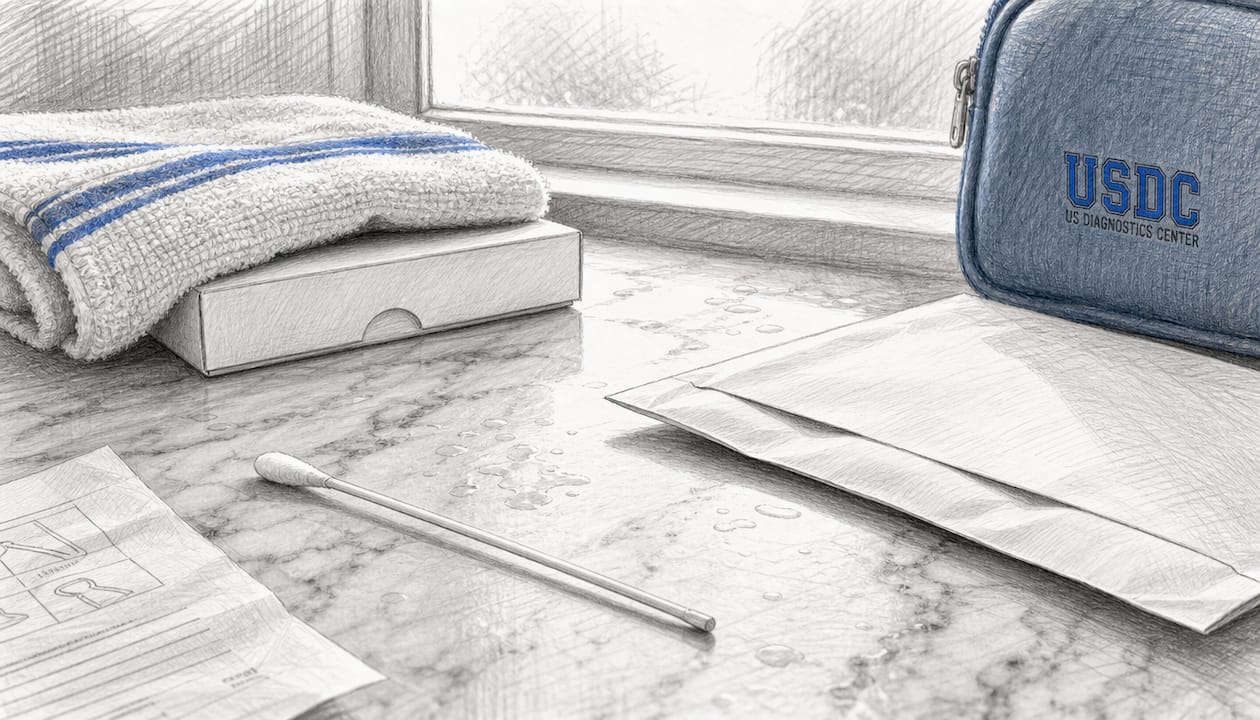
How home DNA kits get processed from collection to lab receipt
The first step in the home DNA testing procedure happens before the kit ever reaches a lab. You collect either a cheek swab or a saliva sample using the materials included in your kit. Both sample types contain buccal cells, which carry the nuclear DNA needed for analysis.
Proper collection technique matters more than most people realize. Eating, drinking, or smoking within 30 minutes before swabbing contaminates the sample and reduces the usable cell yield. That single mistake is the leading cause of resampling requests, which can double your total turnaround time. Following the step-by-step collection guide included with your kit eliminates most of these risks.
Common collection mistakes that cause sample failure include:
- Swabbing for too short a time (less than 30 seconds per cheek)
- Touching the swab tip with your fingers before use
- Sealing a wet swab inside the collection tube, which promotes bacterial growth
- Mislabeling or failing to register the kit online before shipping
Once sealed and registered, your sample ships back to the lab in the prepaid return envelope included with the kit. Transit time adds one to several days to the overall timeline, depending on your location and carrier speed.
Pro Tip: Register your kit online before dropping it in the mail. Labs use your registration to match your barcode to your account, and unregistered kits sit in a holding queue until the link is made.
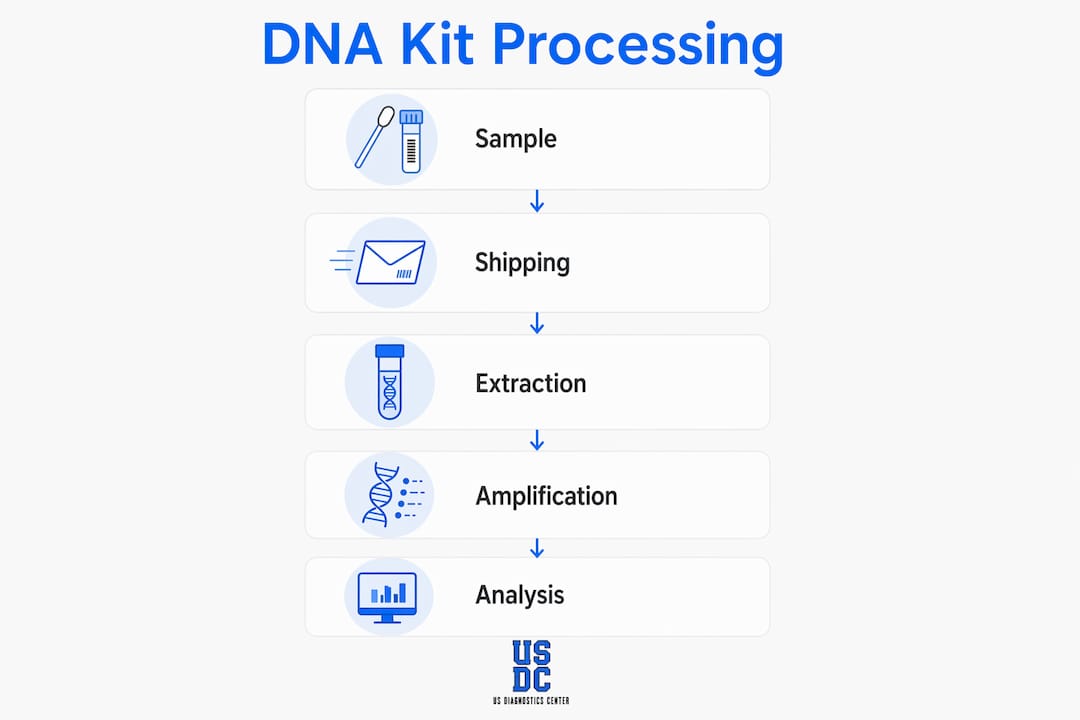
How do labs extract and prepare DNA for analysis?
Lab intake is the first quality gate your sample passes through. Upon arrival, each sample receives a barcode-only identifier, replacing any personal information. Technicians handling the sample from this point forward do not know whose DNA they are working with. This anonymization protects your privacy and removes any possibility of biased handling.
After intake, the lab begins DNA extraction. Technicians use chemical lysis and purification to break open the buccal cells and separate the genetic material from proteins, cell debris, and other impurities. The result is a purified DNA solution ready for the next stage.
Quality checkpoints at this stage include:
- Measuring DNA concentration to confirm sufficient quantity for testing
- Assessing purity ratios to detect contamination from proteins or solvents
- Flagging samples that fall below minimum thresholds for resampling
If your sample does not meet the lab's purity or quantity standards, the lab will contact you and send a new collection kit. CLIA certification requires labs to maintain documented quality control procedures at every extraction step. That certification is what separates a reliable result from a guess. You can learn more about what a DNA kit includes and how those contents support quality extraction.
How does DNA amplification and hybridization work?
Once purified DNA passes quality checks, the lab amplifies it using polymerase chain reaction, commonly called PCR. PCR multiplies DNA millions of times to produce enough material for accurate reading by microarray chips. Without amplification, the original sample would not contain enough genetic material to generate reliable data.
After amplification, the lab applies the DNA to a microarray chip. Illumina® microarray technology uses hybridization probes and fluorescent signals scanned by lasers to convert your DNA into a digital sequence. Each probe on the chip is designed to bind to a specific genetic variant. When a match occurs, the probe emits a fluorescent signal that a laser scanner reads and records.
The table below shows the two primary technologies used at this stage and what distinguishes them:
| Technology | Method | Output |
|---|---|---|
| PCR amplification | Copies DNA segments millions of times | Sufficient DNA quantity for chip reading |
| Illumina® microarray | Hybridization probes with laser scanning | Digital genetic variant data |
Automation governs this entire phase. Robotic systems load samples onto chips, run the hybridization cycle, and pass chips through the laser scanner without manual handling. That reduces human error and keeps results consistent across batches.
Pro Tip: Labs that use Illumina® microarray chips test for a large number of genetic positions in a single run. For paternity and kinship testing, US Diagnostics Center analyzes up to 28 markers, which is well above the threshold needed for a statistically conclusive result.
How do labs analyze the data and deliver your results?
The laser scanner produces raw fluorescent intensity data, not readable genetic information. Bioinformatics algorithms translate those raw digital signals into specific genetic variants at each tested position. This is the step most people picture incorrectly. Lab technicians do not read your DNA like a document. They review algorithm outputs and flag any positions where signal quality falls below confidence thresholds.
Quality assurance at the analysis stage includes:
- Automated filtering of low-confidence calls at individual marker positions
- Cross-checking results against internal control samples run in the same batch
- Secondary review of any markers that fall outside expected signal ranges
- Final report generation only after all quality thresholds are met
CLIA-certified labs maintain accuracy rates that exceed 99.5% for genotyping common variants. That figure applies to the technical accuracy of reading the DNA itself. However, false positive rates up to 40% exist when results are interpreted without qualified professional guidance. The lab produces accurate data. Misreading what that data means is a separate and avoidable problem.
Your report arrives digitally once analysis is complete. A qualified professional should review any result that carries legal, medical, or family implications. The DNA results interpretation guide from US Diagnostics Center walks through how to read common report formats without misapplying the numbers.
What factors influence turnaround time and accuracy?
Understanding DNA kit results requires knowing why timelines vary. Several variables affect how quickly you receive your report, and most of them are predictable.
- Sample collection quality. A contaminated or insufficient sample triggers a resampling request. That adds the full shipping and processing cycle again, often adding one to two weeks to your timeline.
- Shipping speed. Transit from your home to the lab depends on carrier performance and your geographic location. Delays here are outside the lab's control but affect your total wait time.
- Batch processing. Labs frequently process samples on 24- or 96-well plates, grouping multiple samples together for efficiency. Your sample may wait in refrigerated storage until the batch is full before processing begins.
- Lab volume and seasonal demand. Post-holiday and peak demand periods can push processing times to 8–12 weeks due to lab backlog. Ordering outside of peak periods reduces this risk.
- Lab certification and technology. CLIA-certified labs with automated microarray systems process samples faster and more consistently than labs relying on manual methods.
Typical home DNA test turnaround runs between 2 and 8 weeks from the date the lab receives your sample. US Diagnostics Center's lab processing runs 2–3 business days after receipt, with standard order-to-results delivery in 7–10 business days. For a detailed breakdown of what drives timing, the home DNA results timeline guide covers each variable in depth.
Key Takeaways
Home DNA kits get processed through a five-stage laboratory sequence, and the accuracy of your results depends as much on your sample collection technique as on the lab's technology.
| Point | Details |
|---|---|
| Collection quality is critical | Avoid eating or drinking 30 minutes before swabbing to prevent sample failure and delays. |
| Anonymization protects privacy | Labs replace personal data with barcodes on intake, so technicians never know whose sample they handle. |
| PCR and microarray drive accuracy | Amplification and Illumina® hybridization convert DNA into digital data with over 99.5% technical accuracy in CLIA-certified labs. |
| Batch processing affects timing | Samples wait in refrigerated storage until a full plate is assembled, adding unpredictable wait time before analysis begins. |
| Professional interpretation matters | False positive rates reach up to 40% without qualified review, so never act on results without expert guidance. |
What the lab process actually looks like, from someone who has seen it closely
Most people assume a scientist sits at a bench and reads their DNA strand by strand. That image is completely wrong, and the gap between expectation and reality causes a lot of unnecessary anxiety.
What actually happens is closer to a barcode scan at a grocery store, scaled up to millions of data points. Your DNA gets converted into a digital file. Algorithms compare that file against reference databases. A human reviews the output for quality flags. The report you receive is the end product of a computational process, not a manual inspection.
That distinction matters for one practical reason: the quality of the input determines the quality of the output. A contaminated sample produces noisy data. Noisy data produces uncertain calls. Uncertain calls produce results that look accurate but carry hidden error. The lab's algorithms cannot fix a bad sample.
The other misconception worth addressing is that a glossy report equals a reliable result. Some testing services invest heavily in report design and very little in laboratory infrastructure. The questions worth asking are about CLIA certification, marker count, and whether a qualified professional reviews flagged results before delivery. Those factors predict accuracy far better than how the report looks on screen. Common DNA testing myths around this topic are worth reviewing before you order any kit.
— Todd
US Diagnostics Center's approach to reliable home DNA testing
US Diagnostics Center builds its home DNA testing process around the quality controls described in this article. Every kit includes a prepaid return shipping envelope and clear collection instructions designed to minimize sample failure before the lab ever receives your swab.
US Diagnostics Center analyzes up to 28 markers per test, which exceeds the minimum needed for statistically conclusive kinship results. Lab processing runs 2–3 business days after receipt. For paternity, maternity, sibling, and grandparent testing, you can review available home DNA test kits and select the option that fits your situation. If your need involves legal admissibility, the legal DNA testing options collection covers court-ready testing with chain-of-custody documentation.
FAQ
How long does it take to get home DNA kit results?
Typical turnaround runs 2–8 weeks from lab receipt, depending on shipping speed, lab volume, and sample quality. US Diagnostics Center completes lab processing in 2–3 business days, with standard order-to-results delivery in 7–10 business days.
What happens to my DNA sample after testing?
Labs anonymize your sample with a barcode on intake and process it through extraction, amplification, and digital scanning. Retention and destruction policies vary by provider, so check your kit's privacy terms for specifics.
Can a bad swab really ruin my DNA test?
Yes. Poor sample collection is the leading cause of resampling requests. Eating or drinking within 30 minutes before swabbing contaminates the sample and reduces usable cell yield, triggering a full restart of the process.
What does CLIA certification mean for my results?
CLIA certification means the laboratory meets federal quality standards for testing human specimens. CLIA-certified labs maintain technical accuracy above 99.5% for genotyping, which is the baseline you should require before trusting any DNA test result.
Why do labs use batch processing instead of testing samples immediately?
Labs load samples onto 24- or 96-well plates to run multiple tests simultaneously, which reduces cost and improves consistency. Your sample may wait in refrigerated storage until a full plate is assembled before processing begins.
Recommended
- What Is Included in a DNA Test Kit: Full Guide | USDC
- How Fast Home DNA Test Results Arrive: A Clear Guide | USDC
- Home DNA Test Kit Instructions: Step-by-Step Guide | USDC
- How DNA Testing Works: Step-by-Step Guide | USDC
This article is part of our Understanding DNA Testing: How It Works and What to Expect guide.


0 comments