

A mother can say no to a private paternity request, but she generally cannot block a court-ordered DNA test. Once a family court issues an order, refusal carries real legal consequences, from contempt findings to a default paternity ruling. The remedy is to petition the family court or contact your state’s IV-D child support agency, which can compel legally admissible testing even without her cooperation.
TL;DR:
- A court-ordered DNA test is enforceable and can lead to a default paternity ruling if the mother refuses to comply.
- Private, at-home tests lack legal admissibility due to chain-of-custody issues, making court-ordered testing essential for legal cases.
- States like Texas allow genetic testing without the mother’s participation, and IV-D agencies can mandate and fund testing in contested cases.
- Family courts can hold contempt sanctions, including fines and incarceration, if a party disobeys a lawful testing order.
- Preparation with relevant documents, such as birth certificates and evidence of contact, expedites court proceedings and strengthens the case.
Table of Contents
- What Does It Mean When a Mother Refuses a Paternity Test?
- How Do You Get a Court-Ordered Paternity Test?
- What Happens If She Still Refuses a Court Order?
- Can Testing Proceed Without the Mother’s DNA Sample?
- Who Pays When the IV-D Agency Gets Involved?
- What Should You Gather Before Filing?
- Why Chain-of-Custody Testing Actually Matters in Court
- A Short Legal Perspective: Do This the Right Way
- Planning for Paternity Testing When the Mother Refuses
- Sources
- FAQ
What Does It Mean When a Mother Refuses a Paternity Test?
There’s a sharp legal line between asking a mother informally and asking a judge to order it. A mother has no legal obligation to hand over a cheek swab just because someone asks. She can decline a private, at-home request without consequence, and no court will punish her for it.
That changes the moment a judge signs a testing order. At that point, refusal is no longer a personal choice protected by law. It becomes noncompliance with a court directive, and courts have tools to address that.
The distinction matters for another reason: admissibility. A private paternity test purchased online and swabbed at a kitchen table carries no chain-of-custody documentation, which means a judge will not accept it as legal proof of parentage. Courts require an accredited lab, verified identities, and a documented sample trail from collection to lab result, as California’s court self-help guidance makes clear.
Two other factors shape whether a court even orders testing in the first place:
- The marital presumption. In most states, a child born to a married woman is presumed to be her husband’s, which can complicate a third party’s request for testing.
- Existing acknowledgments of paternity. A prior voluntary acknowledgment on file can shift the burden onto whoever is trying to challenge or establish parentage.
How Do You Get a Court-Ordered Paternity Test?
Getting a judge to order testing follows a defined sequence, and skipping steps usually means delay, not a shortcut.
- Confirm you have standing. An alleged father, the mother, the child (through a representative), or the state’s IV-D agency can typically file a paternity petition. Rules on who qualifies vary by state, so check your local family court’s requirements before filing.
- File the petition. The document must include a sworn statement alleging paternity, or at minimum a reasonable possibility of the biological connection, such as evidence the parties had contact during the likely conception window.
- Serve notice on the mother. She must be formally notified of the petition and given the opportunity to respond, following your state’s rules for service of process.
- Attend the hearing. A judge reviews the petition and any response, then decides whether genetic testing is warranted. As FindLaw’s overview explains, this is the point where a court order transforms a request into an enforceable directive.
- Complete sample collection at a neutral site. Once ordered, testing happens through a neutral collector who verifies photo ID and documents chain-of-custody at every step, not through a mailed home kit.
Pro Tip: File your petition with as much documentary support as you can gather up front. A judge is far more likely to grant testing quickly when the sworn statement is backed by texts, photos, or dated records showing contact rather than a bare assertion.
What Happens If She Still Refuses a Court Order?
Refusing a judge’s order is a different matter entirely from declining an informal request, and courts do not treat it lightly.
Family courts hold contempt power, and they use it when a party defies a lawful order. According to Cornell Law’s overview of contempt of court, consequences can include:
- Monetary fines set by the judge
- An award of the other party’s attorney fees
- In extreme, ongoing cases, coercive incarceration until the party complies
Beyond contempt, many states apply a more direct remedy under Uniform Parentage Act principles: if a party refuses to comply with a testing order, the court can enter a default finding of paternity against the refusing party’s position. In practice, that means a mother’s refusal can backfire. Rather than blocking a paternity determination, it can result in the court simply declaring paternity established without genetic confirmation.
Once paternity is set, whether through DNA results or a default ruling, child support obligations and parental rights follow automatically under state law.
Can Testing Proceed Without the Mother’s DNA Sample?
Yes, and this is the detail most people searching for answers don’t realize until they’re already in court. A biological relationship between a child and an alleged father can be established through the two parties alone, without the mother contributing a sample.
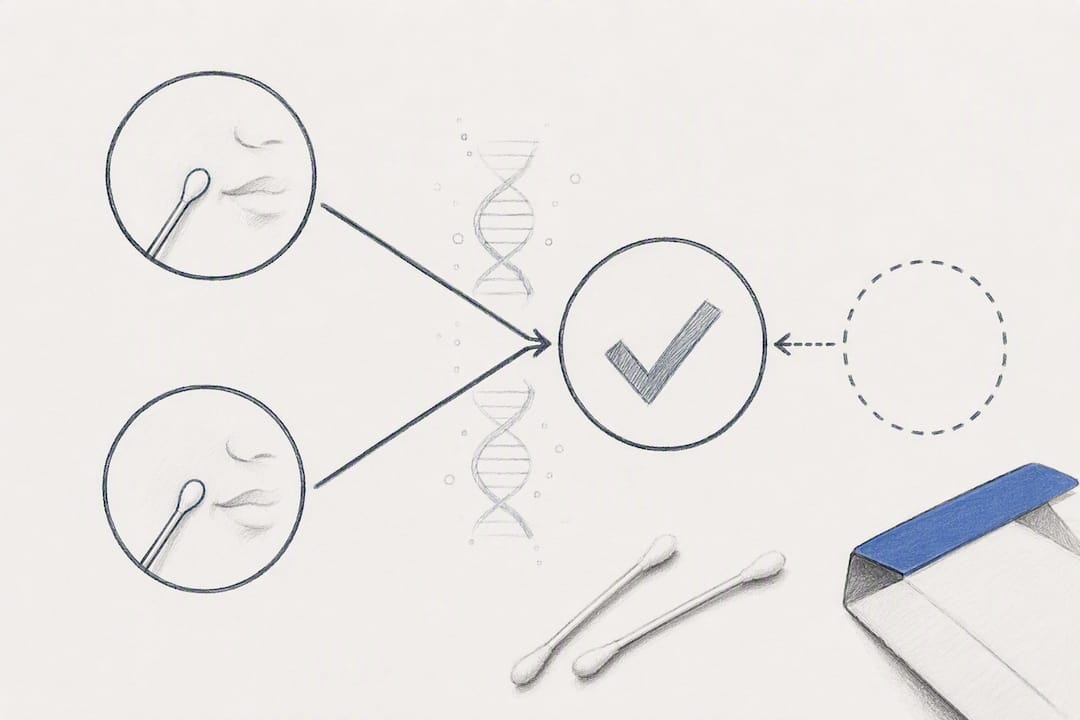
Several states make this explicit in statute. Texas law, for example, allows courts to order genetic testing of the child and the alleged father and to proceed with adjudication even when the mother does not participate, as laid out in Texas Family Code § 160.622. California’s courts follow a similar approach.
A few conditions still apply:
- For a minor child, collection requires either the custodial parent’s cooperation or a specific court order authorizing the sample to be taken.
- Home test kits carry no legal standing here either; only a court-ordered, accredited collection counts.
- Prenatal testing is a separate matter and does require the mother’s participation, since there’s no other way to access fetal DNA before birth. Postnatal testing of child and alleged father generally does not.
Who Pays When the IV-D Agency Gets Involved?
State child support agencies, known as IV-D agencies, have federal authority to force the issue in contested cases. Under 45 CFR § 303.5, IV-D agencies must require genetic testing in a contested paternity case unless good cause exists to waive it, and they frequently front the cost of testing themselves.
| Path | Who initiates | Who typically pays first |
|---|---|---|
| IV-D administrative process | State child support agency | Agency, subject to recoupment |
| Family court petition | Alleged father, mother, or child’s representative | Petitioner, unless the case is later folded into IV-D |
If paternity is confirmed, the agency can seek reimbursement from the parent, according to guidance from the Administration for Children and Families. Choosing the IV-D route makes sense when child support is the goal; a direct family court petition fits better when a private dispute over parentage is the only issue.
What Should You Gather Before Filing?
Preparation shortens the timeline more than any other single factor. Before you file, assemble:
- The child’s birth certificate
- Any texts, emails, or messages showing contact around the conception window
- Prior voluntary acknowledgments of paternity, if any exist
- Records of any informal test the mother refused, including dates and method of request
Expect a general sequence of filing, service, a hearing, sample collection, lab processing, and finally a court entry of results. The exact timeline varies significantly by state court caseload, sometimes stretching from a few weeks to several months for the court steps alone, on top of lab turnaround.
On cost: petitioners in a straight family court filing usually pay initial testing fees themselves, while cases run through the IV-D agency often have those costs covered up front by the state.
Pro Tip: Ask the clerk’s office whether your county allows electronic filing for paternity petitions. It can shave real time off the service and hearing scheduling process, especially in urban courts with heavy dockets.
Why Chain-of-Custody Testing Actually Matters in Court
Admissibility comes down to a handful of concrete requirements: a neutral third-party collector, photo ID verification for every participant, a documented chain-of-custody form, and lab processing that meets recognized testing standards. Skip any one of these, and a result that’s scientifically accurate can still be legally worthless in front of a judge.
For court-required testing, work with a lab that offers witnessed collection and full chain of custody. USDC currently offers home DNA kits for personal-knowledge answers before or alongside legal proceedings, with lab processing typically completed in 2 to 3 business days and standard order-to-results turnaround of 7 to 10 business days. Choosing the right testing path for your court's requirements depends on chain-of-custody documentation and witnessed collection, not just the DNA result itself.
The difference between a test that satisfies your curiosity and one that satisfies a judge comes down entirely to documentation. The DNA doesn’t change. The paper trail does.
A Short Legal Perspective: Do This the Right Way
Never collect a sample without lawful consent or a court order. Contact an attorney or your IV-D agency early, preserve every document, and expect state-specific rules to shape your timeline more than any general guide can.
— Dr. Todd Lewis
Planning for Paternity Testing When the Mother Refuses
If you’re heading into a family court petition or already have an order in hand, the DNA testing itself does not need to be the hard part. For personal-knowledge answers before or alongside court proceedings, USDC’s home DNA kits are an option, with lab processing in 2 to 3 business days and a standard order-to-results turnaround of 7 to 10 business days. For the separate testing a court will require, work with a provider that offers witnessed collection and full chain of custody.
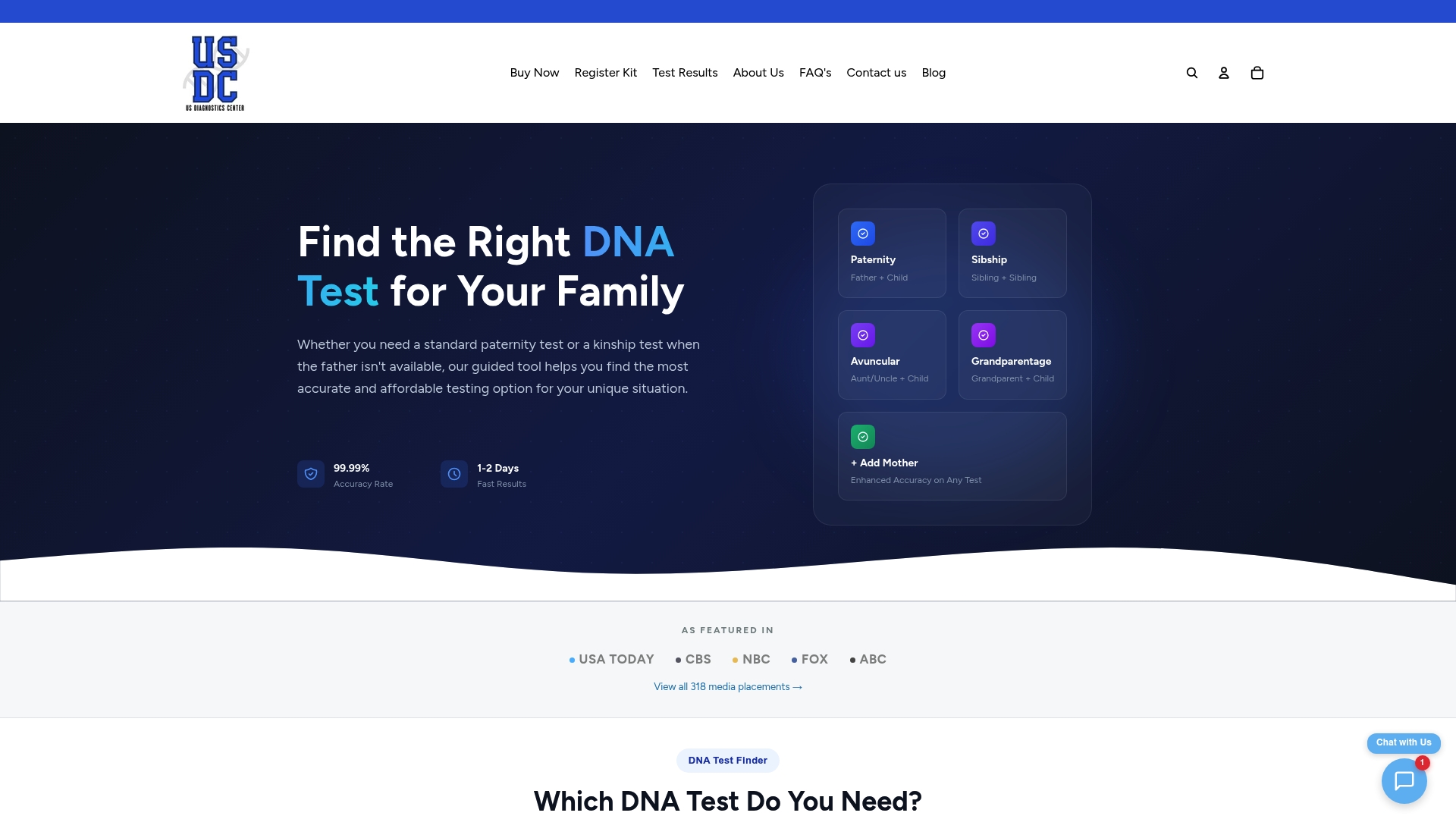
Home paternity, maternity, sibling, grandparent, and aunt/uncle testing options are available with pricing varying by test type and features, each analyzing multiple genetic markers. Legal cases require the court-admissible option rather than the standard at-home kit, since only the neutral-collection version holds up procedurally. If you’re still comparing which test fits your situation, the paternity testing guide walks through the differences before you order.
This article is general information, not a substitute for advice from a qualified lawyer. Consult a qualified legal professional about your own circumstances before acting on anything here.
Sources
- Court Self-Help - Contested parentage and genetic testing (California Courts)
- How to legally get a paternity test if the child’s mother refuses | FindLaw
- Contempt of court | Wex | LII / Legal Information Institute
FAQ
What should you do if a mother refuses a paternity test?
File a petition with family court or contact your state’s IV-D child support agency; either route can result in a judge ordering testing that she cannot lawfully ignore.
Can a mother be forced to take a DNA test?
She cannot be physically forced, but a court can order testing, and refusing that order can lead to contempt sanctions or a default paternity finding against her position.
What if the mother refuses to name the father?
A court can still order genetic testing of the child and a suspected alleged father based on other evidence of contact, without requiring the mother’s cooperation or her identification of anyone.
What happens if the mother doesn’t show up for testing?
Missing a court-ordered collection appointment is treated as noncompliance, which can trigger contempt proceedings or prompt the judge to adjudicate paternity by default.
Is a home DNA test enough for a custody or support case?
No. Courts require accredited chain-of-custody testing with witnessed collection; a mail-order home kit has no standing in a courtroom.
Recommended
- 9 Legal Proof of Paternity Documents U.S. Courts Accept
- What Happens If You Refuse a Paternity Test? (2026)
- Paternity Test With Just Father and Child: When It Works
This article is part of our Paternity Testing: The Complete Guide guide.


0 comments