

Yes, family courts and state child-support (IV-D) agencies can order genetic testing to establish paternity, and we want you to know this process is available to mothers, fathers, and other parties in a contested case. Mothers are often required to participate once an order is issued, and refusal can carry legal consequences, though rules differ by state. Your first move should be contacting your local IV-D office, family court clerk, or an attorney.
TL;DR:
- Either parent or an IV-D agency can initiate a case; local filing rules, fees, and hearing schedules vary, so contact your county office first.
- After a testing order, refusal can lead to contempt or other penalties; courts narrowly recognize documented safety concerns as possible good cause.
- Court results require documented collection with identity verification through an approved lab; courts can test the child and alleged father without the mother’s sample.
- Agency funding can cover testing upfront, with costs recouped from the alleged father if paternity is established, limiting a mother’s initial expense.
- A $79 home kit returns private results in 7 to 10 business days, but courts require testing arranged through an agency with chain of custody.
Table of Contents
- Federal rules and the child-support agency role
- Common situations that lead to court-ordered testing
- A mother’s rights, ability to refuse, and consequences of refusal
- Step-by-step process to ask for court-ordered testing
- How testing works in a legal case and why chain of custody matters
- Who pays for testing, typical fees, and realistic timelines
- Practical checklist and trusted resources
- Why this matters beyond the paperwork
- Private testing options alongside the legal process
- FAQ
- Sources
Federal rules and the child-support agency role
Paternity establishment in the United States runs through a federal and state partnership. Under 45 CFR §303.5, states receiving federal child-support funding must maintain procedures for paternity establishment, including the ability to order genetic testing and identify approved laboratories for legally acceptable results. The companion statute, 42 U.S.C. §666, requires states to offer expedited processes for contested cases and to make properly performed genetic test results admissible in court.
In practice, this means:
- IV-D agencies can order testing in contested paternity matters tied to child support.
- Agencies may pay for testing upfront, subject to recoupment rules described below.
- States maintain lists of approved laboratories whose results meet legal admissibility standards.
- Procedures, fees, and timelines vary by state, so contacting your local office early matters.
Because the specifics differ from state to state, the agency serving your county is the most reliable source for what happens next in your case.
Common situations that lead to court-ordered testing
Courts typically order genetic testing when paternity is contested in a matter tied to child support, custody, or an inheritance dispute. A party, often the mother or the state on her behalf, files a sworn statement describing a reasonable possibility of the biological relationship, or the alleged father files a statement denying it, and the court uses that filing to decide whether testing is warranted.
Several patterns show up repeatedly:
- A mother seeking child support files first, naming the alleged father.
- An alleged father disputes paternity and requests testing to resolve the question.
- A default order is entered when a named respondent fails to respond to the petition, which can establish paternity without testing in some states.
- Good-cause exceptions allow limited refusal, such as safety concerns connected to family violence, though these are narrowly applied.
If your situation fits one of these patterns, the court process is designed to move relatively quickly once the initial paperwork is filed.
A mother’s rights, ability to refuse, and consequences of refusal
Once a court issues a testing order, refusing to comply can lead to contempt findings and other legal consequences in many states, according to guidance in the Administration for Children and Families’ attorney reference materials. Good cause for declining is narrow and usually tied to documented safety concerns, not simple reluctance.
It helps to understand the difference between two paths to legal fatherhood:
- A voluntary acknowledgment of paternity, signed at or after birth, is a legal finding, but it comes with a limited rescission window.
- A court adjudication, reached after contested proceedings or testing, is far harder to overturn once entered.
- Either path carries long-term consequences for custody, support, and inheritance, so understanding which one applies to your case matters before you sign anything.
If you are unsure whether to sign an acknowledgment form at the hospital or wait for a court process, consider speaking with a family law attorney first. For a closer look at what happens procedurally when a mother refuses testing, our related guide walks through the typical sequence of events.
Pro Tip: Keep copies of every document you sign related to paternity, including hospital acknowledgment forms, since the rescission window for those is often just a matter of days.
Step-by-step process to ask for court-ordered testing
Either parent, or the IV-D agency acting on a parent’s behalf, can initiate a paternity case, and the filing typically happens at family court or your local child-support office. The sequence generally looks like this:
- File a petition or sworn statement with the family court or IV-D agency, describing the basis for the paternity claim or denial.
- Serve the other party according to your state’s rules for service of process.
- Attend a hearing or administrative appointment where the court or agency reviews the request and may order genetic testing.
- Complete sample collection through an approved laboratory once testing is ordered.
- Receive the lab report, which becomes part of the court record and supports a final paternity determination.
Before you file, gather what you can:
- Any prior acknowledgment forms, birth certificates, or correspondence about the father’s identity.
- Contact information for the other party, needed for service.
- Documentation of any support already paid or needed.
If the case is contested or involves custody alongside support, a consultation with counsel is worth the cost before your hearing. Our overview of what courts require in child-support cases covers how agencies typically structure these filings.
How testing works in a legal case and why chain of custody matters
Legal paternity testing differs from a home kit purchased for personal curiosity because the sample collection, handling, and lab reporting must follow a documented chain of custody for the result to hold up in court. Cleveland Clinic notes that this documented process, paired with an accredited lab, is what separates evidence a judge will accept from a result that simply satisfies personal curiosity.
A few points matter here:
- Courts favor chain-of-custody collection, where an unbiased third party verifies identity and handles the sample.
- The mother’s sample is often requested because, as MedlinePlus explains, comparing child, mother, and alleged father markers together helps resolve ambiguous results and rule out confounding genetic overlap.
- Courts can and sometimes do proceed with testing of just the child and alleged father when the mother is unavailable, though results may be less conclusive.
- A completed lab report typically states the probability of paternity and becomes part of the evidentiary record the court reviews.
For readers who want more detail on how these standards apply across different circumstances, our guide on legal paternity testing requirements walks through documentation expectations.
Who pays for testing, typical fees, and realistic timelines
Federal rules allow IV-D agencies to pay for ordered testing upfront, then recoup those costs from the alleged father if paternity is established. That arrangement reduces the upfront burden on mothers pursuing a case through the agency rather than private counsel.
- Sample collection to lab report typically takes a matter of days once testing is scheduled.
- Filing to hearing timelines depend heavily on your local court’s docket and your state’s procedural rules.
- Expedited lab processing is often available for an additional fee when a case needs to move faster.
Agencies that pay for testing upfront can recoup those costs from the father once paternity is confirmed, under the federal recoupment framework, which limits how much mothers are expected to pay out of pocket in agency-led cases. Our breakdown of process, cost, and timeline expectations covers what to expect in more detail.
Practical checklist and trusted resources
A short checklist helps before your first call:
- Gather identifying documents for yourself, your child, and the alleged father.
- Write down dates and any evidence relevant to the sworn statement you’ll need to file.
- Call your local IV-D office first; ask what forms they require and whether they’ll order testing directly.
- Keep a written log of every contact, filing, and deadline.
For procedural steps specific to court-admissible documentation, the partner resource Total Tox outlines the exact steps and paperwork many courts expect.
Pro Tip: Call the child-support office before the court clerk. Many cases move through the IV-D process without ever requiring a private attorney.

Why this matters beyond the paperwork
A paternity determination shapes custody, support, and inheritance for years, so this process deserves careful attention rather than guesswork under pressure. We encourage you to contact your local IV-D agency or an attorney promptly once a dispute arises, since timelines and rights can shift the longer a case sits unresolved. Private testing resources can offer information along the way, but they are not a substitute for the legal process itself.
— Dr. Todd Lewis
Private testing options alongside the legal process
When you want answers while a legal case is still moving, we offer home DNA test kits built for exactly that kind of situation. We provide a guided test selection tool to help find the appropriate kit for your family’s situation, whether for paternity, sibling, or grandparent testing.
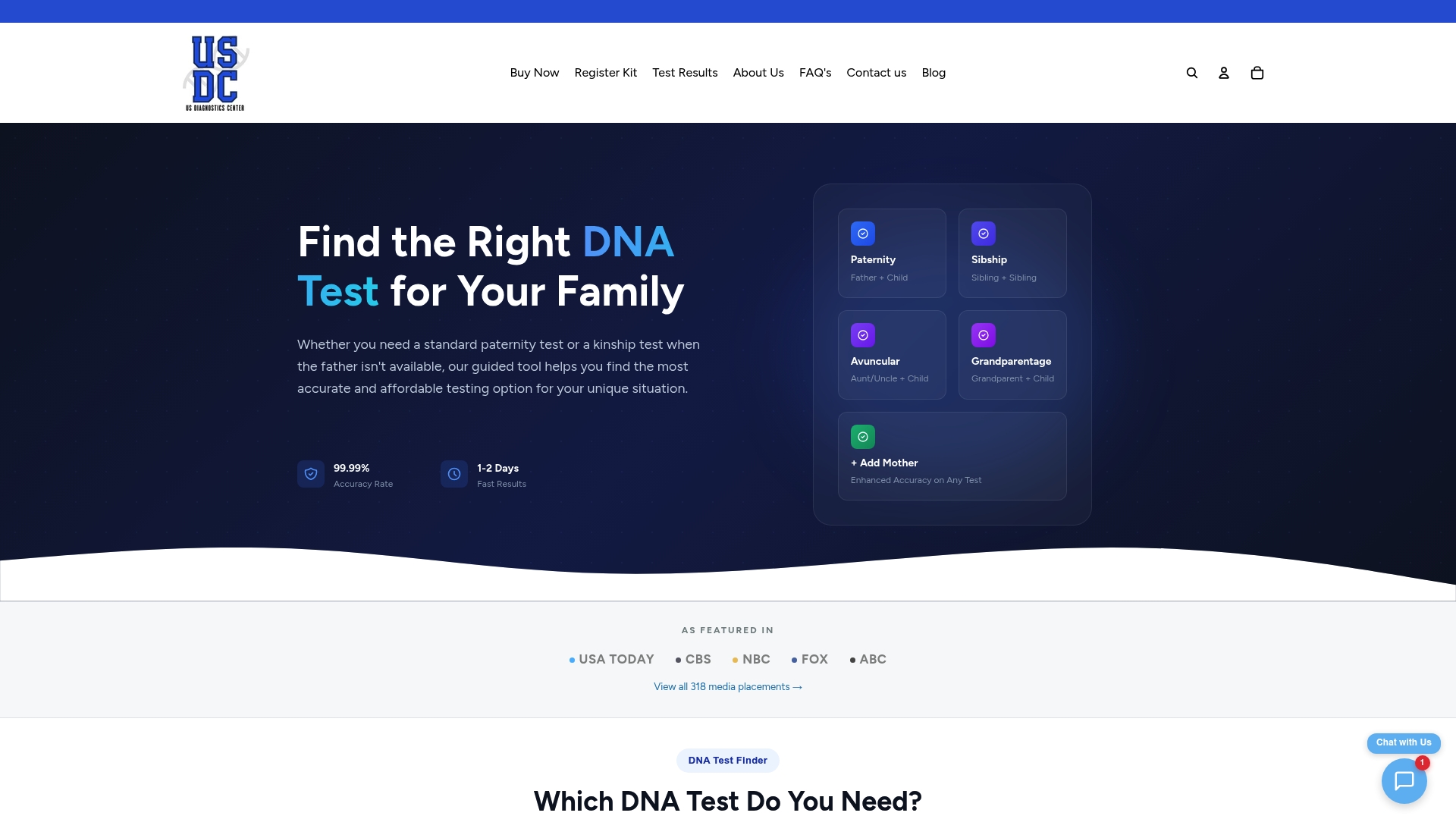
- Home Paternity Test Kit costs 79 USD and includes a prepaid return shipping envelope.
- Lab processing runs 2 to 3 business days, with standard order-to-results in 7 to 10 business days.
- Next-Day Results processing is available for an additional $100 when you need answers faster.
We do not offer court-admissible or legal testing at this time. Courts require chain-of-custody collection arranged through appropriate agencies or laboratories, so our home kits are intended for private use rather than legal evidence. If you want a private result while your case moves forward, start with our test-finder tool.
FAQ
How much does it cost to do a DNA test on an unborn baby?
We do not offer prenatal paternity testing, so we can’t quote a price for that specific procedure. For postbirth private testing, our Home Paternity Test Kit costs $79, with results typically ready in 7 to 10 business days.
Can DNA testing prove fatherhood?
Yes, comparing genetic markers between a child and an alleged father can establish or exclude paternity with a high degree of confidence, as MedlinePlus explains. A mother’s sample often helps clarify ambiguous results by ruling out overlapping markers.
How to read paternity test results?
Cleveland Clinic notes that accredited labs present these figures alongside the markers compared, so reading the summary statement is usually enough to understand the outcome.
Can a mother’s DNA not match her child?
A mother’s DNA should match her biological child at the maternal markers tested, and a true mismatch is extremely rare outside of lab error or sample mix-up. If a result appears inconsistent, retesting through an accredited lab with proper chain-of-custody handling is the appropriate next step.
What should I check before choosing a paternity testing option?
Confirm whether you need a legal, chain-of-custody test for court purposes or a private result for personal information, since the two serve different purposes. Legal cases require an approved laboratory arranged through the court or IV-D agency, while private clarity can come from a home kit like ours.
Sources
- eCFR :: 45 CFR 303.5 – Establishment of paternity.
- 42 U.S. Code § 666 - Requirement of statutorily prescribed procedures to improve effectiveness of child support enforcement
- Essentials for Attorneys, Chapter Nine: Establishment of Parentage
- DNA: What is DNA? | MedlinePlus Genetics
- DNA paternity test | Cleveland Clinic


0 comments