

A notary can absolutely notarize a signed copy of an at-home DNA test result, but that stamp does not turn the test into a legal or court-admissible document. Notarization confirms that you signed the paper in front of a licensed notary on a given date; it says nothing about how the sample was collected or handled. Below, we walk through what notarization does, where its limits fall, and how to decide whether a home kit from US Diagnostics Center or a path toward legal testing fits your situation.
TL;DR:
- Notarization confirms your signature and identity but does not establish a valid chain of custody for legal or court purposes.
- A notarized home DNA result lacks documentation of sample collection, handling, and transfer, which are essential for admissibility in legal cases.
- Remote online notarization requires specific state approval and cannot guarantee acceptance across different jurisdictions or legal processes.
- Formal legal testing involves documented sample handling and collection procedures that a notary stamp cannot replicate or verify afterward.
- For legal or official use, it is better to start with a chain-of-custody test rather than relying solely on notarized home results.
Table of Contents
- What a Notary Actually Verifies (and What They Don’t)
- Why Notarizing a Home Result Doesn’t Create a Chain of Custody
- How to Get a Notarized Copy of Your At-Home DNA Result
- Choosing Between a Home Test and a Legal Chain-of-Custody Test
- What We Recommend and What to Plan For
- Home DNA Kits and a Guided Finder to Help You Choose
- FAQ
- Sources
What a Notary Actually Verifies (and What They Don’t)
A notary public’s job is narrow by design. They confirm your identity through government-issued photo identification, witness your signature, and attach a seal and signature of their own to certify that the signing happened as described. That’s the entire scope of the role. A notary is not trained in genetics, does not review laboratory methods, and has no authority to confirm that a DNA report is scientifically accurate.
This gap creates predictable confusion. Two examples come up often:
- Some people assume a notarized result will be accepted in a custody hearing because it “looks official.” It generally will not, because courts look for documented sample collection, not a notary’s signature.
- Others expect the notary to confirm that the person named in the report is the same person who provided the cheek swab. A notary has no way to verify that connection.
How you get the notarization matters too. Remote online notarization (RON) lets you sign in front of a notary over video, while in-person notarization still requires a physical visit. The American Bar Association notes that RON, IPEN, and RIN notarization methods vary by state, so a document notarized remotely in one state may not satisfy a requirement in another.
Why Notarizing a Home Result Doesn’t Create a Chain of Custody

Chain of custody means a documented, unbroken record of who collected a biological sample, how it was packaged, who handled it in transit, and how the lab logged it on arrival. Courts and government agencies rely on that paper trail to trust that the sample tested actually came from the person named in the report. A notary stamp added after the fact cannot recreate any of that history.
Federal guidance illustrates the gap directly. The SSA POMS guidance on paternity testing notes that in-home DNA tests often lack the documentation standards associated with accredited chain-of-custody collection, which is part of why they can face admissibility problems. The American Bar Association echoes this from the evidence side: fundamentals of authentication under the rules of evidence require proof that a document is what it claims to be, and a notary’s signature witnessing does not supply that proof for the underlying scientific content.
A notary’s seal confirms a signature happened at a point in time. It cannot confirm who swabbed their cheek three weeks earlier or whether that swab ever left their own kitchen counter.
Put simply, notarization authenticates your signature on a piece of paper. It does not and cannot authenticate the biology behind it.
How to Get a Notarized Copy of Your At-Home DNA Result
If you want a notarized copy for your own files, a family conversation, or a situation where a notarized document happens to be accepted, the process is straightforward.
- Print your full lab report, including any pages that list your name, sample ID, and result date.
- Bring a valid government-issued photo ID that matches the name on the report.
- Locate a notary, either in person at a bank, shipping store, or legal office, or through a remote online notarization platform if your state permits it.
- Sign the report in front of the notary; do not sign it beforehand, since most notaries require you to sign in their presence.
- For RON sessions, expect identity checks such as knowledge-based authentication questions or credential analysis of your ID before the video signing begins.
- Pay the notary’s fee, which is typically a small flat charge set by state law.
- Keep the notarized original in a safe place and make copies for whatever personal use you intend.
Pro Tip: Hold on to the lab’s original shipping envelope, order confirmation email, and any sample collection instructions. If a question ever comes up about where the report came from, that paperwork supports your own records even though it still falls short of formal chain-of-custody documentation.
Remember that notarization verifies your signature and the date, not the test’s accuracy or the sample’s origin. It’s a recordkeeping tool, not a legal upgrade.

Choosing Between a Home Test and a Legal Chain-of-Custody Test
Most people reaching for an at-home kit want a quick answer, not a courtroom document. A notarized copy works fine for:
- Settling a private family question without involving any agency or court.
- Keeping a personal record for your own peace of mind.
- Sharing results informally with relatives during a family conversation.
Formal situations generally call for a different starting point. Courts, custody proceedings, adoption cases, and vital-record amendments typically require documented chain-of-custody collection rather than a notarized home report. The Usa explains that apostilles and authentication certificates verify a signature or seal, not the content behind it, which is the same limitation that applies to notarizing a DNA report for official use.
Before ordering any kit, ask yourself: Will anyone besides me or my family ever need to see this result? Could this end up in a legal filing, a government application, or a dispute someone else controls? If the answer is yes or even uncertain, start with a process built for that purpose rather than trying to upgrade a home result later.
For readers who only need a personal answer, home kits remain a practical, affordable starting point. Current prices and turnaround times are available on our pricing page.
What We Recommend and What to Plan For
Our straightforward recommendation: notarize a home DNA result when you want a dated, signed copy for your own records, not when you expect it to function as legal proof. If there’s any real chance the result will need to hold up in a court filing, a custody matter, or an official government process, it’s worth starting with a test built to chain-of-custody standards rather than notarizing a home report after the fact and hoping it’s enough.
We’ve written more on how that documented process works in our explainer on chain of custody, and on the practical differences between home and court DNA testing. Both are worth a look before you order anything.
— Dr. Todd Lewis
Home DNA Kits and a Guided Finder to Help You Choose
When your goal is a fast, private answer for personal peace of mind, we built our home DNA tests collection around exactly that need. Notarization handles the paperwork side; the kit itself handles the science.
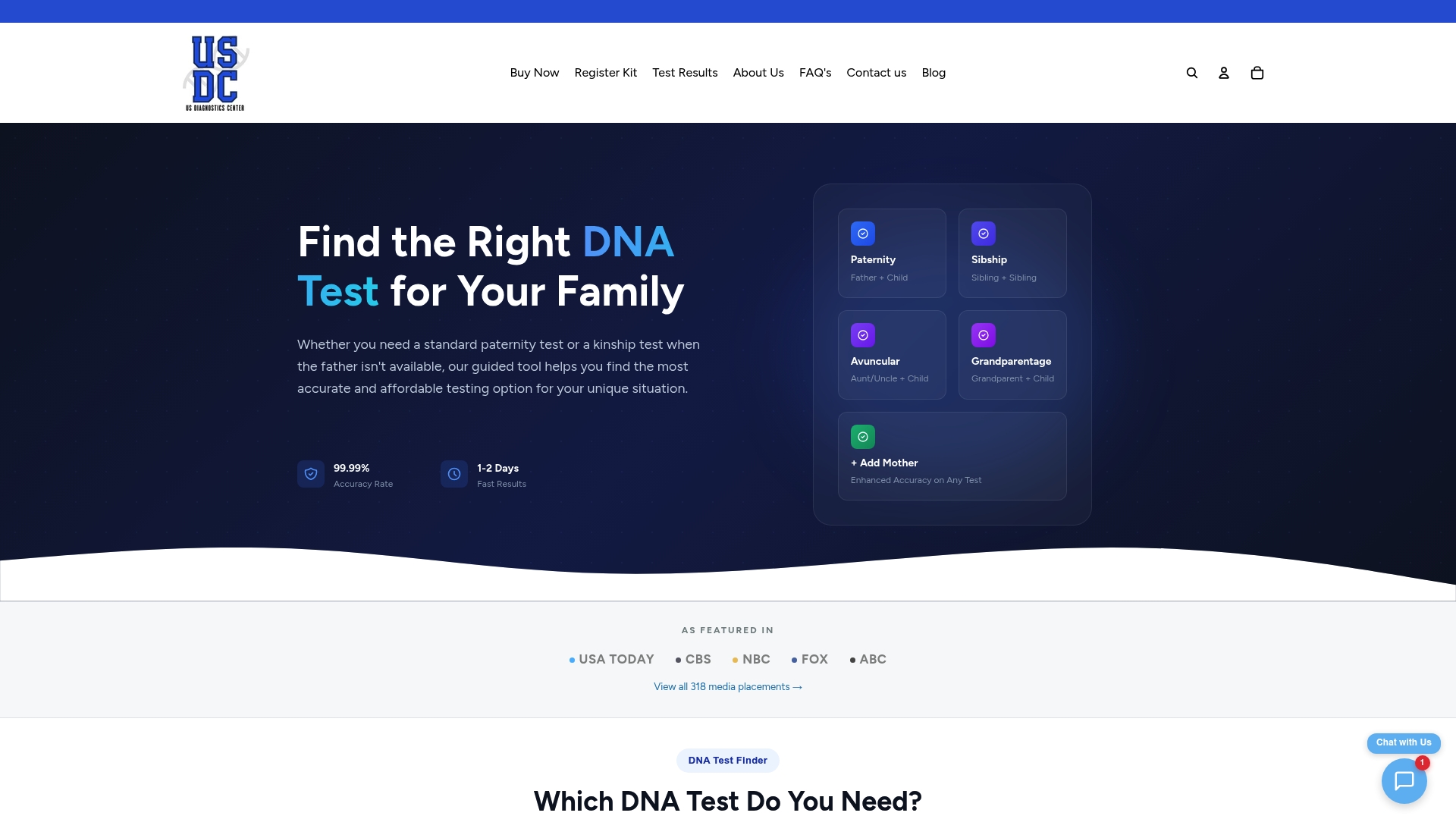
Our home lineup covers the most common family questions at straightforward prices. Every kit ships with a prepaid return envelope, so getting your sample back to the lab doesn’t require buying postage separately.
- Lab processing typically takes 2 to 3 business days once your sample arrives.
- Standard order-to-results timing runs 7 to 10 business days from the moment you place your order.
- Our guided test finder walks you through a few quick questions and recommends the right kit for your specific family situation.
If you’re not sure which kit fits your question, start with the test finder rather than guessing. It takes a couple of minutes and points you toward the option that matches what you actually need to find out.
FAQ
Does notarizing a DNA test make it legally valid?
No. Notarization confirms your identity and that you signed the document, but it does not establish the chain-of-custody documentation that courts and agencies require for legal admissibility, as outlined in SSA POMS guidance.
Can I use a notarized home DNA result for a government application?
It depends entirely on the specific agency’s requirements. Some processes accept notarized documents for limited purposes, but most official uses require a chain-of-custody test rather than a notarized home report, so check with the requesting agency first.
What is the difference between RON and in-person notarization?
RON lets you sign in front of a notary through a video session, while in-person notarization requires a physical visit to the notary’s location. The American Bar Association notes that not every state permits RON, so it’s worth confirming availability before scheduling.
How much does a home DNA test from US Diagnostics Center cost?
Our home test kits are available in several varieties, with results typically ready in 7 to 10 business days from order to delivery. Please see our website for the most current pricing details.
Can a notary confirm who actually provided the DNA sample?
No. A notary verifies your identity and signature at the moment of notarization, but has no way to confirm who collected the biological sample used in the test or how it was handled beforehand.
Sources
- SSA POMS guidance on paternity testing and in-home test admissibility
- Usa
- How do I notarize e-signatures? | American Bar Association


0 comments