

You can test more than one child for paternity, and the process is simpler than most parents expect. Each child is compared with the alleged father, and every comparison produces its own result. A child can be confirmed or excluded independently of a brother or sister. If the question is whether two children share the same father, a sibling test can answer that directly. At-home kits from US Diagnostics Center start at $79 for a father and one child.
TL;DR
- Every child needs a result of their own. One father tested against three children means three father-child comparisons, not one shared answer.
- If the question is whether children have the same father, a full or half sibling test ($139) compares the children to each other.
- Our Home Paternity Test Kit is $79. Our checkout lets you add participants, so you can build the order around your family.
- Lab processing takes 2 to 3 business days. A standard order, from the day you order to the day you have results, takes 7 to 10 business days.
- Our tests are private, at-home tests. They are not court tests. If a judge or agency has asked for DNA evidence, that requires a different, accredited process.
Table of Contents
- How a paternity test works when several children are involved
- One father and several children
- When the question is whether children share a father
- When the alleged father is unavailable
- How to read the results
- Timing and cost for more than one child
- Choosing the right test and the right paperwork
- Our perspective
- Ready to order
- FAQ
- Sources
How a paternity test works when several children are involved
A paternity test compares a child’s DNA with the alleged father’s DNA at a set of genetic markers. The child inherits half of those markers from the mother and half from the father. Any marker that cannot be traced to the mother must come from the biological father. The federal Office of Child Support Enforcement explains this logic: if the alleged father lacks a marker that the child must have inherited from the father, he is excluded. If he has it, there is no exclusion at that marker.
With several children, that comparison is repeated for each child. Each child contributes a cheek swab, and so does the alleged father. The lab analyzes each child’s profile against his, and each child gets a separate conclusion. Our tests analyze up to 28 markers.

This matters for a practical reason. Siblings do not share identical DNA unless they are identical twins. Each child received a different random mix from each parent. A man can be the father of one child and not another, and the results for one child say nothing about the next.
What the swabs look like
Collection is painless. Each person rubs a swab on the inside of the cheek for a few seconds, and the swabs go back in the prepaid return shipping envelope included with the kit. Participants should not eat, drink, or chew gum for about an hour before sampling, which keeps the sample clean. Follow the instructions in your kit for each person, and label each swab with the correct name.
For several children, a few habits prevent mix-ups:
- Collect from one person at a time and seal each swab before opening the next.
- Write the name on each envelope right away, never after.
- Keep the children’s samples apart from each other until they are sealed.
- Confirm that every name on the paperwork matches the person who gave the sample.
One father and several children
This is the most common situation: one man, two or more children, and a question about whether he is the father of all of them, some of them, or none.
The cleanest approach is to test the alleged father against each child. Each pairing gives its own answer. Parents often ask whether testing just one child is enough. It is not, unless the only question is about that one child. A result for the oldest says nothing legal or genetic about the youngest.
Including the mother
Including the child’s mother is not required for a basic father-child test, but it helps. Research from Oslo University Hospital on kinship testing notes that the strength of evidence depends on who participates and that it improves when the child’s mother takes part. With a mother’s sample, the lab can tell right away which markers came from her and which must have come from the father. That removes a source of uncertainty, and the question becomes clearer.
When the mother is the same for all the children, one mother’s sample can support more than one comparison. Ask during checkout about adding participants, so you pay for what the family situation needs.
Different mothers
If the children have different mothers, treat each child and mother as their own group. The alleged father is common to all of them, but each child has a different set of maternal markers. Orders for these families often get complicated, so it helps to write down who is being tested for what before you choose kits.
When the question is whether children share a father
Sometimes the alleged father cannot or will not take part. Other times the question is not about him at all: two siblings, raised apart, want to know whether they are full siblings, half siblings, or unrelated.
A sibling test compares the children to each other. It estimates whether they share both parents, one parent, or neither.
| Question | Test that fits | Our price |
|---|---|---|
| Is this man the father of this child? | Home Paternity Test Kit | $79 |
| Is this man the father of two children? | Paternity test for each child, with added participants | See checkout |
| Do these two children share both parents? | At-Home Full Sibling DNA Test Kit | $139 |
| Do these two children share only one parent? | Home Half Sibling DNA Test Kit | $139 |
| Is the mother the biological mother? | Home Maternity Test Kit | $129 |
| Are these twins identical or fraternal? | Home Twin Zygosity Test Kit | $119 |
A sibling test is a statistical comparison, not a direct confirmation of a father, so the result is expressed as the likelihood of a relationship. Participation matters here as well. The Oslo University Hospital guidance says that more close relatives generally improve the strength of the result, and that includes the mothers of potential half siblings.
If you are not sure whether a half sibling or full sibling kit fits, our test finder walks through your situation and recommends a kit.
Twins are a special case
Twins deserve a separate note. A standard paternity test treats identical twins as one genetic person, because they share the same DNA. If your question is whether twins are identical or fraternal, the Home Twin Zygosity Test Kit is $119. If the question is who fathered a set of fraternal twins, each twin is still compared with the alleged father individually.
When the alleged father is unavailable
Families often cannot reach the man in question. He may be deceased, out of contact, or unwilling. Kinship testing can sometimes help in that situation: Oslo University Hospital states that close relatives of the alleged father can be tested instead when he is unavailable.
For home testing, that usually means a grandparent, aunt, uncle, or sibling relationship test. Our Home Grandparent DNA Test and Home Aunt/Uncle DNA Test Kit are each $139. The more closely related the participants are, and the more of them there are, the stronger the picture. See our guide to kinship testing with only one relative available for the trade-offs.
The same logic applies when two possible fathers are brothers. Their DNA overlaps, so the analysis needs more care. We cover this in paternity testing when possible fathers are related.
How to read the results
A paternity result gives either an exclusion or an inclusion, and a probability figure.
- Exclusion: the alleged father does not match the child at enough markers. The NYC Office of Chief Medical Examiner’s protocol, which follows AABB parentage standards, defines an exclusion as two or more loci excluding in a parent and child comparison.
- Inclusion: he matches at nearly every marker, with a probability of paternity that is very high.
Behind the percentage sits the Combined Paternity Index. The National Institute of Justice describes the CPI as the product of the individual indexes at every marker tested, an odds ratio rather than a probability. In other words, the more markers the lab analyzes, the more evidence goes into the number.
We design our tests to deliver results that are 99.99% accurate when the man tested is the biological father. An exclusion is typically conclusive. When you test several children, read each result against its own child, and do not average them or assume that a match for one applies to the rest.
Timing and cost for more than one child
Here is what you can plan around.
- Lab processing: 2 to 3 business days after your samples arrive.
- Standard order to results: 7 to 10 business days, including shipping and sample receipt.
- Faster option: Next-Day Results are available during checkout.
- Return shipping: each kit includes a prepaid return envelope.
Other sources describe a wider range. Cleveland Clinic says at-home results usually take one to two weeks after samples reach the lab, and that a paternity test in a medical setting can cost up to $500, with no coverage from health insurance. For a family testing two or three children, the difference adds up quickly, which is why many parents choose a home kit when the result is for their own peace of mind.
Our published prices:
- Home Paternity Test Kit: $79
- Home Maternity Test Kit: $129
- Home Twin Zygosity Test Kit: $119
- Home Full Sibling, Half Sibling, Grandparent and Aunt/Uncle kits: $139 each
You can view all of them on our home DNA test page.
Choosing the right test and the right paperwork
Before you order, settle one question: who will see the result? A private result is for the family. Legal matters are different. Federal law requires states to have genetic testing procedures in contested paternity cases, and results are admitted when the lab is approved by an accreditation body. Cleveland Clinic likewise notes that at-home tests are not admissible in court.
Our tests are home tests for personal knowledge. If a court, child support agency, or attorney is involved, ask them what documentation they require before you buy any kit. Our article on why home DNA differs from legal tests explains the gap in more detail.

State rules vary, and they affect what a father must do after a result. For example, the process in Texas is described in this overview of paternity in Texas, which covers the steps fathers face after paternity is established. If you have a custody or support question, a family law attorney in your state is the person to ask.
Our perspective
Families rarely come to us with a clean, one-child question. They come with two or three children, a changed relationship, a possible second father, or a parent who cannot take part. Our approach is built around that reality.
We start with the relationship you need to resolve, not the product. That is why we built a guided test finder: it points you to the most accurate and affordable kit for your situation, and it avoids buying a kit that cannot answer your question.
For most families testing several children, the practical route is a paternity kit for each child, plus a sibling kit if the children’s relationship to each other is part of the question. We analyze up to 28 markers, process samples in 2 to 3 business days, and include a prepaid return envelope, so the process stays simple even with a crowded kitchen table.
We keep the results private and the instructions plain. Take your time collecting samples, label everything, and give each child’s result the weight it deserves on its own.
Dr. Todd Lewis
Ready to order
If you know which relationships you need to test, you can start with our Home Paternity Test Kit at $79. If you are unsure whether you need paternity, half sibling, or grandparent kits, the test finder asks a few questions and suggests the right match. Add participants at checkout for a larger family, and choose Next-Day Results if you need an answer sooner.
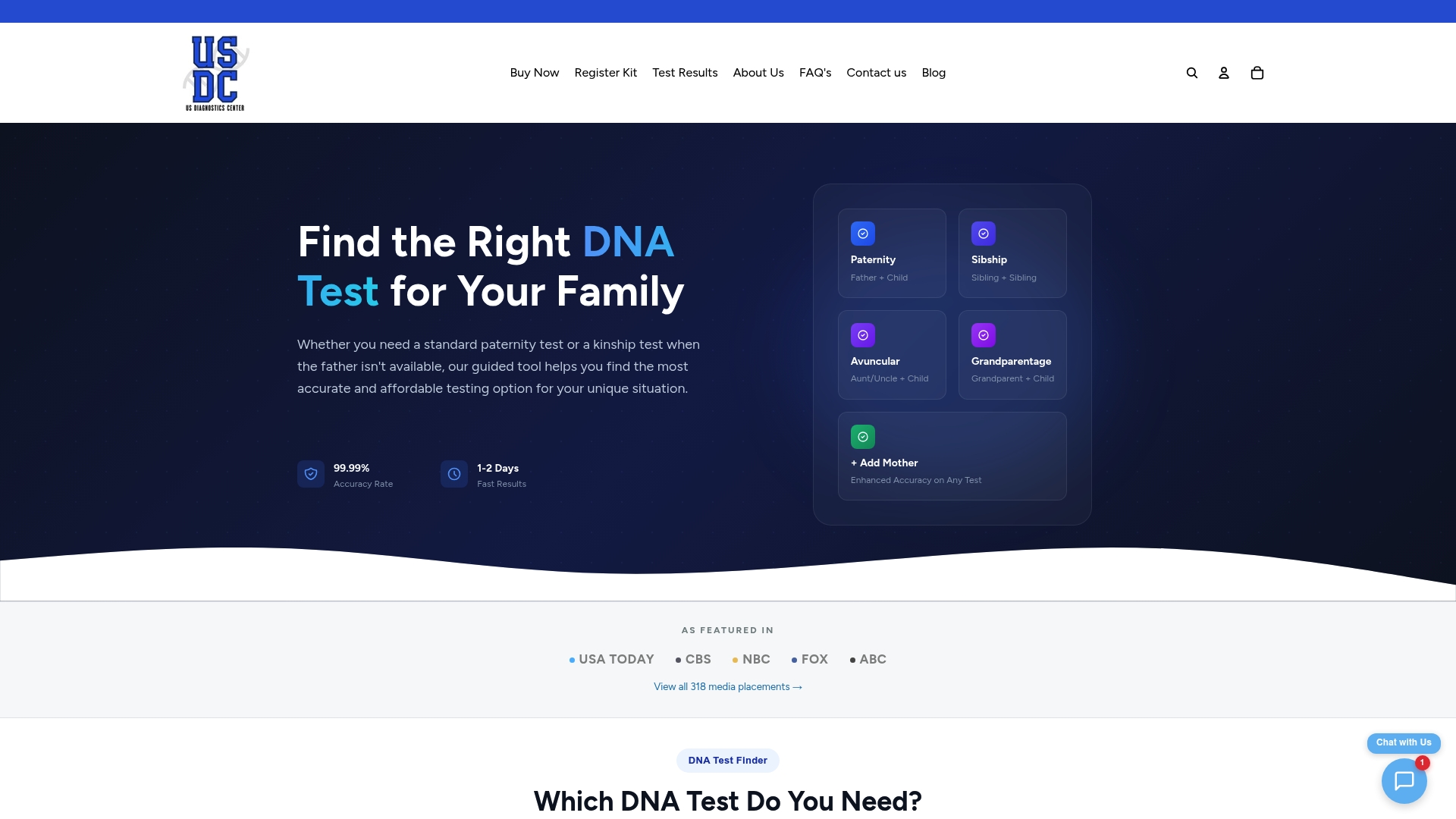
Every kit ships with instructions and a prepaid return envelope, and our team can answer questions about who should be included before you place an order.
FAQ
Can one man be tested against several children at once?
Yes. He gives one sample, and each child gives a sample of their own. The lab compares his profile with each child separately, so you get a separate result for every child. Ask about adding participants at checkout so you order the right number of comparisons.
If one child is confirmed as his, does that apply to the others?
No. Each child inherits a different random mix of DNA, so one result says nothing about another child. If the question is whether the children share the same father, a full or half sibling test compares them directly.
Do I need the mother’s sample?
A basic father-child test can be done without her, but her sample strengthens the analysis. With it, the lab can separate the child’s maternal markers from the paternal ones. When several children share the same mother, her participation can be useful for each comparison.
How long does it take for several children?
Lab processing takes 2 to 3 business days after the samples arrive, and a standard order from purchase to results takes 7 to 10 business days. Next-Day Results are available during checkout. Ship all samples back together in the prepaid return envelope to keep the timing consistent.
Will a home test be accepted by a court or immigration office?
No. Home tests are for personal knowledge. Courts and agencies set their own requirements. USCIS, for example, requires an AABB-accredited laboratory for DNA evidence of a biological relationship. Check with the court, agency, or your attorney first.
Sources
- Cleveland Clinic: DNA Paternity Test
- Oslo University Hospital: Other kinship
- Office of Child Support Enforcement: Essentials for Attorneys, Chapter Nine
- NYC Office of Chief Medical Examiner: Paternity Analysis
- National Institute of Justice: Parentage and Relatedness statistics
- USCIS: Genetic testing guidance
- Law Office of Anna Din PLLC: Paternity in Texas


0 comments