

A used toothbrush can often yield enough DNA for a paternity test, and systematic reviews have documented complete profiles recovered from bristles in many cases. It remains a secondary option, though, because cheek swabs produce more consistent results with fewer variables to manage. One controlled study found usable STR profiles in roughly 70% of toothbrush samples tested.
TL;DR:
- One controlled study found usable STR profiles in roughly 70% of toothbrush samples; damp storage, shared use, and time since brushing can lower recovery.
- Labs target bristle bundles near the base, and one review found that sampling about five bundles was sufficient in some protocols.
- Keep the brush dry in a clean paper envelope, avoid touching the bristles, and record the user’s identity and collection date to limit contamination.
- Partial profiles may need extra markers or a second sample, and results can take longer because labs may repeat extraction attempts.
- For legal testing, use a witnessed collection with signed forms and a laboratory that meets applicable standards, with documented handling from collection through reporting.
Table of Contents
- How Labs Extract DNA From Toothbrush Bristles
- What Affects Your Odds of a Usable Sample
- How to Collect and Submit a Toothbrush Sample
- What to Expect From the Results
- Notes From US Diagnostics Center and Dr. Todd Lewis
- Is a Toothbrush the Right Route for You?
- Order a Home Paternity Kit or Check Sample Options First
- FAQ
- Sources
How Labs Extract DNA From Toothbrush Bristles
Saliva residue and epithelial cells collect at the base of the bristles, close to where they meet the handle, during normal brushing. This is the region laboratories target first, since it holds more biological material than the exposed bristle tips, which are rinsed repeatedly by water and toothpaste.

Extraction follows the same basic path used for other relationship-testing samples, as detailed in examples of genetic testing for IVF and fertility. A technician isolates the cellular material from the bristle bundles, purifies the DNA, and amplifies specific short tandem repeat (STR) markers that are compared against a reference sample. The number of markers examined and the quality of the extraction kit both influence whether the lab ends up with a complete profile or a partial one.
The process generally includes:
- Selecting bristle bundles closest to the base, where cell deposits concentrate.
- Releasing trapped DNA from the bristle material using a purification protocol.
- Amplifying STR markers through standard PCR-based methods.
- Comparing the resulting profile against the other tested party’s sample.
A systematic review published in MDPI’s International Journal of Environmental Research and Public Health found that extraction method and bundle selection materially affect outcomes, and that sampling around five bristle bundles was sufficient in some protocols to generate a usable profile. One comparative study cited in that review reported stronger results using the QIAamp DNA Mini Kit than with lower-yield alternatives, which is part of why lab-to-lab success rates vary even on similar samples.
What Affects Your Odds of a Usable Sample
Several variables determine whether a toothbrush sample returns a complete profile, a partial one, or nothing usable at all.
- Time since last use. Profiles have been recovered from brushes used anywhere from a day to several months earlier, though recovery success drops as time passes and storage conditions matter as much as elapsed time.
- Storage conditions. A brush kept dry tends to preserve DNA better than one left damp, since moisture encourages bacterial growth that degrades genetic material.
- Shared use and contamination. A toothbrush used by more than one household member introduces mixed DNA, which can confuse or invalidate a profile.
- Bristle bundle selection. Sampling too few bundles, or the wrong location on the brush, lowers the chance of a complete result regardless of how recently it was used.
- Toothpaste and rinses. Antibacterial rinses and some toothpaste formulations can reduce the biological material available at the bristle base.
A complete profile allows a lab to report a standard probability of paternity. A partial profile, missing data at one or more markers, still has value but usually requires additional markers or a second sample to reach the same confidence level.
Pro Tip: If you’re not sure how long ago the brush was last used, say so when you submit it. It helps the lab choose the right extraction protocol instead of guessing.
How to Collect and Submit a Toothbrush Sample
Collecting a toothbrush sample correctly matters as much as the sample itself. A rushed or contaminated collection can turn a usable brush into a wasted one.
- Choose the brush the individual actually uses regularly, not a spare or a shared one.
- Avoid touching the bristles directly with your fingers, since this adds your own DNA to the sample.
- Handle the brush by the handle only, using a clean tissue or glove if available.
- Place the entire brush head, or the bristle section as instructed by the lab, into a clean paper envelope rather than plastic.
- Label the envelope with the date of collection and the identity of the person it belongs to.
For storage and packaging:
- Keep the sample dry. Trapped moisture inside a sealed plastic bag accelerates degradation, so a paper envelope is the better choice for short-term storage.
- Seal the envelope and, where chain-of-custody matters, use tamper-evident tape.
- Include a brief signed note describing who used the brush and when, especially if the sample is going to be compared to a cheek swab collected separately.
Formal chain-of-custody procedures matter when a test needs to meet legal or agency standards. Federal guidance for child-support enforcement agencies, for example, requires the use of laboratories that perform legally and medically acceptable genetic tests and documents how samples are handled from collection through reporting. When that level of formality is required, a witnessed collection with signed forms, following the standard cheek swab procedure, is almost always the more reliable path than relying on a toothbrush.
What to Expect From the Results
Labs typically report paternity results as a probability of inclusion or exclusion, built from how many of the tested markers match between the child and the alleged father. The more markers that overlap cleanly, the higher the reported probability when the result points toward paternity.
- A complete profile from a toothbrush is treated the same way as a profile from a cheek swab once it clears quality checks.
- A partial profile, lacking data at some markers, can still support a conclusion but with a lower overall confidence score.
- Turnaround on toothbrush samples can run longer than standard swabs, since some samples require repeat extraction attempts before a usable profile emerges.
Roughly 70% of toothbrush samples tested in one case series produced a complete STR profile matching the corresponding blood reference, according to research published in Forensic Science International. That leaves a meaningful share of samples that come back partial or unusable, which is the main reason labs treat toothbrushes as a backup rather than a default.
When a toothbrush sample returns only a partial result, labs can sometimes strengthen the analysis with an additional reference sample from a close relative, run through kinship-based statistical models, though outcomes still depend on how many markers overlap and how the family is structured.
Notes From US Diagnostics Center and Dr. Todd Lewis
Our home paternity process offers options for situations where a cheek swab from one party isn’t realistic and a secondary sample is necessary. A test selection tool can help you determine which kit fits various family scenarios, including paternity or kinship tests.
A few practical notes worth keeping in mind:
- We process samples typically within a few business days once they reach the lab, with standard order-to-results timing of about one to two weeks.
- Our standard testing examines multiple genetic markers, which helps confirm results even when a secondary sample like a toothbrush returns a partial profile.
- Every kit ships with a return envelope for sending samples back to the lab.
Pro Tip: If you’re relying on a toothbrush instead of a cheek swab from one party, call ahead and tell the lab before you ship anything. It changes how they plan the extraction and saves you a delay.
Dr. Todd Lewis notes that the biggest avoidable error he sees is submitting a toothbrush that’s been rinsed clean or shared among family members, both of which cut directly into the odds of a usable profile.
Is a Toothbrush the Right Route for You?
A toothbrush sample makes sense when discretion matters or when a direct cheek swab from one party simply isn’t possible, but it’s worth being honest about the tradeoff. Cheek swabs remain more predictable because the collection is controlled and the sample is fresh, while a toothbrush depends on variables you can’t always verify, like how long ago it was used or who else touched it.
If you’re leaning toward a toothbrush, contact the testing service before you collect anything. Confirming what they need in terms of packaging, documentation, and bundle count up front can help avoid resubmitting samples that don’t meet protocol.
— Dr. Todd Lewis
Order a Home Paternity Kit or Check Sample Options First
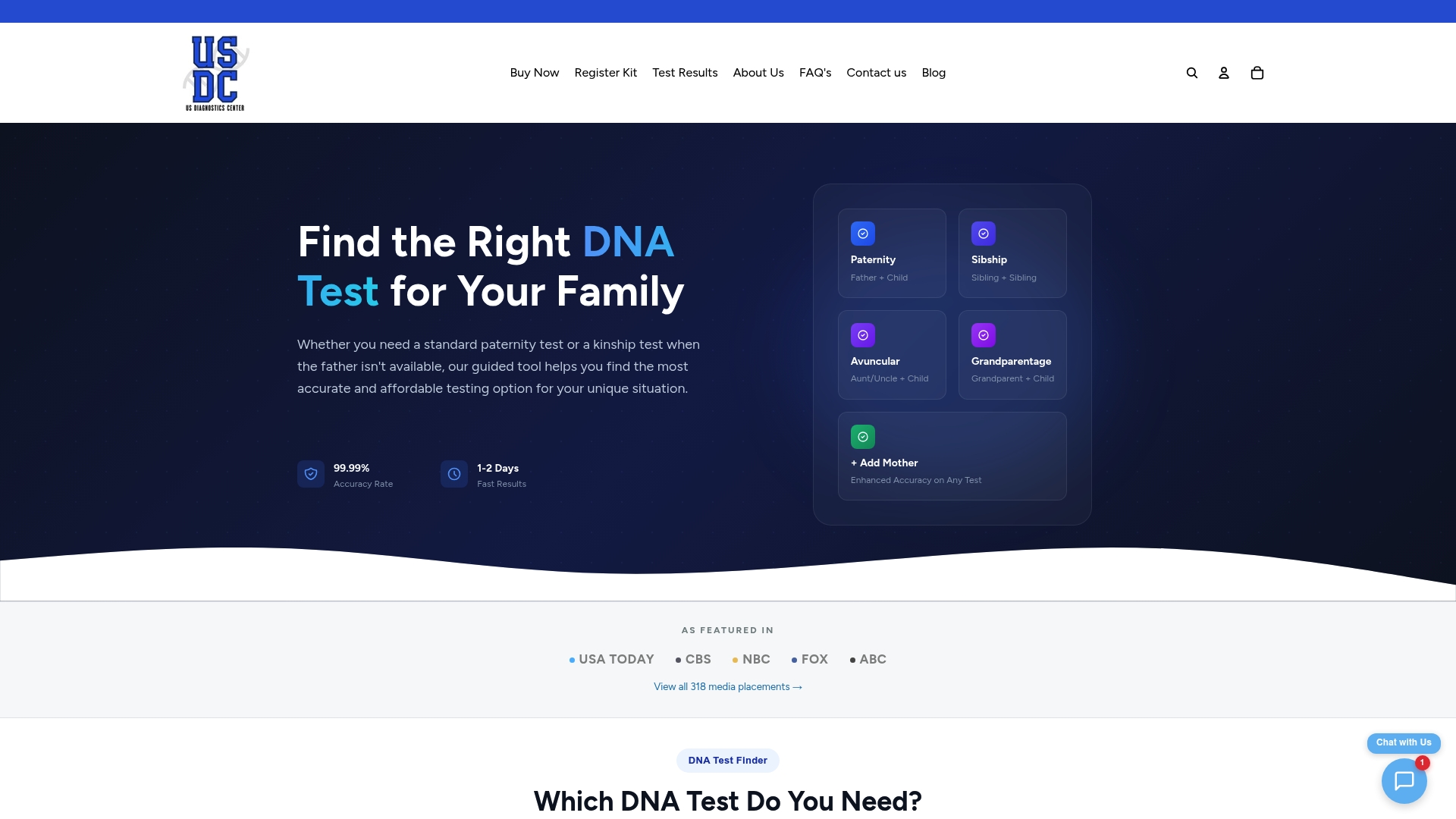
We make it simple to figure out which kit fits your situation before you commit to anything. Our test finder walks you through a few quick questions and recommends the right option, whether that’s a standard paternity test or a kinship test involving a sibling, grandparent, or other relative.
If you’re working with a toothbrush sample instead of a fresh cheek swab, reach out to us before you ship anything so we can confirm what we need for extraction. A few things worth knowing before you order:
- Our Home Paternity Test Kit runs $79 and tests up to 28 markers.
- Lab processing takes 2 to 3 business days, with standard order-to-results timing of 7 to 10 business days.
- Every kit includes a prepaid return envelope, so return shipping is already handled.
- Our full collection of home DNA kits covers paternity, maternity, and sibling or grandparent testing for more complex family questions.
Start with the test finder, or browse the kit collection directly, to get the right test moving today.
FAQ
Can a used toothbrush really provide enough DNA for a paternity test?
Yes, in many cases a used toothbrush carries enough epithelial cell material at the base of the bristles for a lab to generate a usable STR profile. One case series reported roughly a 70% success rate, though cheek swabs remain more reliable since the sample is fresh and collection is controlled.
How long does DNA last on a toothbrush or mouth swab?
DNA on a toothbrush can sometimes be recovered months after last use, though profile completeness drops the longer the brush sits, especially if it’s stored somewhere damp. A fresh cheek swab, by contrast, is processed almost immediately, which is why it typically yields more consistent results.
Can I get a DNA test for my baby?
Yes, maternity and paternity testing can be done for infants using a simple cheek swab, which is gentler and more reliable than trying to use an item like a toothbrush. Our Home Maternity Test Kit is built for exactly this kind of testing.
Are there home DNA tests that use hair instead of a cheek swab?
Hair can sometimes be used for DNA testing, but results depend heavily on whether the hair includes a root with follicle tissue attached, since the shaft alone contains far less usable DNA. A cheek swab or a toothbrush with intact bristle bundles is generally a more dependable starting point for relationship testing.
How do I do a paternity test discreetly?
A toothbrush, used cup, or similar personal item can sometimes serve as a discreet secondary sample when a direct cheek swab isn’t an option. Our guided test finder can help you figure out which kit and sample type fits your situation before you order.
Sources
- Toothbrushes as a source of DNA for gender and human identification: a systematic review
- Toothbrushes as a source of DNA for gender and human identification—A systematic review
- Human identification using DNA purified from residues in used toothbrushes
- § 303.5 Establishment of paternity. (eCFR)


0 comments