

Yes, many DNA test sellers in the United States let you pay over time. Common routes include buy-now-pay-later (BNPL) pay-in-four plans, in-house installment options, standard credit cards, and point-of-sale financing. The trade-off is real: lower upfront cost can come with late fees, overdraft risk, or extra data handling, so we recommend reading the provider’s terms and privacy policy before choosing how to pay.
TL;DR:
- At home kits cost $79 for paternity, $129 for maternity, and $139 for sibling, grandparent, or aunt and uncle testing.
- Pay in four plans usually require one quarter upfront and three biweekly payments; choose them only if scheduled debits fit your cash flow.
- Missed BNPL payments may trigger late fees, bank overdrafts, or collections; the 2023 late fee rate across BNPL loans was 4.1%.
- Lab work takes 2 to 3 business days, while standard results take 7 to 10 including shipping; confirm whether rush processing waits for payment clearance.
- Check seller and lender privacy policies for data use, explicit consent, and deletion procedures before financing a test involving sensitive genetic information.
Table of Contents
- Payment plan options you’ll see at checkout
- Typical U.S. costs and timelines for common DNA tests
- BNPL in depth: how pay-in-four works and what it risks
- Privacy and regulator guidance for providers offering flexible payments
- Practical checklist: choosing the right payment option
- Eligibility criteria for payment plans
- How to apply for a payment plan
- How payment plans affect your overall cost
- Getting help with a payment plan
- Cancellation and refund policies tied to payment plans
- Comparing payment plan approaches across DNA testing sellers
- A straight answer on payment flexibility and quality
- Find a DNA test and payment option that fits your budget
- FAQ
- Sources
Payment plan options you’ll see at checkout
A DNA test purchase typically offers a handful of ways to spread out the cost, and each one fits a different budget and timeline.
Pay-in-four BNPL plans split the total into four equal payments, usually with the first due at checkout and the rest billed every two weeks. Most BNPL providers skip a hard credit check, which makes approval fast, but the schedule is rigid once it starts.
In-house installment plans, when a provider offers them, work differently. Rather than routing payment through a third-party lender, the seller bills you directly over a set number of weeks or months, often with more flexibility on timing but less standardized consumer protection than regulated BNPL products.
Standard credit cards remain the simplest option for many buyers: no new application, familiar billing, and rewards points, though carrying a balance means ordinary card interest applies.
Point-of-sale installment loans, offered through a financing partner at checkout, suit larger purchases better than a single low-cost kit, since they typically involve a credit check and a longer repayment term.
- BNPL pay-in-four fits quick, low-cost at-home kits where you want the cost split without a credit check.
- In-house installments suit buyers who prefer dealing directly with the test provider.
- Credit cards work best if you can pay the balance off within a billing cycle or two.
- Point-of-sale loans make more sense for higher-priced or expedited orders where a longer term helps.
Typical U.S. costs and timelines for common DNA tests
Prices vary by test type and by who is involved, but home kits for the most common family questions tend to land in a fairly narrow band. Home DNA test kits for paternity start at $79, maternity testing runs $129, and sibling, grandparent, or aunt and uncle tests are priced at $139.
Lab processing and order-to-results timing are two different clocks, and mixing them up leads to unrealistic expectations.
- Lab processing once a sample arrives typically takes 2 to 3 business days.
- Standard order-to-results, counting shipping both ways, usually runs 7 to 10 business days.
- Expedited options can shorten the wait, though financing terms should be confirmed before you assume a payment plan allows for rush processing.
Choosing to pay over time does not usually change how quickly your sample moves through the lab. It can, however, affect whether a seller will begin expedited processing before the first installment clears, which is worth confirming at checkout.
BNPL in depth: how pay-in-four works and what it risks
The pay-in-four structure most BNPL providers use asks for roughly a 25% down payment at checkout, with the remaining balance split into three equal installments billed every two weeks, and many BNPL loans skip the hard credit check that a traditional loan or credit card application requires.
In 2023, 4.1% of BNPL loans were assessed a late fee, and charge-off rates fell to 1.83% that same year, a lower default rate than credit cards carry for similar borrowers, largely because automatic repayments keep most accounts current.
That automation cuts both ways for a DNA test buyer:
- Automatic debits can trigger an overdraft fee from your own bank if the scheduled payment lands before funds do.
- Missing a payment can get you blocked from future BNPL purchases with that provider.
- Unpaid balances can escalate to collection actions, even though most BNPL products don’t report to the major credit bureaus under normal repayment.
- A BNPL provider may collect its own personal data separately from the seller, so it’s worth checking whether financing adds an extra layer of data sharing beyond the test purchase itself.
Privacy and regulator guidance for providers offering flexible payments
Genetic data is about as sensitive as personal information gets, and it doesn’t expire the way a password does. The Federal Trade Commission has warned that consumers should prioritize transparent, verifiable privacy practices over headline price when choosing a genetic testing provider, and FTC enforcement actions have required some companies to delete improperly stored DNA data and stop deceptive billing practices.
A few signs separate a trustworthy provider from one worth avoiding:
- Look for explicit, affirmative consent language for how your sample and data get used, not a buried default opt-in.
- Confirm there’s a verifiable deletion process if you ever want your sample or data removed.
- Watch for dark-pattern billing, where financing terms or recurring charges are harder to find than the price itself.
- Remember that a BNPL or lending partner has its own privacy policy separate from the test seller’s, since financing can introduce an additional data flow.
Pro Tip: Ask a provider to point you to a clear privacy policy and sample-retention policy before you commit to a payment plan, not after your kit ships.
Practical checklist: choosing the right payment option
Matching the payment method to your situation takes just a few minutes of comparison before checkout, similar to how clinics like the Barbados Fertility Centre organize flexible payment options for complex medical services.
- Match the term length to your budget. A four-payment BNPL schedule due every two weeks only works if your cash flow supports it; if not, a slower in-house plan or a credit card may fit better.
- Read the fine print on fees and debits. Look specifically for late fee amounts, how automatic debits are scheduled, and what happens if a payment is missed.
- Confirm how financing affects timing. Ask whether lab work starts before your first or final installment clears, especially if you need expedited results.
- Save your records. Keep receipts, screenshots of the terms shown at checkout, and a copy of the provider’s privacy policy in case you need to reference them later.
Pro Tip: A screenshot taken at the moment of purchase is often the only proof you’ll have of the exact terms you agreed to, since some providers update their terms pages over time.
Eligibility criteria for payment plans
Eligibility rules differ by payment type, and understanding them ahead of time avoids a declined checkout.
BNPL pay-in-four plans generally require only that you be of legal age, have a valid debit or credit card, and pass a soft identity check, which is why approval is usually instant and doesn’t depend on a strong credit history. Point-of-sale installment loans for larger purchases typically involve a harder credit check and may weigh your existing debt and income, since the lender is extending credit over a longer term rather than four quick payments.
In-house installment plans, where a provider offers them directly, tend to set their own criteria, which might include a minimum order size or a required down payment before the plan is approved. Credit cards carry whatever eligibility and credit limit your card issuer has already assigned you, independent of the DNA test purchase itself.
Age and location also matter at a basic level: most DNA testing sellers require the purchaser to be an adult making the purchase on behalf of the test participants, and financing options are generally limited to orders shipped within the United States. If a payment plan is declined, it’s often tied to the financing provider’s own underwriting rather than anything about the DNA test order itself.

How to apply for a payment plan
Applying for financing on a DNA test follows a fairly consistent sequence across most sellers that offer it.
First, you add the test kit (or kits, if ordering for multiple participants) to your cart and proceed to checkout as you normally would. At the payment screen, a BNPL or installment option typically appears alongside standard card payment, often displayed as a toggle or button from the financing partner.
Selecting that option usually redirects you briefly to the financing provider’s own interface, where you enter basic identity and payment details. Approval for pay-in-four BNPL is typically near-instant since it relies on a soft check rather than a full credit pull. Once approved, you complete the first installment or down payment immediately, and the remaining schedule is confirmed by email.
For an in-house installment plan, the process may require contacting the provider’s customer support directly rather than selecting an automated option at checkout, particularly for larger combination orders like a full kinship test involving multiple participants. In either case, confirm the full payment schedule and any fee terms before finalizing the order, since those details are harder to adjust after your kit has already shipped.

How payment plans affect your overall cost
The headline price of a DNA test and what you actually pay can diverge once financing enters the picture, so it’s worth understanding where extra cost comes from.
A standard zero-interest BNPL pay-in-four plan, used as intended, typically doesn’t add interest at all. The cost only rises if a payment is missed, since late fees apply on most BNPL products and a missed automatic debit can also trigger a separate overdraft fee from your own bank.
Point-of-sale installment loans are a different story. Because they often run longer than four payments, many carry interest, and a provider’s advertised rate should be checked against the total repayment amount rather than just the monthly figure. Some BNPL products have evolved into longer installment loans that behave more like traditional credit, including harder credit checks and interest charges depending on the lender and plan length.
Credit cards add cost only if you carry a balance past the due date, at whatever your card’s standard interest rate is. In-house installment plans vary by provider, and any added fee structure should be stated clearly before you commit, since there’s no single industry standard for how those plans are priced.
Getting help with a payment plan
Questions about a payment plan usually come up either before checkout or after a missed payment, and the right contact depends on which stage you’re in.
For BNPL pay-in-four plans, support for the payment schedule itself, including late fees, rescheduling, or disputes, is typically handled by the financing provider rather than the DNA test seller, since the loan agreement sits with that third party. Keeping the confirmation email with your repayment schedule on hand makes it faster to resolve a billing question when you reach out to that provider’s own support team.
For questions about the test order itself, shipping status, or how a payment plan interacts with expedited processing, the seller’s own customer service is the right contact. Most sellers list a support email or phone line on their site specifically for order questions, separate from any financing provider’s support channel.
If a payment plan is declined at checkout or you’re unsure which option fits your order, reaching out to customer support before placing the order is generally more useful than guessing, since eligibility and plan terms can shift based on order size or the specific test combination you’re buying.
Cancellation and refund policies tied to payment plans
A cancellation or refund request works differently depending on whether your DNA test kit has shipped and whether a financing plan is attached to the order.
If you cancel before a kit ships, most sellers can simply stop the order and refund any payment already made, which also typically cancels the remaining BNPL installments with the financing provider. Once a kit has shipped or a sample has been received at the lab, refund policies tend to be more limited, since lab processing involves real cost on an individual sample basis.
When a BNPL plan is involved, canceling the underlying order doesn’t automatically cancel the loan agreement on its own, so it’s worth confirming directly with the financing provider that remaining installments have in fact been stopped, not just paused. The safest approach is to request written confirmation, whether by email or through the provider’s account dashboard, that both the order and any attached payment plan have been closed out.
Always check a specific seller’s stated return and refund terms before ordering, since policies on partially used kits, unopened kits, and expedited orders can all differ.
Comparing payment plan approaches across DNA testing sellers
Sellers in the at-home DNA testing space generally offer some mix of the same basic tools: BNPL pay-in-four, standard card payment, and occasionally an in-house installment option for larger kinship orders. What varies more is how clearly those terms are presented and whether expedited processing requires payment in full upfront.
A seller that displays BNPL terms directly at checkout, rather than only after you’ve entered payment details, tends to be more transparent about fees and schedule. Likewise, a seller that clearly separates its lab processing time from total order-to-results time gives a more honest picture of what financing can and cannot speed up.
For a reader weighing one provider’s payment flexibility against another, the more useful comparison isn’t which seller offers the lowest headline price, but which one pairs clear payment terms with a verifiable privacy policy and a consistent, stated turnaround time. That combination matters more for a DNA test than it would for an ordinary retail purchase, given how sensitive the underlying data is.
A straight answer on payment flexibility and quality
We think flexible payment options deserve a place at checkout, but never at the expense of data security or test accuracy. Our guided test finder matches buyers with the right kit, our lab processing runs 2 to 3 business days with standard order-to-results in 7 to 10, and our team is available to confirm payment options for expedited orders.
— Dr. Todd Lewis
Find a DNA test and payment option that fits your budget
We price our home DNA test kits plainly: home paternity at $79, maternity at $129, and sibling, grandparent, or aunt and uncle testing at $139, each shipped with a prepaid return envelope.
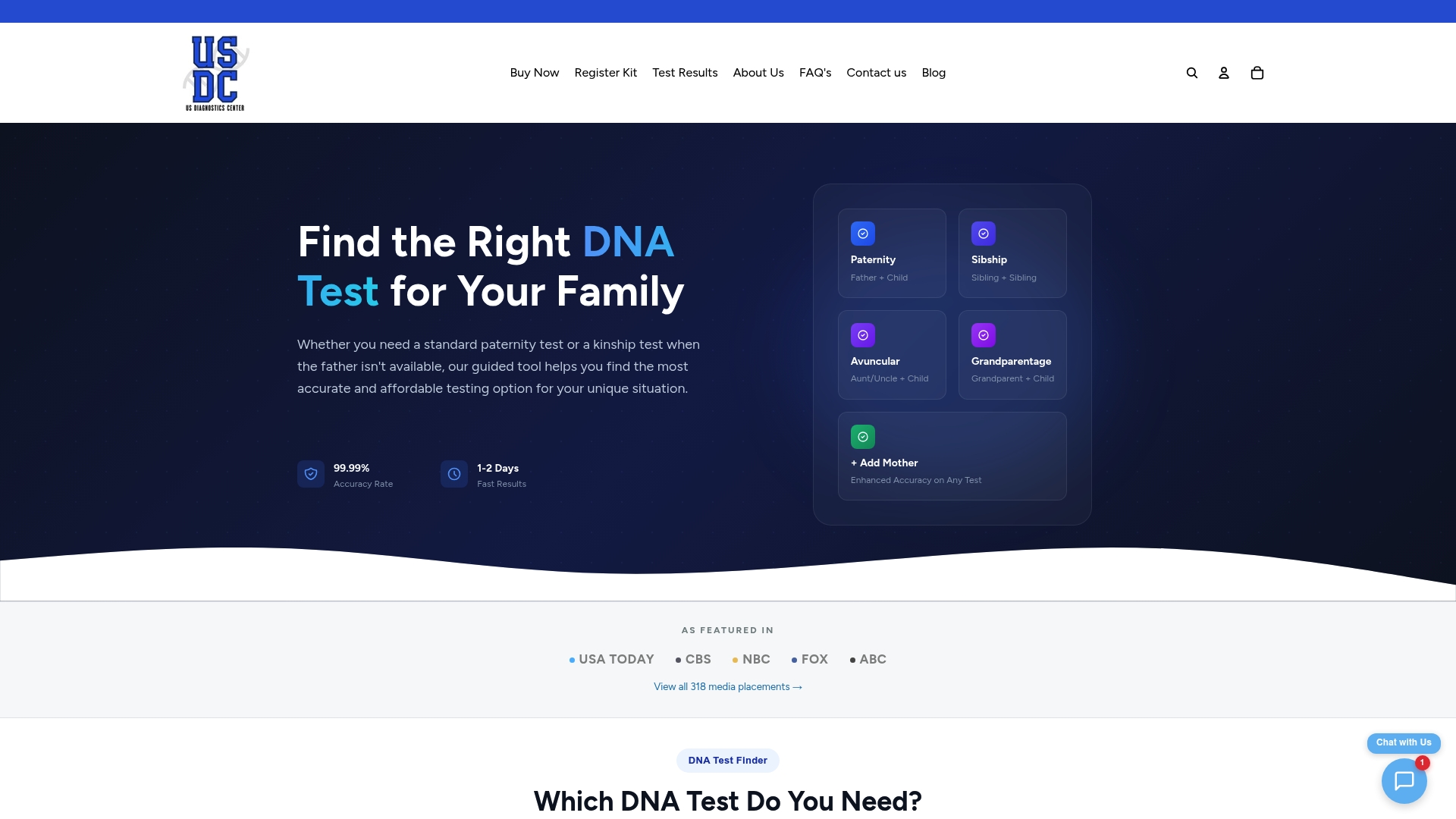
Our guided test finder walks you through which kit fits your situation and shows current checkout payment options, including expedited processing where available. Visit our home DNA test collection to see pricing and pick the option that fits your budget today.
FAQ
Can a DNA test be done with a hair sample?
Hair samples can work for some DNA testing purposes, though cheek swabs remain the more common and reliable collection method for standard at-home paternity and kinship kits. Check a specific kit’s instructions, since sample requirements vary by test type.
How much does a DNA test cost in the USA?
Home DNA test prices in the U.S. commonly range from around $79 for a basic paternity or single-profile test up to $139 for kinship tests like sibling or grandparent testing. Maternity testing typically falls in between at $129.
How can I get a DNA test without paying full price upfront?
Many sellers offer BNPL pay-in-four plans that split the cost into four payments, often with no hard credit check required, or in-house installment options for larger kinship orders. Genuinely free testing is rare and usually limited to specific institutional or eligibility-based circumstances rather than everyday retail purchases.
What makes a paternity test result accurate and reliable?
Accuracy in paternity testing depends on proper sample collection, correct chain of custody if results need to hold up for formal purposes, and a lab that analyzes a sufficient number of DNA markers, with reputable kits testing up to 28 markers. Reading a provider’s stated accuracy and methodology before ordering helps set realistic expectations.
Does a payment plan delay my DNA test results?
Choosing a payment plan doesn’t typically change how quickly your sample moves through lab processing once it arrives, which usually takes 2 to 3 business days. It can, however, affect whether expedited processing begins before your first installment clears, so confirming that detail with the seller before ordering is worthwhile.
Sources
For readers who want to dig into the underlying data on buy-now-pay-later financing and genetic data privacy, these sources cover the regulatory and market research referenced above.


0 comments