

At-home relationship DNA kits typically vary in price depending on the relationship being tested and how fast you need results. US Diagnostics Center, for example, prices a home paternity test at $79, a maternity test at $129, and sibling, grandparent, or aunt/uncle kits at $139. These are consumer-grade tests: you swab your own cheek, mail the sample back in a prepaid envelope, and get results online in about 7 to 10 business days from order to report.
That price point covers a very specific product. It is not the same thing as court-admissible chain-of-custody testing, which involves a third-party collector, signed documentation, and typically higher fees. The Cleveland Clinic notes that at-home kits are generally cheaper but may not meet legal admissibility standards, and MedlinePlus confirms that direct-to-consumer genetic testing prices span a wide range depending on scope.
- Home paternity kits generally cost less than some other relationship test types.
- Maternity and kinship tests (sibling, grandparent, or avuncular) tend to be priced higher than paternity kits.
- Legal or court-admissible testing is a separate category with typically higher costs and a different process.
Key Takeaways
At-home relationship DNA kits generally cost between $79 and $250, with price driven mainly by relationship type, marker count, and how many people are tested.
| Point | Details |
|---|---|
| Base price range | Expect $79 to $139 for standard at-home paternity, maternity, or kinship kits before add-ons. |
| Price covers four things | Kit, lab analysis, prepaid return shipping, and online results are standard inclusions. |
| Extras add up fast | Expedited processing, extra participants, and certified reports can double your total cost. |
| Two different turnaround clocks | Lab processing (2 to 3 business days) and order-to-results (7 to 10 business days) are not the same window. |
| US Diagnostics Center pricing | Publishes transparent per-test pricing ($79 to $139) and up to 28 markers analyzed. |
Table of Contents
- How Much Does AABB DNA Testing Cost, and What's Actually Included?
- What Do Different Relationship Tests Typically Cost?
- What Factors Actually Change Your Quote?
- How Do I Choose the Right Kit Before I Buy?
- How Long Does It Take to Get Results?
- Your 7-Point Checklist Before You Click Buy
- What Should You Actually Prioritize When Choosing a Kit?
- A Transparent Option If You're Ready to Order
- Sources
- FAQ
How Much Does AABB DNA Testing Cost, and What's Actually Included?
The listed price on an at-home kit almost always covers four things: the collection kit itself, lab analysis of your samples, prepaid return shipping, and delivery of your results online. What varies is everything layered on top of that baseline.
A standard kit ships with cheek swabs, an instructions sheet, and a prepaid mailer so you're not paying separately for postage back to the lab. The lab side of the price pays for marker analysis. Tests analyzing more genetic markers generally provide a more statistically confident answer, especially for kinship relationships less direct than parent and child. NIST explains that labs measure many genome positions using swab-based collection and microarray technology, and that approach is highly accurate for close relationships when enough markers are compared.
Here's what commonly costs extra:
- Expedited lab processing
- Adding a third participant (a known father, for example, in a motherless paternity case)
- Notarized or supervised collection for legal use
- Certified paper reports mailed to you
- International shipping
- Phone consultations with a genetic counselor
Pro Tip: Ask the vendor for a total checkout price before you submit payment info, not just the advertised base rate. Add-on participants and expedited shipping can push a $79 kit closer to $150 or more.
What Do Different Relationship Tests Typically Cost?
Price scales with how many people are tested and how genetically distant the relationship is. A basic paternity test, comparing one child to one alleged father, sits at the low end. Kinship tests involving grandparents, aunts, uncles, or siblings tend to cost more because they require deeper marker comparison to reach a confident conclusion when a direct parent isn't available for testing.
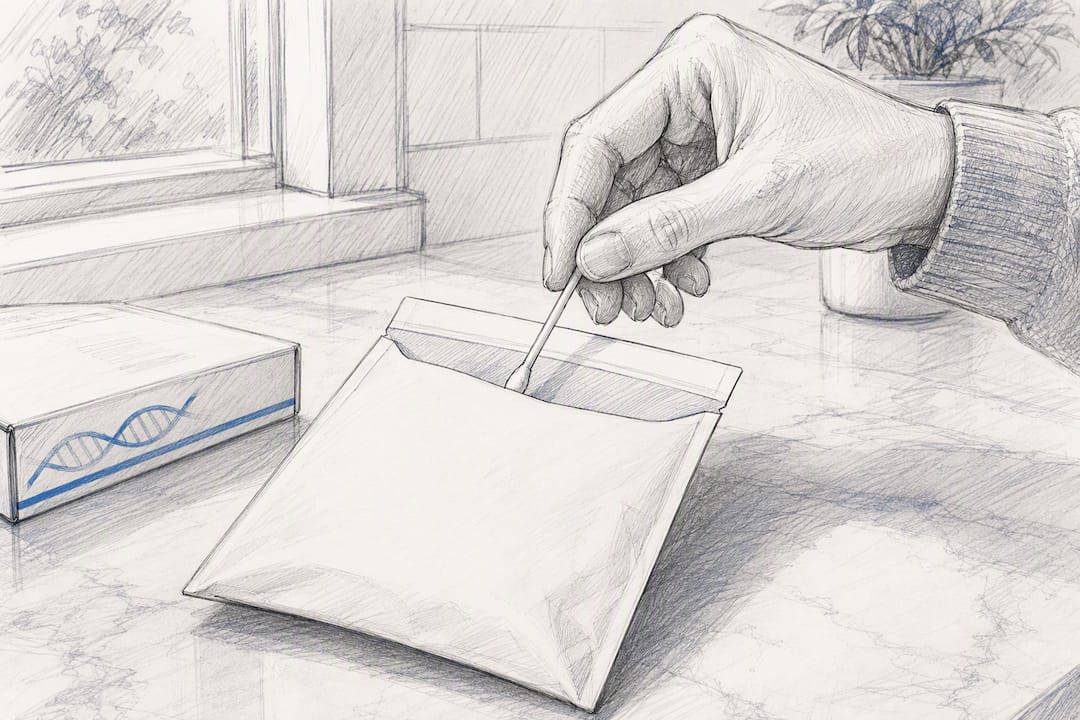
These figures reflect at-home consumer kit pricing, not accredited-lab court-admissible rates, which run higher due to supervised collection and documentation requirements. The Cleveland Clinic notes lab fees for these tests often exceed $100, and medical-setting testing can run into the several-hundred-dollar range.
A few things reliably push price upward within any category:
- Trio tests (child, mother, and alleged father together) cost more than a duo test
- Kinship tests without a direct parent sample available require more markers and more lab work
- Adding participants beyond the standard two-person kit adds a per-person fee
What Factors Actually Change Your Quote?
Marker count is the biggest lever. A test analyzing up to 28 markers costs more to run than a stripped-down version analyzing fewer, and it typically delivers a stronger statistical result, especially for kinship cases where the biological signal is fainter than a direct parent-child comparison.
The number of people tested matters just as much. Every additional participant, a second alleged father, a half-sibling for comparison, adds lab work and a line item to your invoice. The type of relationship also shifts cost: direct parent-child tests are the simplest and cheapest to analyze, while remote kinship (like half-siblings or great-grandparents) demands more sophisticated statistical modeling.
Service-level extras add up fast:
- Supervised or notarized collection for legal use
- Chain-of-custody documentation
- Certified, signed lab reports
- Rush or expedited processing
Where you buy matters too. Ordering direct from a lab often means more pricing transparency than buying through a third-party retailer, where the box price may not reflect the total cost once shipping and add-ons are factored in.
Pro Tip: Before buying, ask exactly how many markers are analyzed and whether the lab provides a numeric probability-of-parentage score with a signed report. A vague answer here is a red flag.
How Do I Choose the Right Kit Before I Buy?
Buying the wrong kit for your situation is the most expensive mistake in this category, not overpaying for the right one. If you need a private answer for peace of mind, a standard at-home kit works. If you need something a court or immigration office will accept, you need a different product entirely, and buying the wrong one means paying twice.
Run through this checklist before you order:
- Confirm the test type matches your relationship question (paternity, maternity, sibling, grandparent, avuncular)
- Check who needs to collect the sample and whether supervised collection is required
- Confirm the marker count and expected turnaround time
- Verify how the sample gets returned and how your identity is confirmed
- Decide whether you need expedited processing
- Review the full price at checkout, not just the advertised starting price
Before you check out, ask the vendor:
- Is supervised or witnessed collection available if I need it later?
- Is a certified paper report included, or is that an extra fee?
- How many markers does the lab actually analyze?
- What's the lab processing time versus total order-to-results time?
- Does this company offer a chain-of-custody, court-admissible option separately?
Read accreditation language carefully. If a company says it is "pursuing AABB accreditation," that is not the same as being accredited. Our guide to verifying AABB accreditation walks through how to check a lab's actual status before you order.
How Long Does It Take to Get Results?
Two clocks are running once you order, and they're not the same thing. Lab processing time is how long the lab takes to analyze your sample once it arrives, commonly 2 to 3 business days for a standard relationship test. Order-to-results time includes shipping both directions plus lab queue time, typically 7 to 10 business days total.

Industry-wide, processing windows for at-home relationship tests commonly run 3 to 10 business days after the lab receives your sample, with total turnaround stretching to a few weeks during high-demand periods.
To speed things up:
- Choose expedited lab processing if it's offered
- Use a verified drop-off or overnight return option
- Activate your kit and register your sample immediately after collection
If you order today with standard shipping, expect results in a little over a week. If you pay for expedited processing and use overnight return shipping, you can often shave several days off that window, at added cost.
Your 7-Point Checklist Before You Click Buy
Run through this fast before you commit to a kit:
- Test type: Does it match your actual relationship question?
- Total price at checkout: Does it include participants and shipping, not just the base rate?
- Marker count: How many markers does the lab analyze?
- Result delivery: Online portal, email, or mailed report?
- Collection and identity verification: Do you self-swab, or is supervision required?
- Turnaround: What's standard versus expedited, and what does expedited cost?
- Included documents: Is a certified paper report standard or an add-on?
Add up every extra, certified reports, extra participants, expedited shipping, before you compare two vendors on price alone. A $79 kit with three add-ons can end up costing more than a $139 kit with everything bundled in.
What Should You Actually Prioritize When Choosing a Kit?
Most people overthink this decision. If you need a private answer for your own peace of mind, buy the cheapest kit that analyzes enough markers, up to 28 is a solid benchmark, and includes prepaid return shipping. Don't pay extra for supervised collection or certified reports you don't need.
US Diagnostics Center is a useful example of what transparent pricing looks like in this category: published per-test prices, a stated marker count, and clear turnaround windows. If your results need to hold up in court or for an immigration case, talk to an attorney before you order anything, that decision shapes which product you actually need.
A Transparent Option If You're Ready to Order
If you've read this far, you already know the two things that matter most: what you're paying for, and how fast you'll get an answer. US Diagnostics Center built its pricing around exactly that clarity. A home paternity test runs $79, maternity is $129, and sibling, grandparent, or aunt/uncle kinship tests are $139, each with up to 28 markers analyzed, a prepaid return envelope included, and lab processing in 2 to 3 business days.
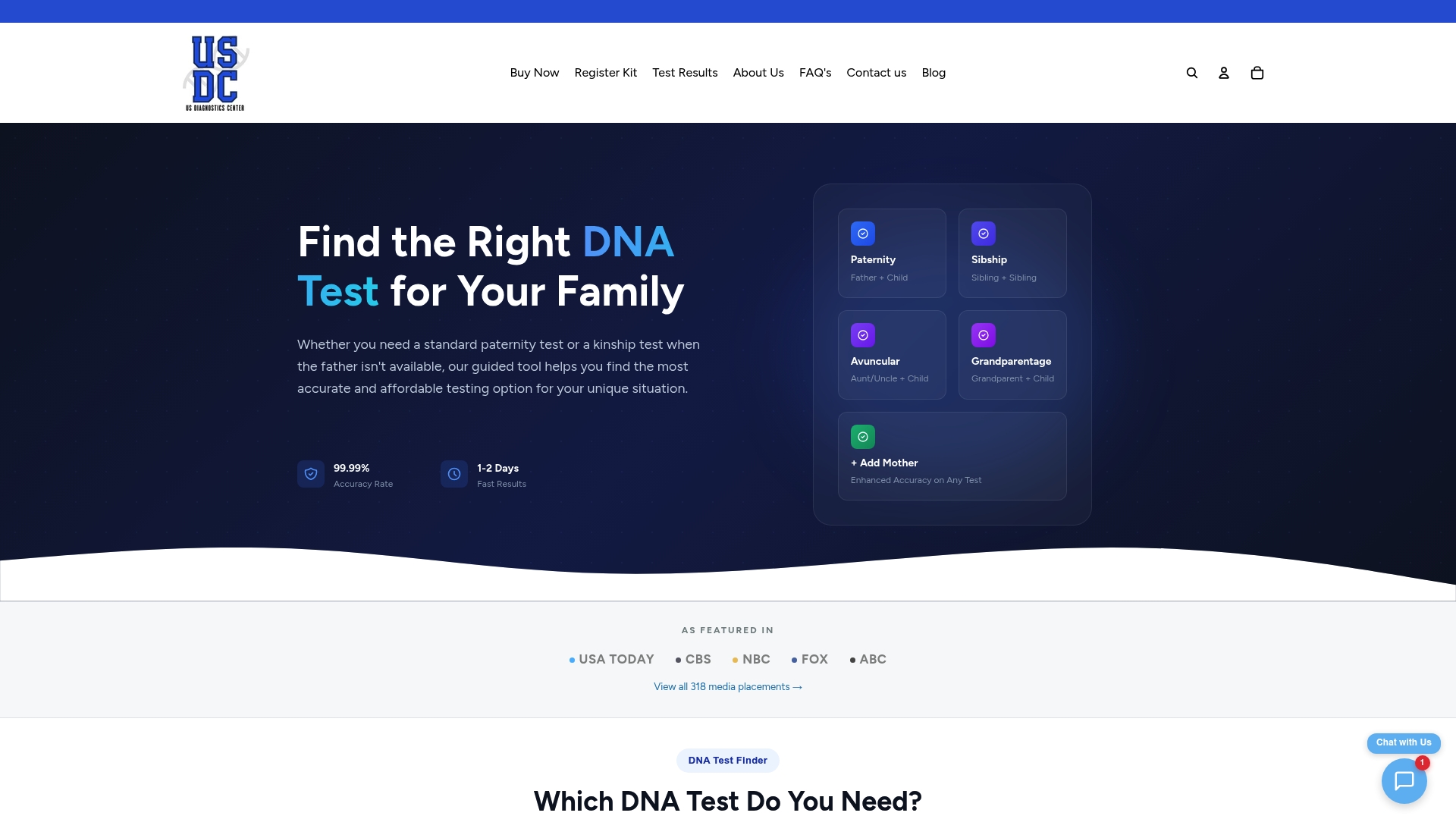
Standard order-to-results time typically takes about a week to a couple of weeks, with expedited options available if you're working against a deadline. What you're getting is a straightforward, price-transparent home kit built for private answers, not a court filing. If that matches what you need, browse the home DNA test collection and pick the relationship test that fits your situation.
Sources
- DNA Paternity Test: Procedure, Accuracy & Results
- Direct-to-Consumer Genetic Testing
- How Do Companies Measure DNA to Discover Your Ancestry? | NIST
- How Long Do Results Take From Home DNA Tests?
Always confirm final pricing and service terms directly on a vendor's checkout page before ordering, since prices and included features can change.
FAQ
Is at-home DNA testing the same as AABB-accredited lab testing?
Not necessarily. Standard at-home kits are consumer products for personal knowledge, while AABB accreditation specifically applies to labs meeting standards for legal chain-of-custody testing.
Why do sibling and grandparent tests cost more than paternity tests?
Kinship tests without a direct parent sample require more markers and more complex statistical analysis to reach a confident result, which raises lab costs.
Does US Diagnostics Center offer court-admissible testing?
US Diagnostics Center focuses on at-home relationship kits for private results. Court-admissible testing is a separate process that requires supervised collection and chain-of-custody documentation.
What's included in a typical $79 to $139 kit price?
The collection kit, lab analysis of up to 28 markers, prepaid return shipping, and online results are standard inclusions at that price point.
How much faster is expedited processing?
Expedited processing and overnight return shipping can shave several days off the standard 7 to 10 business day order-to-results window, usually for an added fee.
Recommended
- Why Home DNA Still Needs Certified Labs in 2026 | USDC
- Why Home DNA Differs from Legal Tests: A Clear Guide | USDC
- 5 Common Myths About At-Home DNA Testing Debunked (2026) | USDC
This article is part of our Understanding DNA Testing: How It Works and What to Expect guide.


0 comments