

A DNA paternity or kinship test is the definitive way to confirm whether a specific man is your biological father, and ordering one is a straightforward process. Choose an at-home kit if you want private, personal answers. For custody, support, or immigration matters, work with a provider that offers a witnessed, chain-of-custody legal test instead.
TL;DR:
- At-home DNA tests are private and affordable but do not include chain-of-custody procedures needed for legal or court use.
- Results from home kits, up to 28 markers analyzed, are conclusive for or against paternity when samples are collected correctly.
- Testing a close relative like a grandparent or sibling can help when the alleged father cannot provide a sample, but legal admissibility requires a witnessed test.
- Sample collection is straightforward, involving cheek swabs following simple rules to ensure accuracy, with results available in 7 to 10 business days.
- Privacy policies and handling of genetic data should be reviewed beforehand, as home tests are less transparent about data use than legal testing providers.
Table of Contents
- Which Type of Test Fits Your Situation?
- How Does the DNA Collection Process Actually Work?
- What Do Your DNA Test Results Actually Mean?
- What If the Alleged Father Can’t Provide a Sample?
- How Private Is Your DNA Test Data?
- The Emotional Weight of Searching for a Biological Father
- How Do You Order and Register a Test Kit?
- Publisher Perspective: What to Expect When You Order
- Ordering the Right Kit From US Diagnostics Center
- Sources
- FAQ
Which Type of Test Fits Your Situation?
The test you need depends entirely on what you plan to do with the result. An at-home DNA test compares genetic markers from two or more people using cheek swabs collected in your own kitchen, and it’s built for private answers, not legal proceedings.
At-home personal tests work well when you want to:
- Settle a personal question about a specific man’s biological relationship to you
- Confirm a suspected sibling, aunt, uncle, or grandparent connection before deciding on next steps
- Get quick clarity without involving courts, lawyers, or government agencies
These tests are generally affordable and private, but they lack the witnessed collection and chain-of-custody documentation that courts require, so results cannot later be converted into legal evidence.
Legal or court-admissible tests are a different animal entirely. They require government-issued ID verification, a neutral third party who witnesses the sample collection, and a documented chain of custody from swab to lab. Courts and immigration authorities generally will not accept results without this, since AABB standards for relationship testing exist specifically to prevent tampering or mix-ups. For anyone anticipating a custody dispute, child support case, or immigration filing, consult an attorney about a provider specifically credentialed for court-admissible legal testing before collecting any sample.
Prenatal paternity testing also exists as a medical option, but it falls outside what this article covers. If you’re pregnant and want answers before birth, talk to your obstetrician or a genetic counselor about the medical testing options available to you.
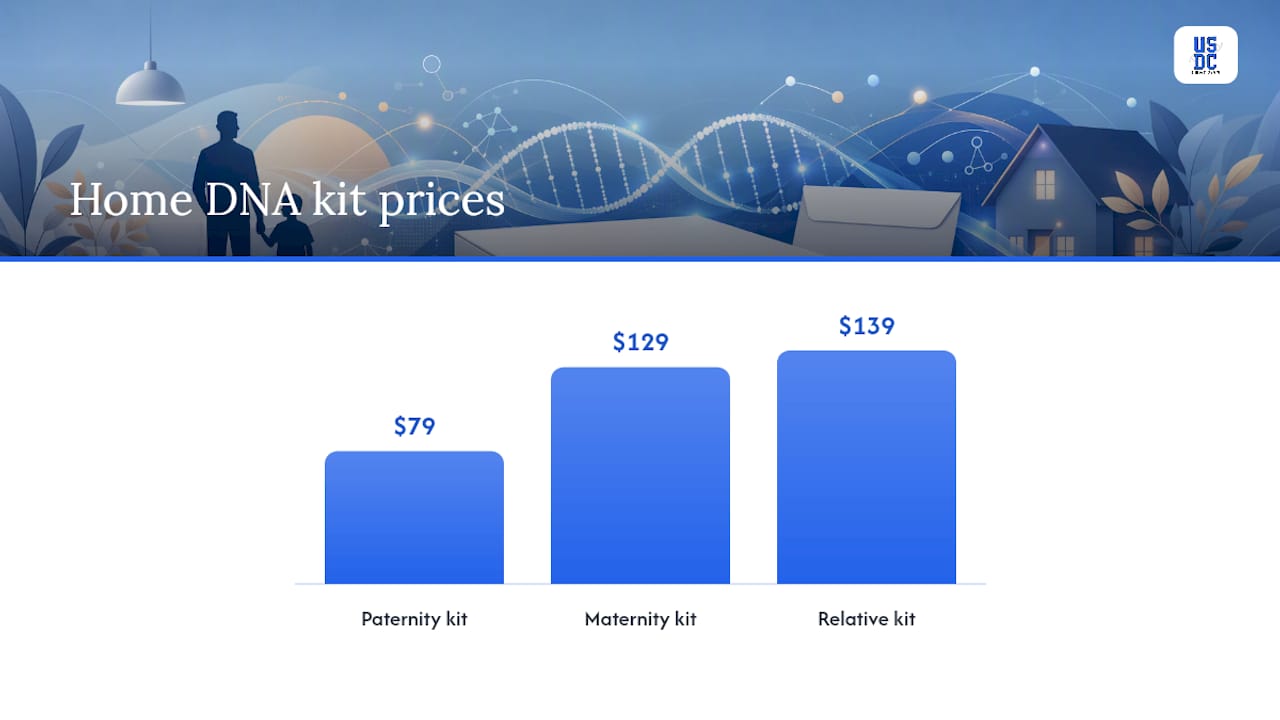
For pricing, an at-home paternity test kit runs $79, a maternity kit is $129, and sibling, grandparent, or aunt/uncle kits are $139 each through US Diagnostics Center’s home DNA test collection. Lab processing typically takes 2 to 3 business days once your sample arrives, with standard order-to-results timing running 7 to 10 business days.
How Does the DNA Collection Process Actually Work?
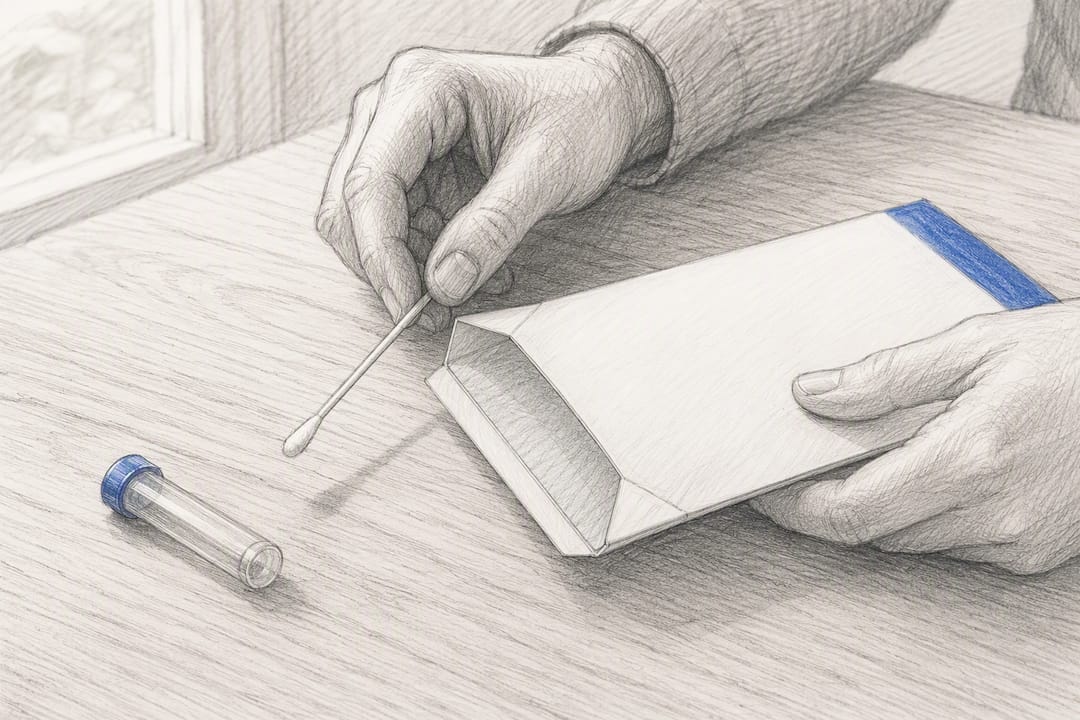
Every home paternity or kinship test starts the same way: a cheek swab collects buccal cells, the soft tissue cells lining the inside of your mouth. Labs extract DNA from those cells and analyze short tandem repeat (STR) markers, the repeating DNA sequences that vary between individuals and get passed down in predictable patterns from parent to child. STR analysis combined with PCR amplification lets a lab compare markers across two or more people and calculate statistical probability. Kits typically test up to 28 markers, and more markers generally means clearer, less ambiguous results, especially for tricky kinship cases like half siblings or aunt/uncle relationships.
Getting a valid sample comes down to following a short list of rules:
- Avoid eating, drinking, smoking, or chewing gum for at least one hour before swabbing.
- Wash your hands before opening the kit to avoid contaminating the swab.
- Rub each swab firmly against the inside of your cheek for the full time specified in the instructions.
- Let swabs air dry briefly before sealing them in the provided pouch, exactly as directed.
- Label each participant’s sample clearly if more than one person is testing.
Pro Tip: Do your swab first thing in the morning before coffee or breakfast. It’s the easiest hour of the day to guarantee you haven’t eaten, drunk, or brushed your teeth recently.
Chain-of-custody procedures like witnessed collection and photo ID only apply to legal tests, not the home kits covered here.
Once collected, samples go back to the lab in the prepaid return envelope included with every kit, no extra shipping cost to arrange. Lab processing runs 2 to 3 business days, and standard order-to-results timing is 7 to 10 business days. Next-day expedited processing is available for an additional fee through the test finder tool if you need answers faster.
What Do Your DNA Test Results Actually Mean?
Your report will land on one of two conclusions: exclusion or strong support for paternity. Exclusion means the tested man is definitively not the biological father. The DNA markers simply don’t match at enough locations, and there’s no ambiguity about that. On the other end, a probability of paternity around 99.9% counts as strong statistical support for a biological relationship, based on how many markers match across the tested individuals.
Modern tests analyzing up to 28 markers are effectively conclusive when the sample collection and handling were done correctly. That’s a meaningful distinction, because most result problems trace back to the sample, not the science.
A few things can complicate an otherwise clean result:
- Contaminated or mislabeled swabs can produce inconclusive or misleading readings.
- Testing between two closely related possible fathers (brothers, for instance) can blur statistical clarity without additional relatives tested.
- Including the mother’s sample when possible sharpens the analysis and reduces statistical ambiguity in difficult cases, even though tests can still be conclusive without her.
If your results are going to trigger a custody filing, child support case, or any legal action, talk to an attorney before you act on an at-home result. Courts will want a properly witnessed legal test, and a personal kit result won’t carry weight in that setting no matter how clear the number looks.
What If the Alleged Father Can’t Provide a Sample?
Death, distance, or a flat refusal to participate doesn’t have to end the search. Kinship testing lets you compare your DNA against the alleged father’s close relatives instead, using statistical models to infer the likely relationship.
Useful alternative routes include:
- Grandparent testing, comparing a child’s DNA to the alleged father’s parents to infer paternity through shared genetic markers.
- Sibling or half-sibling testing, useful when the alleged father has other children available to test.
- Aunt/uncle testing, a workable option when siblings of the alleged father are willing to participate but his parents aren’t available.
When the alleged father has died, samples can sometimes be obtained through a hospital, medical examiner, or archived clinical tissue, though this route typically comes with legal requirements around consent and next-of-kin authorization. Post-mortem testing procedures vary by state and by where the sample is stored, so working through the specific steps early matters more than most people expect. US Diagnostics Center’s guide on posthumous DNA testing walks through how families typically request and use these samples.
How Private Is Your DNA Test Data?
Your DNA carries information about your health, ancestry, and biological relationships, so how a testing company handles that data should factor into your decision as much as price or turnaround time. Reputable providers store samples and results under strict confidentiality protocols and don’t share your genetic information with third parties without your consent.
A few practical questions worth asking before you swab:
- Does the provider state clearly how long it retains your sample and data after processing?
- Is your report delivered through a secure, private channel rather than plain email?
- Who has access to your results within the company, and can you request deletion of your data afterward?
Home paternity tests are inherently more private than legal tests by design, since legal testing requires ID verification and documented custody records that create a more visible paper trail. If privacy is your primary concern and you don’t need court admissibility, that’s one more reason a personal at-home kit may suit your situation better.
Read the privacy policy of any provider you’re considering before you order, not after your sample is already in the mail. Reputable labs will state their data handling practices clearly on their website, and if a company is vague or silent about what happens to your DNA after testing, treat that as a warning sign rather than an oversight.
The Emotional Weight of Searching for a Biological Father
Ordering a DNA test is a simple transaction. What it can uncover is not. Confirming or ruling out a biological father can reshape your sense of identity, your relationship with the man you grew up calling “dad,” or your understanding of your own family history, and it’s worth going in with your eyes open about that.
Some emotional realities worth sitting with before you swab:
- A positive result can bring relief, but it can also open questions about why the relationship wasn’t disclosed earlier, and those questions don’t always have satisfying answers.
- An exclusion result can be its own kind of grief, especially if you had hoped for a different outcome.
- Other family members, siblings, a mother, an alleged father’s other children, may have strong reactions to a request for their DNA, even when your intentions are purely about clarity for yourself.
There’s also an ethical dimension worth naming plainly: testing someone without their knowledge, using a discarded item for DNA rather than a direct swab, sits in a legal and ethical gray area depending on your state and your purpose for testing. If you’re testing a minor or someone who can’t consent for themselves, understand who is legally allowed to authorize that test before you order one.
None of this means you shouldn’t pursue answers. It means pursuing them with a plan for how you’ll handle whatever the result says, and ideally, someone to talk to once you have it, whether that’s a therapist, a trusted friend, or a family member who already knows what you’re doing.
— Dr. Todd Lewis
How Do You Order and Register a Test Kit?
Ordering a home DNA test kit is a simple, four-step process from start to finish.
Step 1: Choose the right kit. Use a guided test finder to match your specific relationship question (paternity, maternity, siblings, grandparent, aunt/uncle) to the correct test, since ordering the wrong kit wastes both time and money.
Step 2: Place your order and register participants. Once your kit ships, you’ll register each participant online using the unique code included in the box. This links each sample to the correct person’s profile before it ever reaches the lab.
Step 3: Collect and mail your samples. Follow the swab instructions exactly, seal each sample as directed, and return everything in the prepaid envelope included with your kit, no separate shipping arrangement required.
Step 4: Track your order and receive results. Once the lab receives your samples, processing typically takes 2 to 3 business days, with standard order-to-results timing running 7 to 10 business days. Results are usually delivered through a secure online portal rather than a phone call, giving you privacy to review them on your own terms first.
If you need answers faster, expedited next-day processing is available as an add-on at checkout for an additional cost.
Publisher Perspective: What to Expect When You Order
The company offers a guided test selection tool designed to help people identify the kit matching their specific relationship question, aiming to avoid picking the wrong kit and thereby saving time and money.
Here’s what you can verify directly: home paternity kits are $79, maternity kits are $129, and sibling, grandparent, and aunt/uncle kits are $139 each. Lab processing runs 2 to 3 business days, with standard order-to-results timing of 7 to 10 business days and expedited options available. Kits test up to 28 markers, and every kit ships with a prepaid return envelope so you’re not hunting for postage.
Equally important is knowing when at-home kinship testing is the right fit. It’s built for personal, non-legal family questions like paternity, sibling, grandparent, and aunt/uncle relationships. Situations that require court-admissible documentation or specialized clinical testing belong with providers specifically credentialed for those uses.
Ordering the Right Kit From US Diagnostics Center
If you’ve read this far, you already know whether you need a straightforward paternity answer or a more specific kinship test, and getting the right kit ordered is the last step between you and a clear answer.
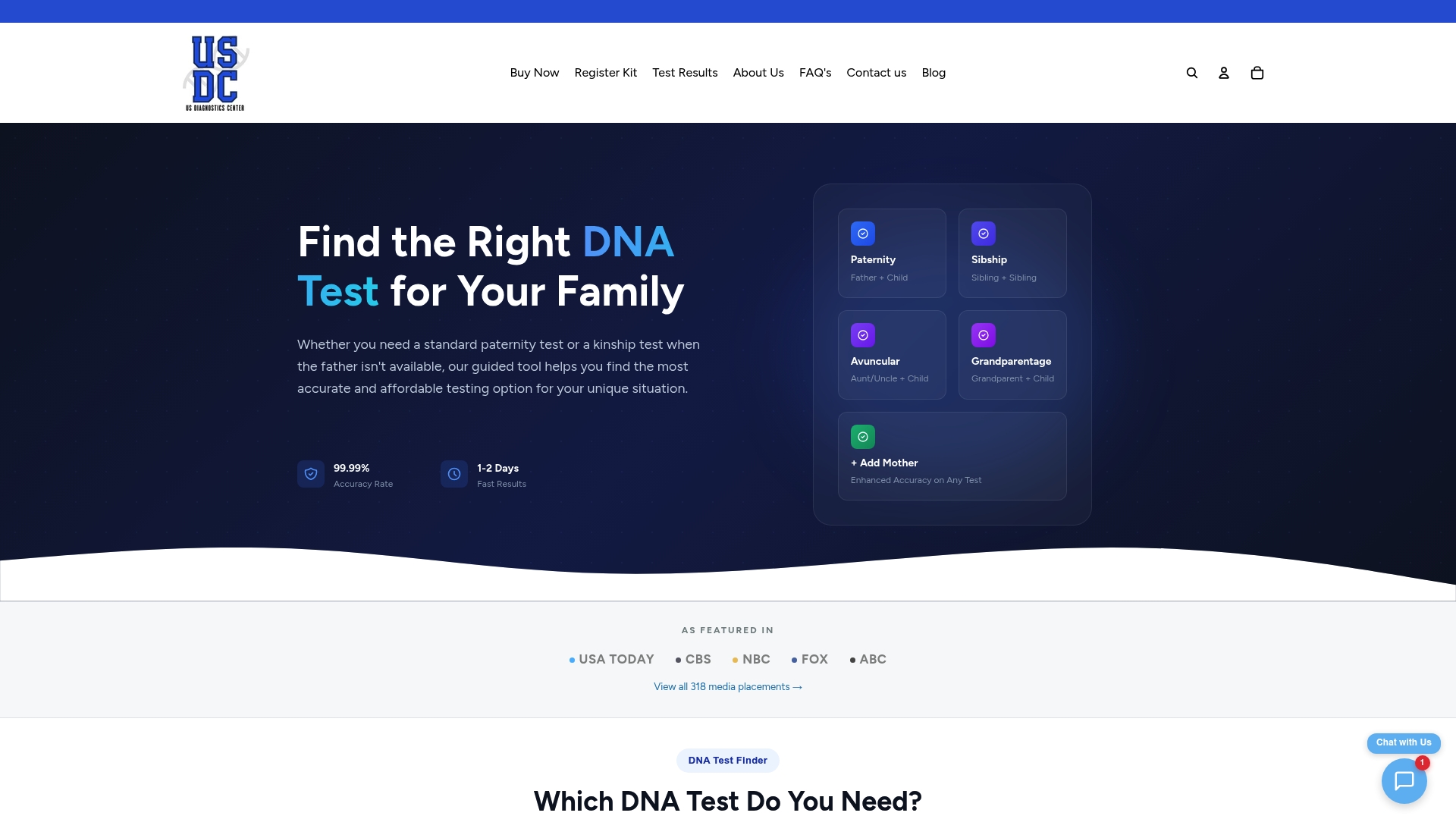
For a direct paternity question between two people, the Home Paternity Test Kit at $79 covers the standard case. If you want to test an alleged father alongside the mother for the clearest possible read, the Paternity Trio Test at $118 or the Paternity Duo Test at $79 through the homepage collection fits that scenario. When the alleged father isn’t available, kinship options like the Home Grandparent DNA Test or Home Aunt/Uncle DNA Test, both $139, let you work through his relatives instead.
Ordering runs three steps: pick your kit using the guided test finder, collect your samples following the included instructions and mail them back in the prepaid envelope, then wait for lab processing (2 to 3 business days) and results delivery (7 to 10 business days total, or faster with the next-day expedited option for an added fee). Browse the full home DNA test collection to compare kits side by side and place your order today.
Sources
The Cleveland Clinic’s overview of DNA paternity testing covers procedure and accuracy in plain clinical language. LegalClarity’s guide to legal versus at-home testing breaks down the chain-of-custody requirements courts demand. The genetics.edu.au fact sheet on forensic and paternity testing offers technical grounding on marker analysis, and LiveScience’s explainer on how paternity tests work walks through STR analysis and PCR amplification for readers who want the science behind the swab.
This article is general information, not a substitute for advice from a qualified lawyer. Consult a qualified legal professional about your own circumstances before acting on anything here.
- DNA paternity test: Procedure, accuracy & results — Cleveland Clinic
- What You Need for a Paternity Test: Legal vs. At-Home - LegalClarity
FAQ
How Accurate Is a Home Paternity DNA Test?
Home paternity tests analyzing up to 28 markers typically report either exclusion (0% probability) or strong statistical support around 99.9% probability of paternity when samples are collected correctly. Accuracy depends heavily on following swab instructions precisely, since contamination is the most common cause of unclear results.
Can I Use an At-Home Test Result in Court?
No, at-home results cannot be used for legal proceedings because they lack the witnessed collection, ID verification, and documented chain of custody that courts require. For custody, support, or immigration matters, work with a provider specifically credentialed for court-admissible legal testing, and consult an attorney before collecting any sample.
How Much Does a Paternity Test Cost?
A Home Paternity Test Kit from US Diagnostics Center costs $79, while kinship kits like grandparent or aunt/uncle testing run $139 each. Expedited next-day processing is available as an add-on for readers who need faster answers.
How Long Does It Take to Get Results?
Lab processing typically takes 2 to 3 business days once your sample arrives, with standard order-to-results timing running 7 to 10 business days total. An expedited next-day option is available at checkout for an additional fee if you need faster results.
What If the Alleged Father Refuses or Is Deceased?
Kinship testing with grandparents, siblings, or aunts and uncles can infer the likely biological relationship even without the alleged father’s direct sample. For deceased individuals, posthumous testing procedures may allow sample collection through a medical examiner or archived clinical tissue, though legal authorization requirements vary by state.
Recommended
- Biological Father Confirmation: What It Means and How It Works
- Paternity Test Without Father Present: Your Full Guide
- Paternity Test After Death | Posthumous DNA Testing (2026)
- Post-Mortem Paternity Testing: DNA After Death (2026)
This article is part of our Paternity Testing: The Complete Guide guide.


0 comments