

DNA testing is commonly used to document a genetic connection between a child born through surrogacy and an intended parent, but it does not, by itself, establish legal parentage in the United States. If you need documentation for citizenship, a passport, or a court order, the DNA test alone will not finish the job. Legal parentage comes from state law, court orders, or federal immigration determinations, and DNA evidence simply feeds into that process.
Here is the immediate action to take. Before ordering any test, gather your clinic records, donor agreements, and surrogacy contract, then talk to a surrogacy attorney about which pathway applies in your state or country of birth.
- If a genetic connection needs to be proven for a federal purpose, only results meeting the U.S. Department of State's 99.5 percent certainty threshold from an accredited lab will be accepted.
- If you're pursuing a state parentage order, your attorney, not a testing lab, determines whether DNA evidence is even necessary.
Pro Tip: Don't order a legal DNA test before confirming with an attorney whether your state's pre-birth order process even requires one. Many gestational surrogacy cases resolve on contracts and medical affidavits alone.
Key Takeaways
DNA testing documents genetic relationships in surrogacy cases, but only a court order or applicable state statute establishes legal parentage.
| Point | Details |
|---|---|
| DNA proves biology, not parentage | Legal parentage comes from state courts, pre-birth orders, or immigration determinations, not the test itself. |
| Federal cases need 99.5% certainty | The State Department requires AABB-accredited lab results at or above this threshold for citizenship and passport cases. |
| Chain of custody is non-negotiable | Legal tests require authorized collection sites or embassy-designated collectors; applicants cannot self-collect for agency use. |
| Consult an attorney before testing | State law determines whether you need a pre-birth order, post-birth petition, or DNA evidence at all. |
| US Diagnostics Center offers home and kinship testing | Paternity, maternity, and kinship tests from $79 to $139, with 2 to 3 business day lab processing. |
Table of Contents
- Why Surrogacy Dna Testing Matters and How Surrogacy Type Changes the Picture
- What Types of Relationship Tests Apply to Surrogacy Cases?
- What Do U.S. Agencies Require for Citizenship or Passport Cases?
- How Do You Order a Court-Admissible DNA Test for a Surrogacy Case?
- What Do Surrogacy DNA Tests Cost, and How Long Do They Take?
- Why DNA Evidence Alone Doesn't Settle Legal Parentage
- What US Diagnostics Center Offers Surrogacy Families
- Practical, U.S.-Focused Guidance for Intended Parents
- Get the Right DNA Test for Your Surrogacy Situation
- Sources
- FAQ
Why Surrogacy Dna Testing Matters and How Surrogacy Type Changes the Picture
Surrogacy DNA testing exists to answer one narrow question: is there a genetic match between a specific adult and the child? That question matters most in three scenarios: proving citizenship or immigration eligibility, supporting a court petition when parentage is contested or paperwork is incomplete, and simple peace of mind when intended parents want independent confirmation that a clinic used the correct embryo or gametes.
Whether a test is even relevant depends heavily on which kind of surrogacy produced the child.
- Gestational surrogacy. The surrogate carries an embryo created from the intended parents' or donors' genetic material. She has no genetic tie to the child, which is why gestational surrogacy is the model most fertility clinics and agencies use in the U.S. today.
- Traditional surrogacy. The surrogate's own egg is used, making her the child's genetic mother. This arrangement carries different legal exposure in most states, since the surrogate has a biological claim that gestational surrogates do not.
Agencies and courts most often ask for DNA confirmation when clinic documentation is incomplete, when donor gametes were involved and the chain of custody on the embryo is unclear, or when a birth happened overseas and a U.S. consulate needs proof of a genetic or gestational link to a citizen parent. Confusion around gestational surrogacy's legal and ethical framework is common enough that scholarly reviews consistently recommend clear contracts and medical affidavits precisely to avoid needing DNA as the only evidence available.
What Types of Relationship Tests Apply to Surrogacy Cases?
Not every situation calls for the same test. Matching the test to the actual question you need answered saves time and money.
- Paternity testing compares a man's DNA against the child's to confirm a genetic father-child relationship. This is the most common test intended fathers request, whether for peace of mind or to support legal or immigration paperwork.
- Maternity testing confirms whether a specific woman's egg produced the child, which matters when donor eggs were used or when clinic records need independent verification.
- Kinship testing (grandparent, aunt or uncle, and sibling comparisons) becomes necessary when the intended parent cannot be tested directly, whether due to death, absence, or exclusive reliance on donor gametes on both sides.
Timing matters too. Prenatal genetic testing exists in two forms: non-invasive prenatal paternity (NIPP) testing using cell-free fetal DNA from maternal blood, and invasive diagnostic procedures like amniocentesis, which carry their own clinical risks and are typically ordered for medical, not parentage, reasons. US Diagnostics Center does not offer prenatal or NIPP testing, and any prenatal option should be discussed directly with your OB-GYN or maternal-fetal medicine specialist.
The other critical distinction is collection method. A peace-of-mind home kit involves a self-collected cheek swab mailed back in a prepaid envelope, useful for personal clarity but not accepted by courts or federal agencies. A legal test requires an authorized third party to verify photo ID, witness the swab collection, and maintain an unbroken chain of custody from collection to lab result. Only the second category holds up in court or before a government agency.

What Do U.S. Agencies Require for Citizenship or Passport Cases?
The federal government's standard is specific, and it is not negotiable. For a child born abroad through surrogacy, the State Department may require DNA evidence of a genetic or gestational connection to a U.S. citizen parent when other documentation, such as clinic records or a birth certificate naming the intended parent, is missing or insufficient.
The threshold and process are precise:
- Results must show 99.5 percent or greater certainty of the parent-child relationship. Anything below that line does not satisfy federal requirements.
- The lab performing the test must be AABB-accredited. This accreditation standard governs chain-of-custody handling specifically for relationship testing used in legal and government contexts.
- The lab must send results directly to the requesting agency, not to the applicant. Self-reported or applicant-forwarded results are not accepted.
Collection procedures differ depending on where the child was born. Within the United States, the applicant cannot receive the test kit directly; instead, an authorized collection site handles the swab and submits it to the lab. Overseas, the lab ships the kit to a U.S. embassy or consulate, where an embassy-designated professional collects the sample from the parent and forwards it back through official channels. Skipping either step, even collecting your own sample correctly, invalidates the result for government use.
One more point often gets missed: a passing DNA result does not end the process. Agencies frequently still require the surrogacy contract, clinic affidavits documenting embryo transfer, and other supporting paperwork even after a genetic match is confirmed.

How Do You Order a Court-Admissible DNA Test for a Surrogacy Case?
Ordering the right test in the right order prevents costly delays. Follow these steps in sequence.
- Talk to a surrogacy attorney first. Confirm whether your state allows a pre-birth parentage order or requires a post-birth petition, since this determines whether DNA evidence is even part of your legal strategy.
- Choose the correct test category. If your case will support a CRBA, passport application, or court filing, request chain-of-custody collection and confirm the lab's accreditation status matches your specific purpose.
- Schedule sample collection at an authorized site, or follow embassy instructions if the birth happened overseas. Bring government-issued ID and any clinic documentation showing the surrogacy arrangement.
- Instruct the lab to report results directly to the court or agency. Keep your own copies of medical affidavits, the surrogacy agreement, and any embryo transfer records separately.
Pro Tip: Ask your attorney to request the lab's reporting protocol in writing before collection day. Some agencies specify exactly how and to whom results must be transmitted, and getting this wrong means starting the entire process over.
What Do Surrogacy DNA Tests Cost, and How Long Do They Take?
Pricing and turnaround vary by test type and whether legal chain-of-custody handling is involved. As a general guide, home paternity testing is available at a relatively low cost, maternity testing is somewhat more expensive, and kinship tests such as sibling, grandparent, or aunt/uncle testing cost slightly more.
Lab processing typically takes a few business days once a sample arrives, with a standard order-to-results window of 7–10 business days for most home tests. Legal or chain-of-custody testing often takes longer because of the added collection-site scheduling step.
A few factors push costs or timelines higher:
- Legal collection fees at an authorized third-party site, which most home-kit pricing does not include.
- Additional participants tested for kinship comparisons (each extra person typically adds to the total cost).
- Embassy processing and international courier fees for overseas births.
- Expedited processing, which can shorten lab turnaround for time-sensitive immigration or court deadlines.
Why DNA Evidence Alone Doesn't Settle Legal Parentage
A DNA test proves biology. It does not, by itself, make anyone a legal parent. That distinction trips up more intended parents than any other part of the process.

Legal parentage in the U.S. is governed by state law, and state approaches vary widely: some states issue pre-birth parentage orders that name intended parents before delivery, while others require a post-birth court petition or, in rarer cases, stepparent adoption to finalize the relationship. A signed surrogacy contract documents everyone's intent, but it is not itself a court order, and treating it as the final legal step is one of the most common and costly mistakes intended parents make.
If an intended parent has no genetic connection to the child at all (for example, when both gametes came from donors), a DNA test cannot help that parent's legal claim. In that case, adoption, stepparent adoption, or an immigration pathway under Section 309 may be the only route, and an attorney should map that out before birth whenever possible. Keep every clinic and legal record organized: embryo transfer logs, informed consent forms, donor agreements, and medical affidavits all matter more than the DNA result once a dispute reaches court.
What US Diagnostics Center Offers Surrogacy Families
US Diagnostics Center provides home and legal paternity, maternity, and kinship testing, including sibling, grandparent, and aunt/uncle comparisons, through a guided test-selection tool that helps you pick the right test for your situation.
- Pricing: home paternity at $79, maternity at $129, and kinship tests at $139, each analyzing up to 28 markers.
- Turnaround: 2 to 3 business days for lab processing, with 7 to 10 business days typical from order to results, plus expedited options for time-sensitive cases.
- Every kit ships with a prepaid return envelope for sample collection.
The lab does not offer prenatal, NIPP, or immigration-specific embassy testing. For chain-of-custody collection needs, coordinate directly with your attorney and the collection site to confirm reporting requirements before you order.
Pro Tip: If you're unsure whether your case needs a legal or home test, ask your attorney first. Ordering the wrong category wastes both time and money.
Practical, U.S.-Focused Guidance for Intended Parents
Most articles on this topic treat DNA testing as a formality, a box to check before citizenship paperwork clears. That framing undersells how much damage a poorly sequenced process can do. The real risk isn't failing a DNA test. It's ordering one before knowing whether you need it, or ordering the wrong kind, and losing weeks while an agency or embassy sends you back to square one.
The conventional advice tells intended parents to "get a DNA test" as if that settles things. It doesn't. The 99.5 percent certainty threshold and AABB accreditation requirement are non-negotiable for federal purposes, but plenty of surrogacy cases never touch federal immigration rules at all. They live entirely in state family court, where a pre-birth order and solid clinic affidavits often matter more than any lab result.
What should come first? A conversation with a surrogacy attorney about which legal pathway your state offers. DNA testing supports that pathway. It never replaces it.
Get the Right DNA Test for Your Surrogacy Situation
Confirm biological parentage after surrogacy
For intended parents confirming their biological connection to a baby born via surrogacy, home kits analyze up to 28 genetic markers with 2 to 3 business days of lab processing after samples arrive. Each kit ships with a prepaid return envelope. For court or agency documentation, legal chain-of-custody testing is Coming Soon.
If your surrogacy case needs documentation, US Diagnostics Center gives you a faster, more affordable starting point than guessing which test category applies on your own. The guided test-selection tool walks you through paternity, maternity, and kinship options based on your specific circumstances, whether you need a simple peace-of-mind result or documentation to hand to your attorney.
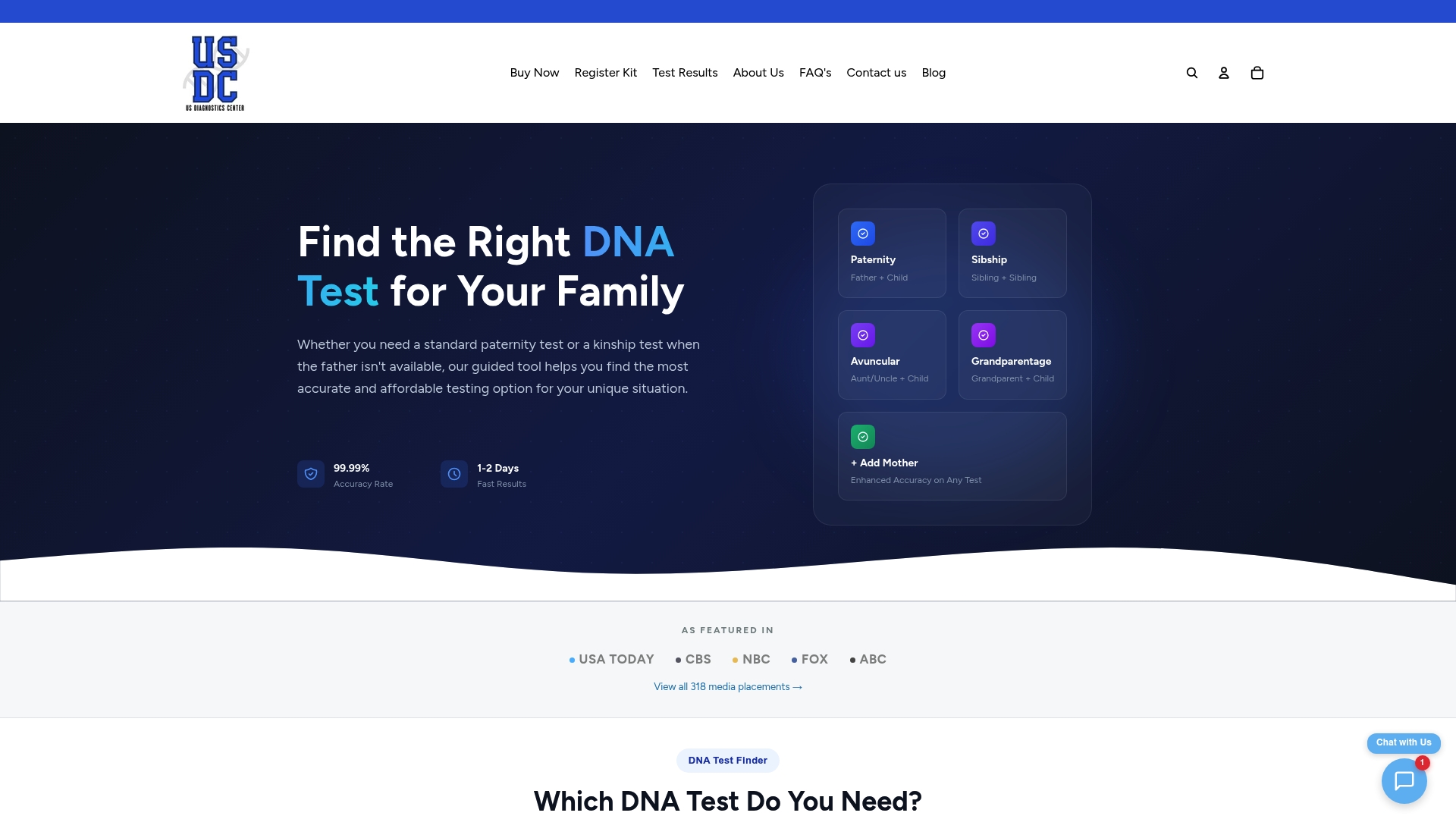
Home paternity testing starts at $79, maternity at $129, and kinship comparisons like grandparent or sibling testing at $139, each with results in 2 to 3 business days once your sample reaches the lab. Every kit ships with a prepaid return envelope, so there's no separate shipping charge to track down. If your case requires chain-of-custody handling for court or agency use, review the legal DNA test options and confirm reporting requirements with your attorney before you order. For most families weighing next steps, the paternity testing guide is a solid place to start comparing test types and pricing before you commit.
Sources
- DNA relationship testing procedures | U.S. Department of State
- Intent Test in ART Cases | Houston Law Review
- Review of gestational surrogacy process and legal/ethical challenges
- Amniocentesis | Johns Hopkins Medicine
This article is general information, not a substitute for advice from a qualified lawyer. Consult a qualified legal professional about your own circumstances before acting on anything here.
FAQ
How Much DNA Does a Surrogate Mother Share With the Baby?
In gestational surrogacy, the surrogate shares no DNA with the baby since the embryo comes from the intended parents' or donors' genetic material. In traditional surrogacy, the surrogate's own egg is used, making her the child's genetic mother.
Which U.S. States Allow Surrogacy?
Surrogacy law varies significantly by state, with some states offering clear pre-birth parentage order processes and others requiring post-birth petitions or additional restrictions; an attorney licensed in the birth state can confirm the current rules that apply to your case.
How Much Does a DNA Test for Paternity Cost During Pregnancy?
Prenatal paternity testing, including non-invasive options, typically involves specialized clinical procedures and is not something US Diagnostics Center offers; discuss prenatal testing costs and options directly with your OB-GYN or a maternal-fetal medicine specialist.
Do Surrogates Still Get Paid if They Miscarry?
Compensation terms after a miscarriage are set by the surrogacy contract itself and vary by agreement, which is why scholarly guidance recommends detailed contracts and independent legal counsel for all parties before the arrangement begins.
Can DNA Testing Alone Get My Child U.S. Citizenship?
No. DNA testing can support a citizenship or passport application by proving a genetic or gestational connection, but the State Department still requires accompanying documentation like clinic affidavits and legal parentage orders in many cases.
Recommended
- Child DNA Test Consent: What U.S. Parents Need to Know | USDC
- DNA Testing for Immigration: At-Home Kinship Tests Explained | USDC
- Discreet Shipping DNA Tests: Your Private Paternity Guide | USDC
- Court-Admissible DNA Testing Benefits for U.S. Families | USDC
This article is part of our Understanding DNA Testing: How It Works and What to Expect guide.


0 comments